How an AI SEO Agent Maintains Older Blog Posts
It flags stale titles, broken links, and missed clicks, then applies only the edits your chosen approval mode allows.


AI writing tools have made publishing easy. Keeping hundreds of posts useful, current, connected, and clickable is where the work starts to pile up.
If you’ve got an established blog, you already know how content decay gradually makes older posts less useful. Refresh stale titles, add missing internal links, fix weak meta descriptions, and remove dead outbound links from old articles.
An AI SEO agent turns that growing maintenance list into a recurring job that doesn’t depend on you remembering it.
Key Takeaways for an AI SEO Agent
- RightBlogger’s Site Agent maintains published posts after content generation is finished, rather than creating new drafts.
- It reads live pages and connected Google Search Console data to find content optimization opportunities.
- You can add a task in plain language when you want a specific fix, and the next scheduled run picks it up.
- You choose how much it can do on its own: approve every edit, let it apply low-risk changes automatically, or let it publish everything.
- Every applied edit can be undone for 30 days, while manual edits stay protected.
The SEO Work That Piles Up on Established Blogs
A blog with real history needs more than fresh posts. Its content strategy should include a regular content audit of the older article library.
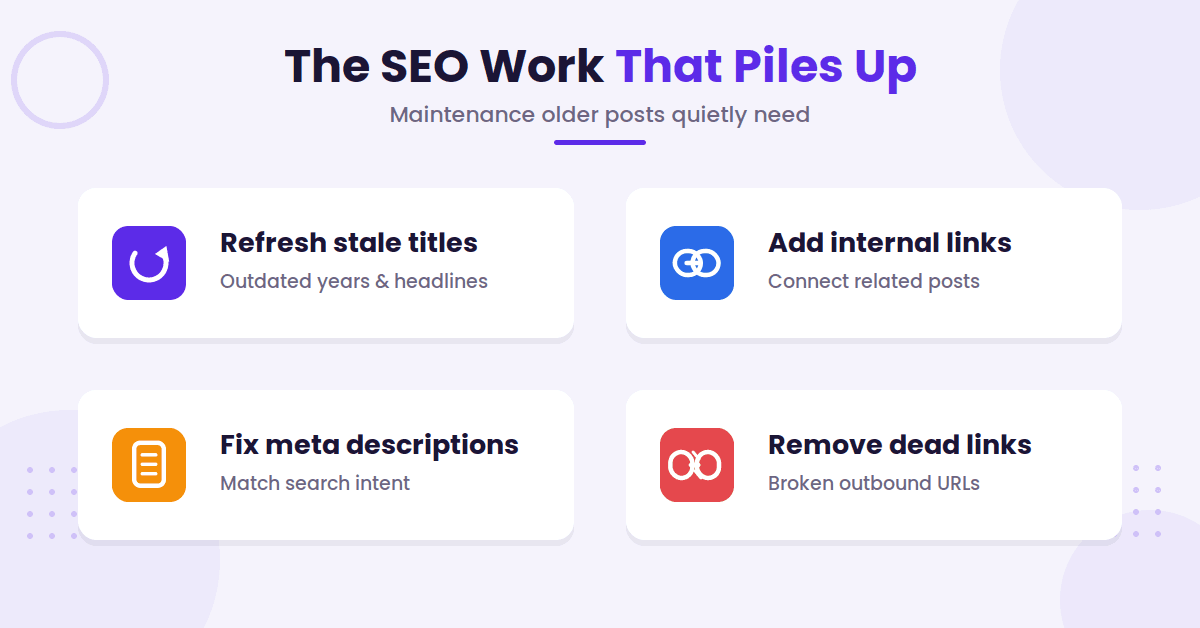
That gets hard when you’re managing sites like ryrob.com, a growing hiking blog, and RightBlogger at the same time. You can tell everyone else to refresh old content, improve metadata, and strengthen links between related posts. Then look up and realize your own to-do list has become a small mountain.
Older pages experience content decay when information gets stale, competitors publish stronger answers, or small issues go unnoticed. An aging article can gradually lose organic traffic, while a neglected library can weaken topical authority across the site.
Across a large archive, that content decay compounds.
SEO maintenance is rarely difficult. The hard part is noticing the right fix before it costs you traffic.
How RightBlogger Site Agent Handles Existing Content
RightBlogger’s AI SEO agent is built for the work that happens after you hit publish. It sits after your content pipeline, reviewing already-published articles on a recurring schedule as a practical check for content decay.
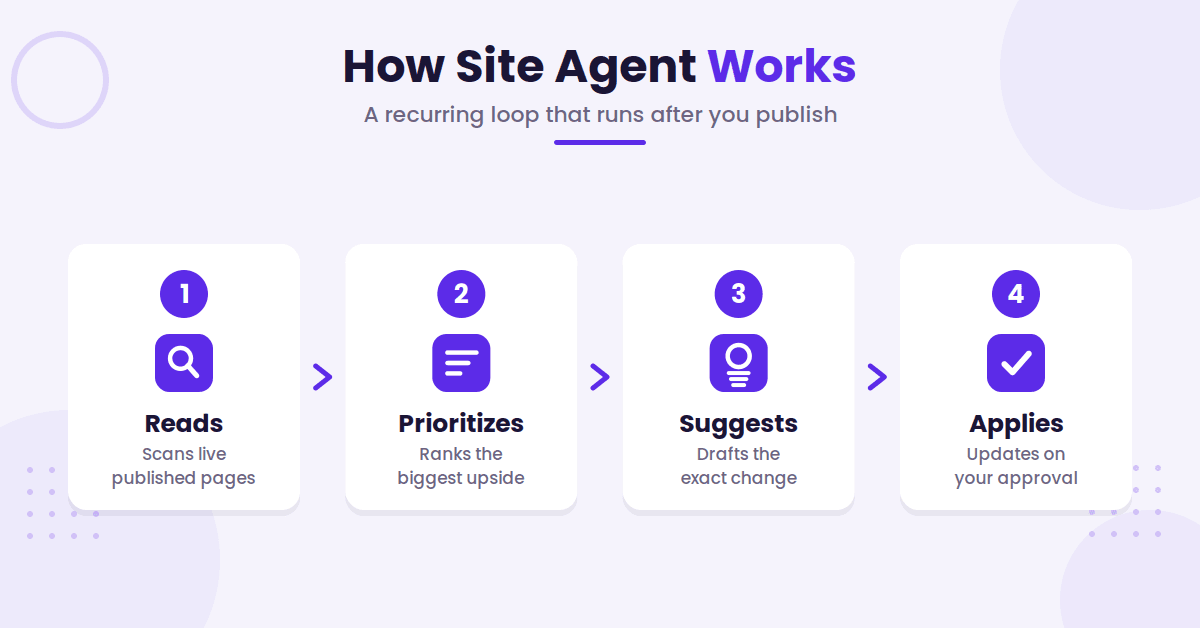
The process is simple: it reads, prioritizes, suggests, and applies approved changes with the most upside.
You can also point it at something specific instead of waiting for it to find work. Add a task in a sentence, like replacing an old link across the site or fixing the broken links in one post, and the next audit takes it on. The change it produces is labelled with what you asked, so the request and the result sit together in your review queue.
It doesn’t write new blog posts. New content belongs in Content Planner automations. Site Agent is the maintenance layer for posts already bringing in impressions, clicks, and readers.
It Finds the Work You’d Otherwise Miss
The agent can spot older articles that should link to a newer guide, then suggest the anchor text to use. Internal linking is a good low-risk improvement because it connects related pages and strengthens topical authority across your site.
It flags outdated years in titles after calendar changes and catches broken outbound links, a small technical SEO cleanup. If a review finds nothing worth changing, that’s useful too. It means the site is in good shape for that run.
Using Search Console to Find Lost Clicks
Impressions show people are seeing your page in Google. Clicks show whether they’re choosing it.
Site Agent uses connected Search Console data to find pages that rank and earn impressions but aren’t getting the clicks they should. Once you connect Google Search Console to RightBlogger, the agent can surface suggestions based on those patterns.
This data reflects Google performance. How your site shows up inside AI answers is a different question, and that’s what the AI Brand Monitor tracks.
Better Meta Titles and Descriptions
A page may need a sharper title, a more useful description, or both. This content optimization isn’t about rewriting copy for its own sake.
A weakening click-through rate can be an early sign of content decay, so titles and descriptions should match search intent.
On one high-traffic post, Site Agent surfaced a strong SEO description update with meaningful traffic potential. Search Console-based recommendations include an estimated +X clicks per month figure, so you can sort the big opportunities from the smaller cleanups.
That estimate helps you prioritize updates with the best potential for ranking recovery. It isn’t a promise of traffic, and bigger meta rewrites should still get human review.
You Decide How Much the Agent Can Change
Handing an AI access to a site with real traffic should feel controlled, so you get three project-level options for how much autonomy fits your site.
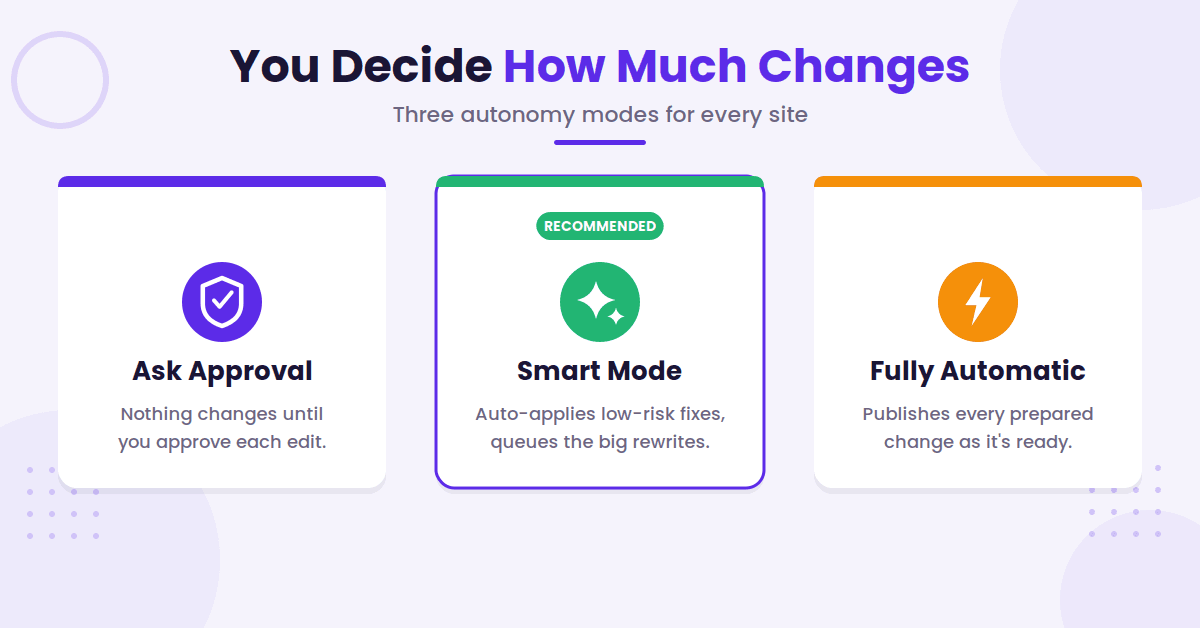
Ask Approval, Smart Mode, or Fully Automatic
Ask Approval keeps a human-in-the-loop, so nothing changes until you approve it. You’ll get an email when new recommendations are ready.
Smart Mode applies low-risk updates on its own, such as internal links. Larger changes, including full metadata rewrites, stay in the queue for your review. This is the recommended mode for most established sites.
Fully Automatic publishes every prepared change as soon as it’s ready. You can change modes whenever you want, and you can pause a project completely when you don’t want the agent to touch it.
You can also set the audit frequency to every seven days, every three days, or daily. New projects start at every three days, and daily audits come with the higher plans.
Every Change Has a Way Back
Before Site Agent updates a post, it saves the original version. Each applied edit includes its own one-click undo button for 30 days.
That means you can reverse one meta rewrite without rolling back every improvement from the week. The original copy is stored in two places, the database and separate cloud storage.
These backups support the undo feature, but they aren’t a replacement for your own independent site backup and recovery plan.
Your Manual Edits Stay Protected
If you update a post yourself after the agent has worked on it, Site Agent won’t overwrite your own edits.
That’s an important safeguard for bloggers who want help with maintenance while still choosing when to edit, update, and improve their best posts by hand.
Site Agent Fits Into Your Existing Workflow
There’s no separate system to figure out. Site Agent uses the connections already inside RightBlogger, including Search Console and your CMS integration.
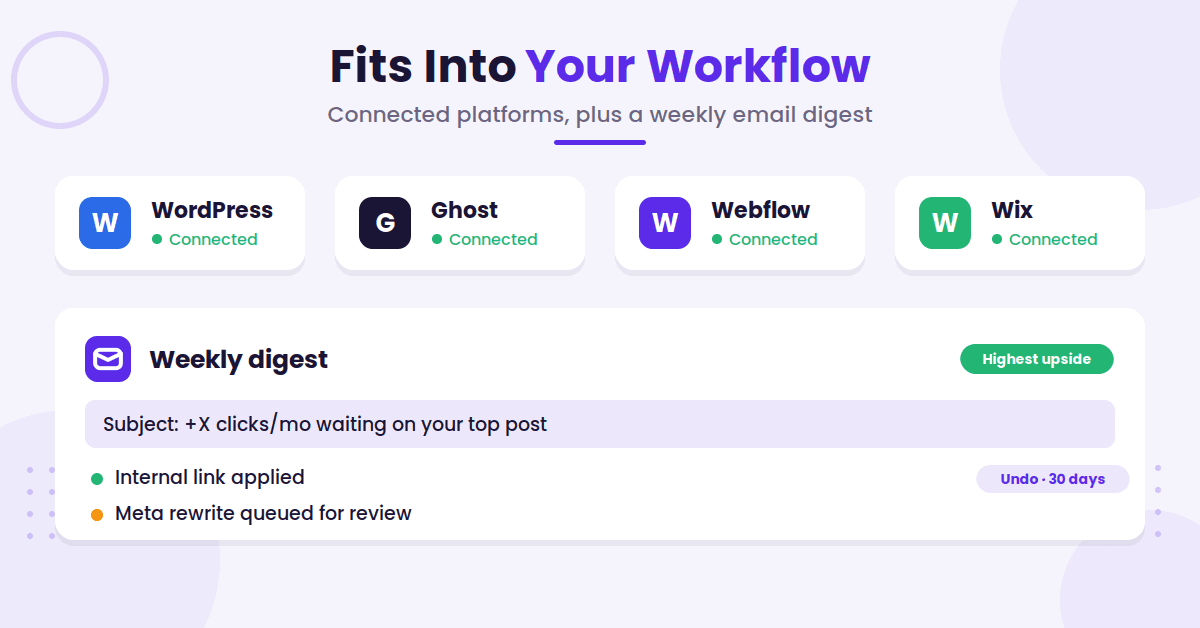
It currently works with WordPress, Ghost, Webflow, Wix, Shopify, and Framer. If you’re on WordPress, the RightBlogger WordPress integration connects the same site setup used for publishing and maintenance.
Each site gets its own audit, suggestion queue, permissions, automation mode, and change history.
After every run, you’ll receive a quick email digest that leads with the most useful change on each site.
The run history shows differences for every suggestion, including skipped edits. It also remembers what you’ve dismissed, so it doesn’t keep pushing the same unwanted change back into your queue.
If you work in Claude or another MCP client, the RightBlogger MCP connector can read the agent’s recent activity, pending suggestions, and edit history, and approve or dismiss the edits it proposes or queue tasks for its next run, so you can manage it without opening the dashboard.
Copy guardrails keep updates natural, and the agent keeps durable notes on each project, including site conventions and past decisions, so its suggestions fit how the site is actually written. That means no search snippets stuffed with em dashes, no generic comprehensive guide filler, and no obvious AI writing slop.
FAQs About an AI SEO Agent
Here are a few additional questions you might have.
Can Site Agent Write New Posts?
No. Site Agent maintains existing published posts, but it doesn’t write new articles or outlines. RightBlogger’s Content Planner automations handle writing and publishing new content.
Can I Tell Site Agent What to Work On?
Yes. Add a task on the Agent page and describe the change in a sentence. The next scheduled audit takes on a couple of tasks alongside what it finds itself, and a site-wide request is worked through a few posts per run rather than all at once. Tasks cover the edits the agent already makes: links, a reworded sentence, a new section, titles, and meta descriptions.
Is Site Agent Included With RightBlogger Plans?
It’s included on the Solo, Pro, and Agency plans, with no per-edit fees and no per-project add-ons. It isn’t part of the free plan.
What Does Day-to-Day Use Look Like?
For most site owners, it looks pretty uneventful. Run Smart Mode, scan the email digest, review the bigger opportunities, and approve the edits that make sense.
Final Thoughts on an AI SEO Agent
The SEO work that gets ignored is usually content decay in older posts. Sensible updates can help those pages earn more qualified organic traffic and may support ranking recovery.
A good AI SEO agent doesn’t take control away from you. It keeps useful maintenance moving while you stay in charge of changes that deserve a closer look.
Keeping your best pages current also helps when AI search engines go looking for sources worth citing.

Article by
RightBlogger Co-Founder, Andy Feliciotti builds websites and shares insights on SEO, photography, and travel.


Automated SEO Blog Posts That Work
Try RightBlogger for free, we know you'll love it.
7-day free trial. Cancel anytime.





Leave a comment
You must be logged in to comment.
Loading comments...