Search Engine Positioning: What It Actually Means (and How to Improve It in 2026)
See how to measure a page’s real position in Search Console, move pages from positions 5 to 15, and earn AI visibility.

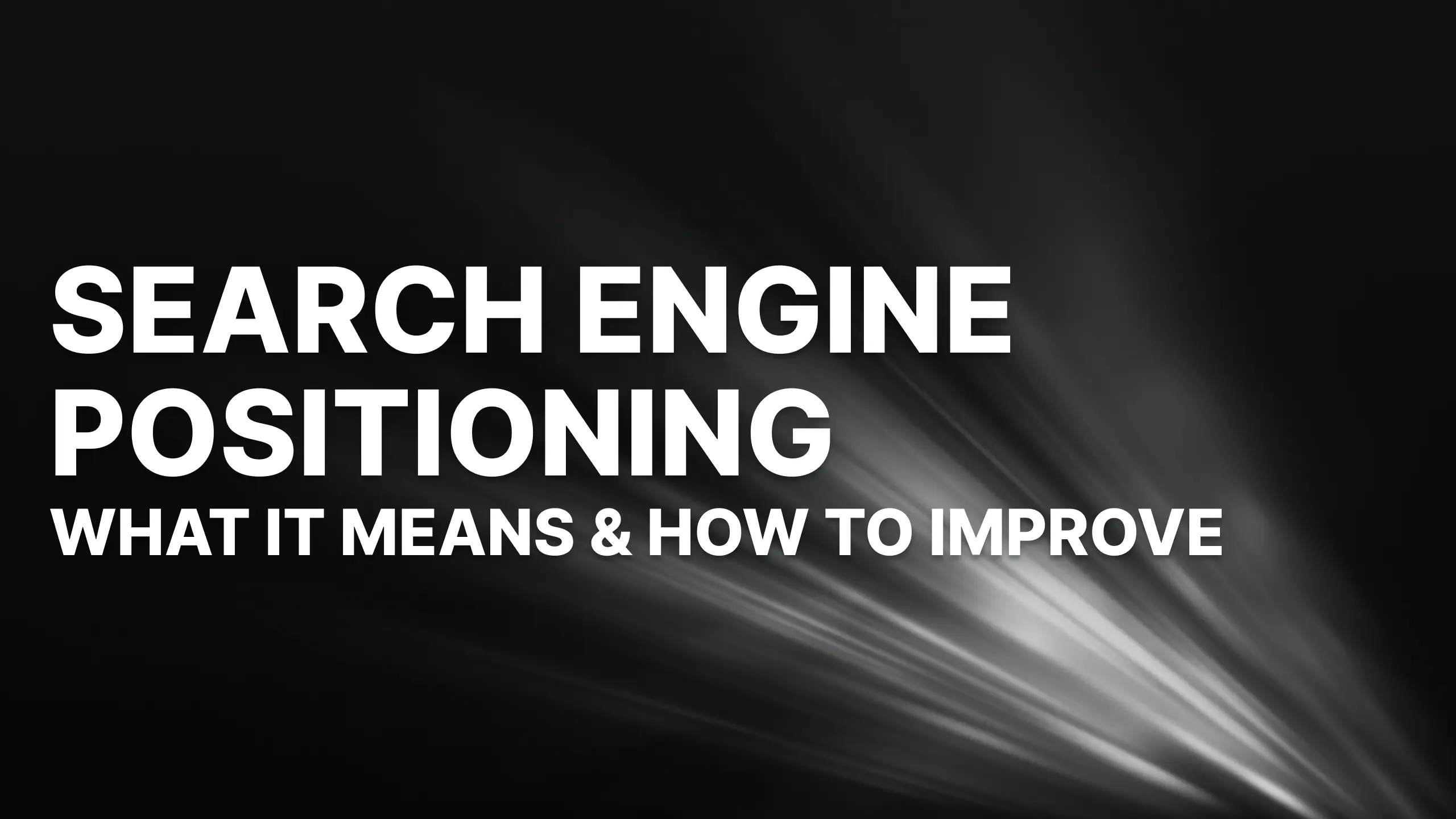
Search your own business name and you sit at the top. Search the thing you actually want to be found for, and you are on page three. That gap is what search engine positioning is about.
It is also one of the most muddled terms in SEO. People use “positioning,” “placement,” “ranking,” and “SEO” as if they mean the same thing, then get confused when their position in Google Search Console says 40 while the page looks like it ranks fine. This guide clears all of that up, shows you how to check where you really stand, and gives you a practical playbook to land higher, including what positioning means now that AI Overviews sit on top of the results.
What is search engine positioning?
Search engine positioning is the practice of improving where a specific page lands in search results for a specific query. In plain terms, it is the spot your page holds on the results page when someone searches a given keyword.
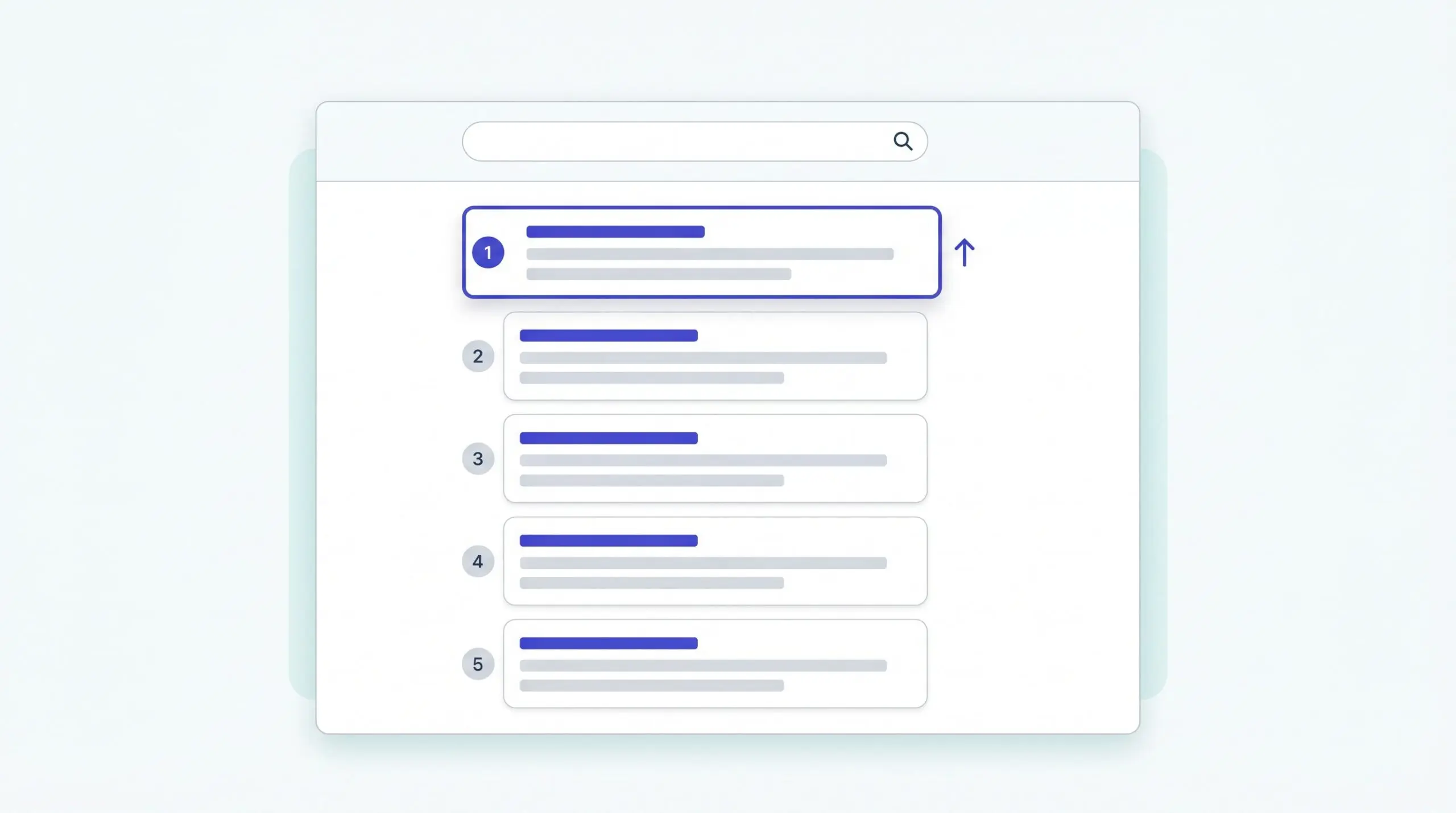
It is a focused slice of SEO. Where SEO covers everything you do across a whole site, positioning zooms in on one page and one query and asks a simple question: can we move this page up for this search? That narrow focus is what makes it useful, because the work is concrete and measurable.
One thing to get straight early: your position is not a single fixed number. The same page can sit at position 3 for one person and position 8 for another at the same moment. More on why that happens in a minute.
Positioning vs. ranking vs. SEO (and why people mix them up)
These three terms get mixed up constantly, even in articles that are supposed to define them. Here is a useful way to separate them: positioning is the spot you hold, ranking is the process of earning that spot, and SEO is the whole discipline behind it.
| Term | What it is | Plain English |
|---|---|---|
| Search engine positioning | The outcome: the spot one page holds for one query | Where you land |
| Ranking | The process of earning that spot (and the ordered list of results itself) | How you get there |
| SEO (search engine optimization) | The full discipline: keywords, content, on-page, technical, and off-page work across a site | The whole job |
| Search engine placement | An older name for the same outcome, still common in agency and small-business marketing | Where you land |
| Search engine ranking position | The numeric slot itself, usually written as a single number | The number |
So optimization is the input, and positioning is the output. You do SEO; you rank pages; the result is the position each page holds. When someone says they want “better positioning,” they almost always mean they want a specific page to rank higher for a specific search.
If you want the mechanics behind why one page outranks another, our explainer on how Google orders and positions pages with PageRank goes deeper on the link and authority side.
One quick disambiguation: if you landed here looking for “brand positioning” or “market positioning,” that is a different thing entirely. Brand positioning is about how people perceive your company in the market. Search engine positioning is purely about where your pages show up in search results.
Is “search engine placement” the same thing?
Practically, yes. Placement is the older term, and it is still what a lot of agencies and small-business marketers say when they mean the same measurable outcome: which slot your page occupies for a given search. If you arrived here searching for search engine placement, a placement check, or how to improve your placement, everything in this guide applies without translation. You will also see “search engine ranking position” used for the same idea. That one is just the number itself, as in “this page holds ranking position 4.” Watch the abbreviation though, because SERP almost always means search engine results page, the page of results as a whole, not the ranking position. Two different concepts, one crowded acronym. None of these distinctions change the work. They matter only because you will meet all of them in tools, invoices, and client reports, and it helps to know they point at the same thing.Why your position is a range, not a single number
Ask “what position am I in?” and the honest answer is “it depends.” The same URL holds different positions at the same time depending on:
- Location. Results in Austin differ from results in London, and local intent makes the gap bigger.
- Device. Mobile and desktop results are not identical, and the layout above your result changes.
- Personalization. Your search and browsing history nudge what Google shows you.
- Timing. Google constantly tests and reshuffles results, so positions wobble day to day.
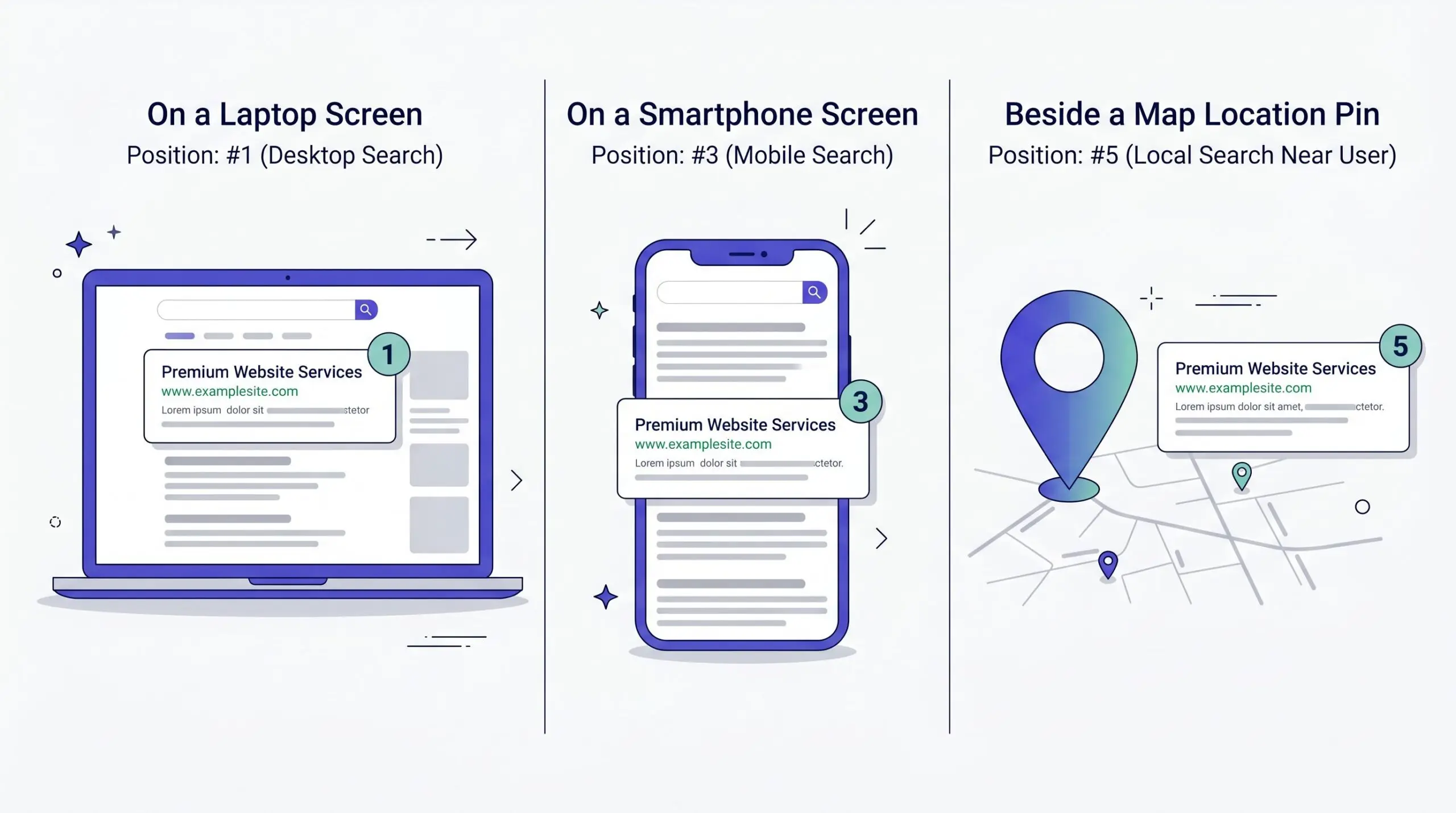
This is why checking your own position in your normal browser is misleading. You are logged in, in one location, on one device, with your own history. The number you see is real for you and almost nobody else. Treat position as a range you are trying to nudge upward, not a fixed score to obsess over.
Why search engine positioning still matters in 2026
Clicks are heavily top-loaded. In FirstPageSage’s long-running CTR study, the first organic result pulls roughly 40% of clicks, about double position 2 and four times position 4. Moving from position 8 to position 3 is not a small bump; it can multiply your clicks.
But 2026 changed the math. AI Overviews now appear on roughly one in five Google searches, and Pew Research found people click links noticeably less often when one shows up. So raw traffic to position 1 is lower than it used to be. The important shift is this: position is now the price of admission to AI visibility. AI Overviews and AI assistants pull heavily from pages that already rank well, so a strong organic position is the single biggest factor in whether you get cited in an AI answer at all.
In other words, classic positioning is no longer just about the blue links. It is the on-ramp to getting surfaced in AI results too. If you want the dedicated playbook for that side, see our guide on getting cited in AI answers (GEO vs SEO). The rest of this article focuses on earning the classic search position that makes both possible.
How to check your actual search engine position
Because position is a range, you need a consistent way to measure it. There are three methods, in rough order of reliability:
- A manual incognito search. Open a private window, log out, and search your keyword. It is free and quick, but it still reflects your location and a single moment, so use it for a rough gut check, not real data.
- Google Search Console. The Performance report shows your real average position for every query your pages actually appear for, based on real searches. This is the most trustworthy free source, with one big catch covered below.
- A dedicated rank tracker. A tracker checks your positions from a fixed location on a set schedule, so you get clean, comparable numbers over time. This is what you want once you are tracking more than a handful of keywords.
Start with Search Console. It is free, it uses real search data, and you probably already have it connected. Just know how to read it.
Check your position in Search Console, step by step
This takes about two minutes and gives you the real number rather than the one your own browser shows you.- Open Search Console and go to Performance, then Search results.
- Turn on the Average position metric at the top. It is switched off by default, which is why plenty of people never find it.
- Set the date range to the last 3 months so a few odd days do not skew the number.
- Add a filter. This is the step that matters. Filter by Query for the exact keyword you care about, or by Page for the URL you are working on. Without a filter you are reading a blended number that describes nothing in particular.
- Use the Pages and Queries tabs together. Filter to one query, then open Pages to see which of your URLs Google actually shows for it. That is often a surprise, and it is how you catch two pages competing for the same search.
The Search Console “average position” trap
This trips up almost everyone. The “average position” in Search Console is not your position for one target keyword. It is an impression-weighted average across every query a page shows up for, including new long-tail searches it barely ranks for.
So your average position can get worse even while your main keyword improves. If a page starts appearing on page five for fifty new long-tail variations, all those low positions drag the average down, even though nothing about your target ranking got worse. It looks like a decline; it is actually expanded reach.
The fix is to stop reading the sitewide number and filter. In the Performance report, filter by a specific query or a specific page to see the position that actually matters. If you are hunting for quick wins, our guide to finding high-impression, low-CTR pages shows how to use this report to spot pages worth re-optimizing.
When a rank tracker earns its keep
Search Console tells you where you landed on average, across real searches that already happened. A rank tracker answers a different question: where do you sit right now, from a chosen location and device, checked on a schedule. That difference matters in three situations.- You are tracking more than a handful of keywords and want one clean, comparable series over time.
- Local matters to you, and you need positions checked from a specific city rather than blended nationally.
- You want to watch competitors move on the same keyword, which Search Console will never show you because it only reports your own property.
How to improve your search engine positioning: a 7-step playbook
Positioning is page-and-query specific, so the goal is not “rank for everything.” It is to make one page dominate one cluster of related searches, then repeat the process. None of this requires a paid tool; the methods below work on their own, and tools just make them faster.

1. Match search intent before anything else
Search your target keyword and look at what already ranks. Are they how-to guides, product pages, comparisons, or tools? That tells you the format Google has decided the query wants. If you publish a sales page where everyone else ranks a tutorial, you have capped your position no matter how good the page is. Match the dominant format first, especially when you target specific long-tail keywords with clear intent.
2. Cover the topic completely
On a SERP without heavy backlink walls, topical completeness is often the strongest lever you have. Cover the subtopics, questions, and entities the query implies, so one page answers everything a searcher might ask next. An entity-first outline helps you map that coverage instead of just repeating keywords, and a real SEO content strategy keeps related pages working together. Grouping queries into clusters, which you can do by hand or with keyword clustering, tells you which searches belong on the same page.
3. Sharpen your on-page elements
On-page is where you have the most direct control over a position. Put the keyword near the front of your title, write a description that earns the click, use a logical heading structure, and give internal links descriptive anchor text. Preview how your listing will look in results before you publish; a clear, compelling snippet wins clicks that a truncated one loses. RightBlogger’s SERP preview tool shows you exactly how your title and description will render.
4. Win the click, not just the rank
Two pages at the same position do not get the same traffic. A sharper title and description pull a higher click-through rate, and a strong click-through rate at a given position tends to compound over time. Add specificity, a year, or brackets where they fit, and aim for the SERP features you can realistically win, like a featured snippet or a People Also Ask slot. Tightening titles on pages that already get impressions is one of the fastest positioning wins there is.
5. Build authority with relevant backlinks
Links still move positions, but on a low-competition SERP you need quality, not volume. A few relevant links pointing at the exact page you want to rank do more than dozens of generic ones. Earn them with original data, expert commentary, and simple backlink outreach, and do not forget internal links from your own strong pages, which pass authority straight to the page you are trying to lift.
6. Fix the technical basics
Technical SEO is the floor your content stands on. If a page is slow, hard to use on mobile, or tough for Google to crawl and index, no amount of writing will rank it. Cover the basics: fast load times, a mobile-friendly layout, clean URLs, correct canonical tags, and pages that are actually indexed. You do not need a perfect score, just no broken fundamentals holding you back.
7. Refresh and re-optimize existing pages
This is the highest-ROI move on the list, and most people skip it. Pull up Search Console and find pages stuck in positions 5 to 15. They are one good update away from page one. Refresh the content, tighten the title, add internal links, update the date, and request re-indexing. Improving pages that already have traction usually beats publishing brand-new ones.
How long does it take to improve your position?
A new page can get indexed and start showing up within days, but showing up is not the same as ranking well. For a competitive keyword, expect four to eight months of consistent work to reach page one, and longer if your site is new and still building authority.
The data is sobering. In an Ahrefs study of a million URLs, only 1.74% of newly published pages reached the top 10 for a target keyword within a year. Across 1.3 million keywords, 72.9% of pages sitting in the top 10 were more than three years old, and the average number one page was five years old. Age is not a ranking factor on its own, but it is a good proxy for how much link equity and refinement a page has accumulated.
The flip side of that study is more encouraging: of the pages that did break into the top 10, nearly 41% managed it within a month. Position tends to arrive either quickly or slowly, rarely on a neat schedule in between.
Be skeptical of anyone promising page one in a few weeks. Fast position movement usually means you ranked for something easy, low-volume, or low-competition. Real positions on real keywords take time, and that is normal.
When your position changes: what is normal vs. a real problem
Positions move every day, and most of that movement means nothing. Here is how to tell ordinary noise from a real issue.
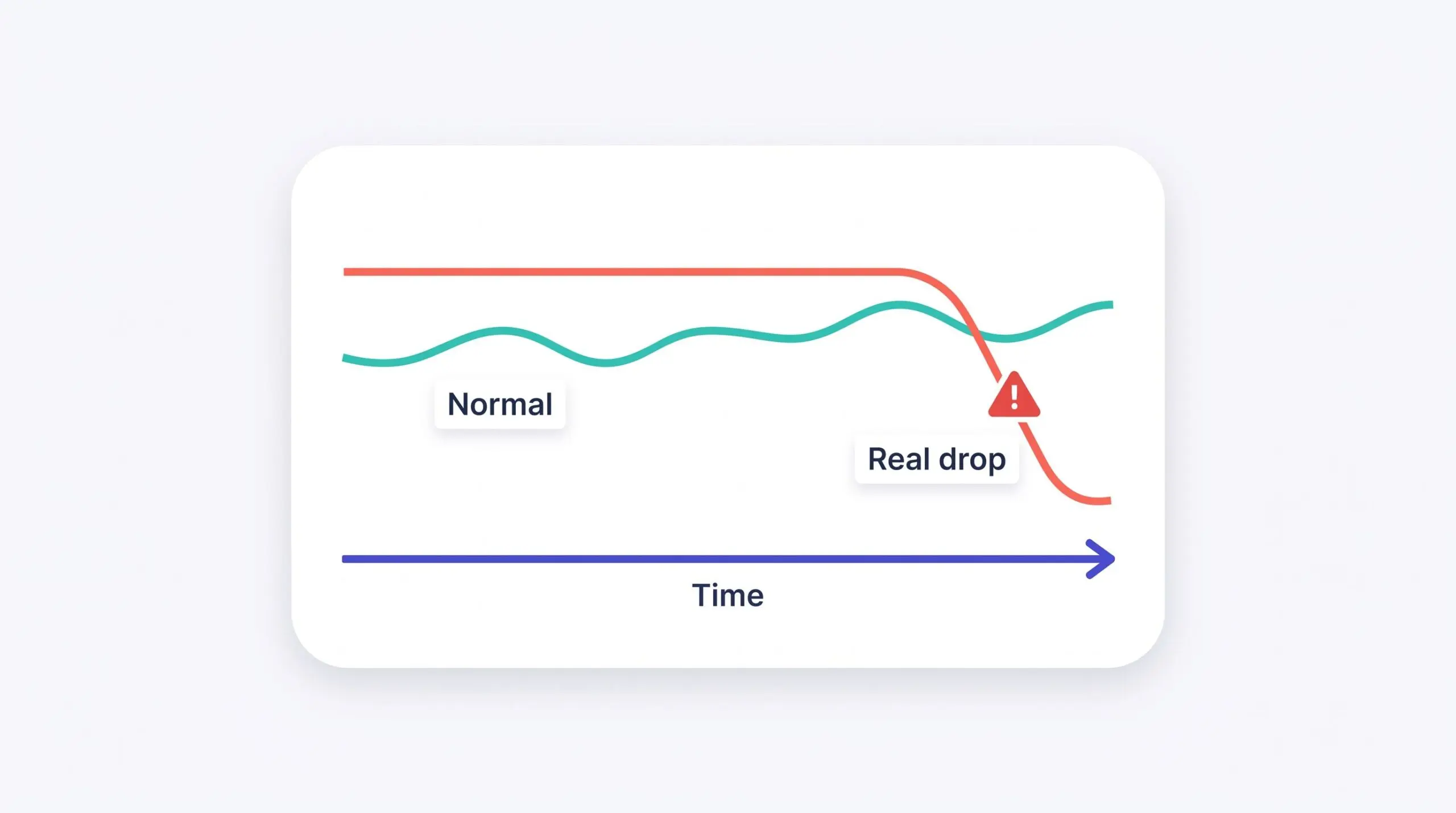
Usually normal:
- A daily wiggle of a few spots up and down.
- A brand-new page bouncing around while Google figures out where it belongs.
- Short-term swings during a known Google update, which often settle within a couple of weeks.
- Seasonal shifts when intent for your keyword changes through the year.
Worth investigating:
- A sustained drop across many keywords over several weeks, not just one.
- A sharp cliff right after a site migration or redesign, which often points to redirects or indexing problems.
- Pages dropping out of the index entirely, which you can confirm in Search Console.
- A manual action notice in Search Console, or a clear hit lining up with a core update.
When something looks like a real problem, check indexing first, then recent site changes, then whether a known update landed at the same time. Most “my rankings tanked” panics turn out to be normal volatility or one fixable technical issue.
Search engine positioning tools (and when you actually need them)
You can do most of this for free with Search Console and manual checks. Reach for tools when manual work stops scaling:
- Keyword research to find the queries worth positioning for. RightBlogger’s keyword research tool surfaces volume and difficulty so you target winnable terms.
- Keyword clustering to group those queries into pages, which the keyword cluster tool does for you.
- SERP preview to optimize how your listing appears before you publish.
- Backlink research to find authority gaps, which the backlinks tool helps with.
A tool will not hand you a position, but it removes the busywork between you and the result. You can see RightBlogger’s full suite of AI tools for blogging and SEO in one place.
Frequently asked questions
Is search engine positioning the same as ranking?
They are related but not identical. Ranking is the process of earning a spot, and your position is the spot you end up holding. You rank a page in order to improve its position. In everyday use people treat them as synonyms, but the cleaner way to think about it is ranking as the action and position as the result.
What is the difference between SEO positioning and SEO optimization?
Think of optimization as the work and positioning as the scoreboard. SEO optimization is everything you do, like content, on-page, technical, and links. Positioning is the page-and-query-level result of that work: where a given page lands for a given search.
Is position 11 the same as page 2?
Roughly, yes. With ten organic results per page, positions 1 to 10 are page one and positions 11 to 20 are page two. So position 11 usually means the top of page two, not the eleventh page. It is also a classic “almost there” spot worth targeting for a quick win.
Why does my search engine position fluctuate every day?
Daily movement of a few spots is normal. Google constantly tests results, and your position also varies by location, device, and personalization. Worry only when you see a sustained drop across many keywords over several weeks, which points to a real issue rather than ordinary noise.
Why is my average position in Search Console so high, like 40?
Because average position is averaged across every query a page appears for, not just your main keyword. New long-tail searches where you rank low pull the number up. Filter the Performance report by a single query or page to see the position that actually matters.
Does search engine positioning still matter with AI Overviews?
Yes, arguably more than before. Fewer top positions convert to direct clicks now that AI Overviews sit on top, but those same well-ranked pages are the ones AI answers tend to quote. So your position is still the gate to visibility in both classic and AI search, even when it does not always earn the click.
What are the “4 types of positioning”?
That question comes from marketing, not search. It refers to ways a brand can position itself in a market, on price, quality, use case, or against a competitor. It has nothing to do with where your page lands in Google. The overlap is only the word. If you are here for search results, the section above on positioning versus ranking versus SEO is the one you want.How do I improve my search engine placement?
The same way you improve positioning, because they are the same thing. Match the search intent of the query, cover the topic completely, sharpen your title and description, earn a few relevant links, clear any technical blockers, and refresh pages that already sit in positions 5 to 15. That last one moves the needle fastest, since the page has already proven it can rank.Own your position, then earn your spot in AI answers
Search engine positioning comes down to one page, one query, and the spot it holds. Get the definition straight, measure your real position in Search Console instead of your own browser, and work the playbook one page at a time. Start with the pages already sitting in positions 5 to 15, because those are the fastest to move.
And remember the 2026 reality: a strong classic position is now the on-ramp to AI visibility, not just blue-link traffic. Earn the position first, then build on it to get cited in AI answers. If you want a head start finding the right queries to target, RightBlogger’s keyword research tool is a good place to begin.

RightBlogger Co-Founder Andy Feliciotti focuses on website development and shares his photography and travel adventures on YouTube.


Automated SEO Blog Posts for Your Site
Research, write, publish, and share from one account.
7-day free trial. Cancel anytime.





Leave a comment