Featured Snippet SEO for Blogs in 2026: Step-by-Step Guide
Target one question, answer it in two sentences, and update the block regularly.

You cannot mark a page as a featured snippet. Google picks the extract. A click on the box jumps to that section on your page. Official: featured snippets and how featured snippets work.
Boxes can sit at the top, in People also ask, or next to Knowledge Graph. There is no official 40–60 word or eight-item spec. Structure helps Google extract. It does not opt you in.
This guide is how to write so an extract is easy to lift, plus how to opt out with nosnippet or a low max-snippet if you need to.
Key Takeaways for Featured Snippet SEO in 2026
- Focus your content strategy on specific long-tail keywords by addressing one clear search question rather than a broad topic.
- Provide concise answers within the first 1 to 2 sentences to satisfy both user intent and search engine algorithms.
- Use short headings, short paragraphs, and simple formatting to keep your content scannable and accessible.
- Include lists or FAQs only when they logically fit the query and enhance the user experience.
- Keep your pages updated regularly because stale answers often lose their rankings to more current information.
- Clear, answer-first writing can help both snippets and AI features. Winning a snippet does not cause an AI Overview citation. Official: AI features and your website.
Why Featured Snippets Still Matter in 2026
Google has significantly evolved its search engine results pages, but this transition has not stopped the platform from pulling concise answers from pages that are easy to parse. That means featured snippet SEO still matters for blog posts that address direct questions, explain a complex process, or define a term in plain language.
Be honest about the shift, though. As AI Overviews spread to a majority of searches, industry tracking shows the share of queries that display a traditional snippet fell by more than half through 2025. Snippets have not disappeared, but the opportunity is now concentrated in how-to, comparison, best-of, and specific long-tail queries, where AI Overviews appear less often.
It also helps to know what “Position Zero” actually means today. Since Google stopped repeating the snippet page in the regular listings back in 2020, the featured snippet is the number one organic result, not a bonus slot above your ranking. The term survives as shorthand, not an extra position you win on top of page one.
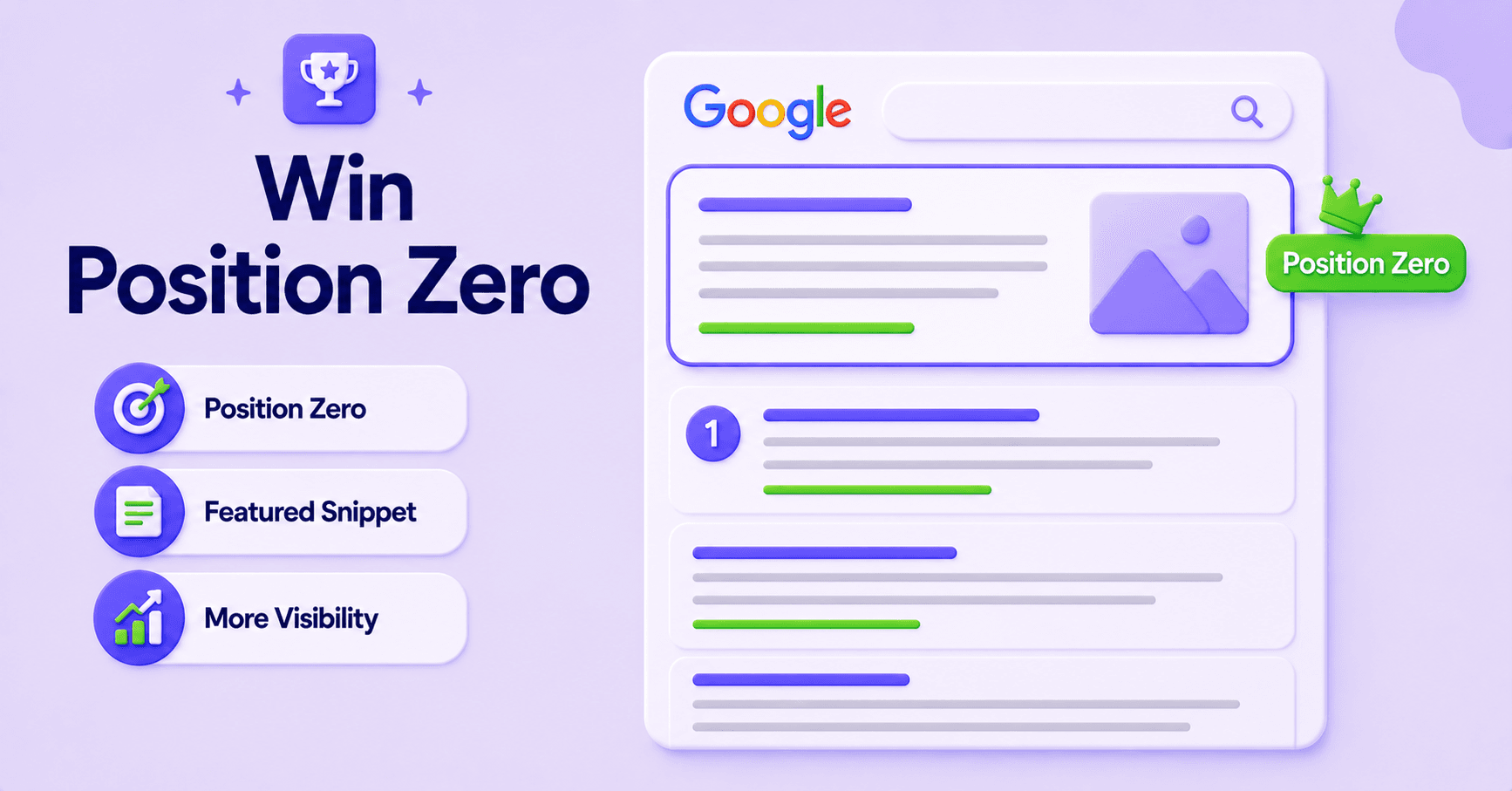
The current landscape is defined by the rise of zero-click searches, where users find the information they need without ever leaving the results page. Your content cannot simply be high quality. It needs to be structured so that Google can easily lift, trim, and display your answer without any ambiguity.
If your answer is easy to lift, Google can still lift it.
You do not need a bloated page. Open with a clear answer and stay organized. That helps extraction. It is not a snippet-to-AI-Overview pipeline. Official: AI features and your website.
The 7-Step Featured Snippet SEO Process
The full process breaks down into seven steps.
1. Pick One Question, Not a Bundle of Them
The first mistake is trying to rank a page for three or four different topics at once. That usually turns the article into mush, while Google prefers a page with one clear purpose.
A strong target usually starts with a question. Through careful keyword research, you can identify the right long-tail keywords to target.
Common examples include:
- How do I…
- What is…
- Best way to…
- How long does…
These phrases signal that the searcher wants a direct answer, not a lengthy history lesson. If the query is broad, narrow it until the intent becomes obvious.
Basic research also helps. You want a topic with enough demand to matter, but not so much competition that the results are dominated by giant authority sites.
If you want a deeper tactical walkthrough on picking the right page structure, my how to get Google featured snippets guide breaks that process down in more detail.
2. Read the Current Result Before You Write
Never write blind. Search the query first and examine what Google is already showing.
Analyze the current SERP features to determine whether the result is a paragraph snippet, a list, or a short definition. Does the winning page answer the question in one concise block, or is the answer spread throughout the page?
Google often rewards the format it already trusts. If the current snippet is a paragraph, do not force a giant numbered list. If it is a list, do not bury the answer inside a personal story.
The page should match the searcher’s expectations. Search Engine Land has a solid reference here are 9 optimization guidelines to get featured snippets. The core takeaway is simple: make the answer obvious and keep the page easy to read.
3. Put the Answer Up Front
This is the step that often determines whether a page wins or loses the snippet.
Place the answer within the first 1 to 2 sentences, then provide supporting context afterward. You want to provide concise answers that function like a definition box at the top of the content.
If someone only reads the opening, they should still understand the main point. That means no lengthy introductions, no warm-up paragraphs, and no unnecessary setup before delivering the answer.
Write the opening like a direct reply to a real person. If the query is “What is featured snippet SEO?”, the first sentence should answer that question in plain English.
A simple test is to read the first 60 words out loud. If they sound like a real answer, you are on the right track. If they sound like you are trying to impress someone, simplify them.
4. Break the Topic Into Smaller Questions
Once the primary answer is established, build the rest of the article around the follow-up questions users commonly ask. This is where heading tags become valuable.
Use H2 and H3 headings that sound like actual search queries rather than creative section names. You should also review the People Also Ask section to identify related subqueries.
For example:
- “What changes in 2026?” works better than “The New Reality.”
- “Which format wins most often?” works better than “Format Matters.”
Google processes structure quickly, so clean headings create a clear map of your content.
This is also where FAQ blocks help. If you want a faster way to shape those question-based sections, the Answer Engine Optimizer tool can help surface the kinds of subquestions that usually get pulled into answer boxes.
The point is not to stuff more words on the page. The point is to make the page easier to slice into useful parts.
5. Use Formats Google Can Lift Fast
Featured snippets are not about fancy writing. They are about clean structure.
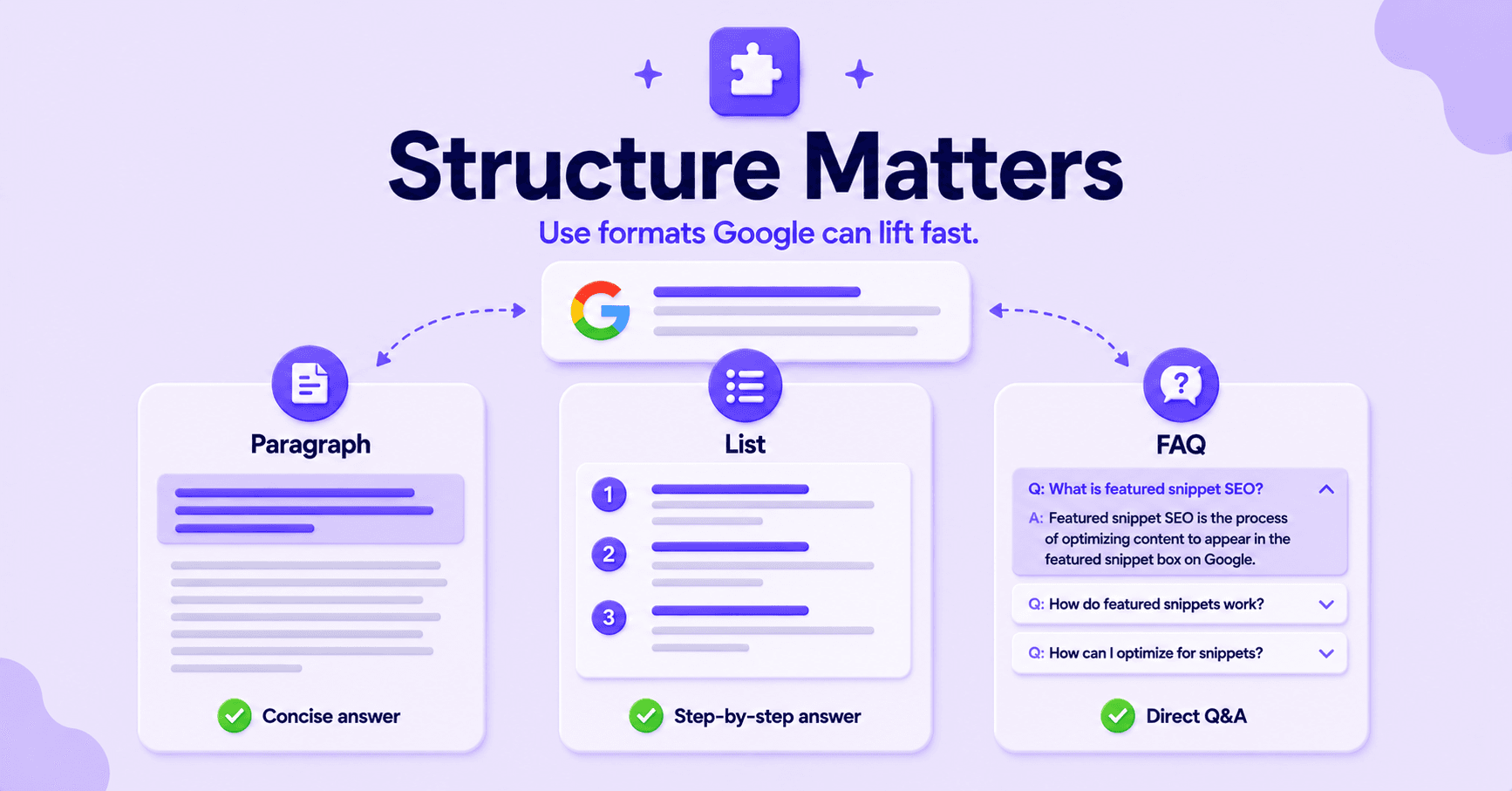
Google can pull information from several formats, including:
- Paragraph snippets
- Ordered lists
- Unordered lists
- Tables
- Video clips with a timestamped section
- FAQ answers
Use a paragraph when the query requires a definition or brief explanation. Use a list when the query involves steps, options, or examples.
Keep paragraphs short enough that each one communicates a single idea. Readers want speed, Google wants clarity, and the pages that respect both typically perform better.
The same principle applies to mobile devices. If a page feels crowded on a phone, it becomes harder for both users and crawlers to process the content efficiently.
6. Add Trust Signals and Freshness
Winning a snippet is not only about formatting. It also depends on whether your content appears current and trustworthy.
Update posts when information changes. Replace outdated screenshots, refresh examples, and verify that any statistics or claims remain accurate.
Stale content can still rank, but newer pages often replace it when they answer the same question more effectively.
Focus on building brand authority as an important trust signal. Use a real author bio, include firsthand examples, and demonstrate actual experience with the topic.
When pages compete for a snippet, thin content is exposed quickly. My GEO vs SEO explained guide covers how answer-focused content overlaps with AI search results and why clarity, freshness, and usefulness now decide which pages get pulled.
7. Publish, Measure, and Rewrite the Snippet Block
Do not treat the first draft as the final draft.
After publishing, monitor performance in Google Search Console. Review impressions, clicks, and the exact queries driving traffic to understand how the content influences click-through rate.
If the page receives impressions but does not earn the snippet, the answer may need to be tighter. If it wins the snippet and later loses it, compare your content with the page that replaced it.
Pay particular attention to the first 100 words. Tighten the answer, move the main phrase higher, and ensure the heading aligns closely with search intent.
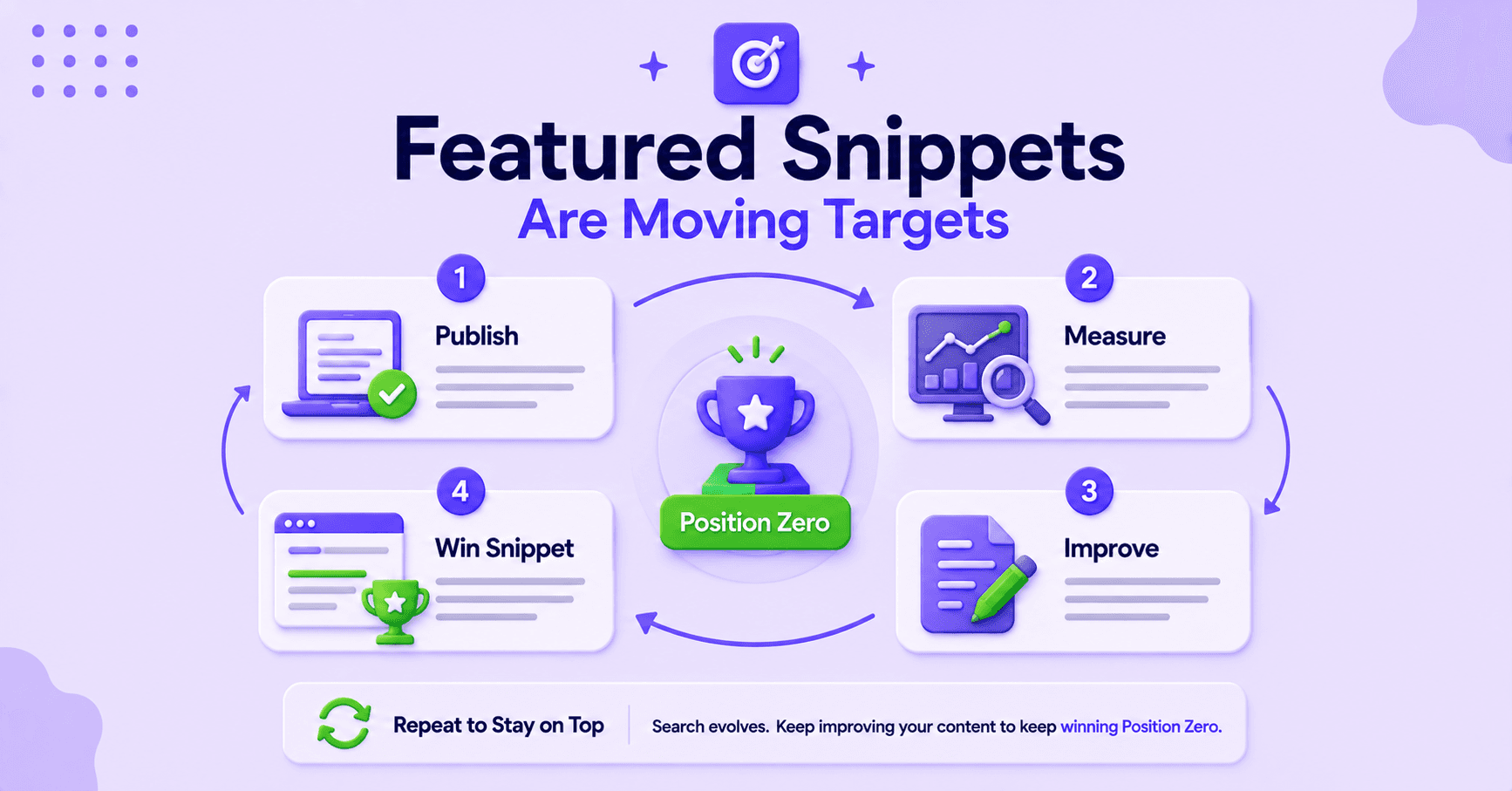
A featured snippet is not a trophy. It is a moving target, and pages that are regularly updated typically remain competitive longer than pages that are published once and forgotten.
Common Mistakes That Kill Snippet Chances
The easiest way to lose a snippet opportunity is by making the introduction too clever. If the page starts with a long story, Google must work harder to find the answer, and readers often lose interest before reaching it.
Another common mistake is targeting a topic that is too broad. A page about marketing is usually too vague, while a page about how to write a welcome email for new subscribers has a much clearer purpose.
Specific topics almost always outperform vague ones.
You must also align your content with search intent. If the body copy does not directly answer the query, Google will likely skip your page.
Technical settings can create problems as well. Accidentally leaving a nosnippet rule in place blocks your content from featured results entirely, and an overly restrictive max-snippet value makes a snippet progressively less likely. Both are easy to flip on by accident inside an SEO plugin.
The third mistake is maintaining stale structure. Updating only the title while leaving outdated headings, examples, and answer blocks in place rarely improves performance.
To stay competitive, ensure the answer block, headings, and supporting examples remain aligned with the current search query and user expectations.
If you want a reality check on how this fits into AI-heavy search results, Are Featured Snippets Still a Thing? is a useful read. It helps reset expectations without turning the entire topic into hype.
FAQs About Featured Snippet SEO in 2026
Below are additional questions that might help you.
Are Featured Snippets Still Worth Chasing?
Yes, featured snippets are still worth chasing if your topic addresses a specific search intent and provides a concise answer. While search formats continue to evolve, featured snippets remain a highly effective way to capture organic traffic and increase click-through rates.
They are particularly valuable on pages where a brief summary serves as an entry point for a more comprehensive discussion, providing a reliable strategy for driving consistent blog traffic.
What Kind of Content Wins Snippets Most Often?
Short definitions, numbered step-by-step instructions, comparison tables, and tightly written FAQ sections win snippets most often. Creating content that directly addresses queries found in the People Also Ask box is a proven method for winning these prime positions.
Pages that answer a single question without unnecessary fluff tend to have the best chance of ranking, as search engines prioritize content that perfectly aligns with the user’s preferred format.
How Long Should a Snippet Answer Be?
Google publishes no exact length for a featured snippet, and you cannot mark a page as one. Write a short, stand-alone answer or a short list as practice, not as a spec. Official: featured snippets.
A click on the box jumps to the extracted section. If you do not want a snippet, use nosnippet or a low max-snippet.
Does Schema Markup Guarantee a Snippet?
No, schema markup does not guarantee a featured snippet. While implementing structured data helps Google better understand your content, excellent structure and clear, readable text remain the primary drivers of success.
If the answer is buried within a long post or lacks clarity, even the best structured data will not save it. Focusing on high-quality, user-focused answers remains the most effective way to improve your overall Google rankings.
Final Thoughts on Featured Snippet SEO
Mastering featured snippet SEO in 2026 is not about relying on cheap tricks. It is about providing absolute clarity to your audience. Give Google one clear question, one concise answer, and a page that remains easy to scan.
That is the entire strategy. Place short, direct answers at the top of your content, utilize clean headings, prioritize fresh information, and maintain a logical structure.
If the answer is obvious before the reader has to hunt for it, you are doing it right. By consistently following these best practices, you create the best possible foundation to improve your overall Google rankings.

Article by
RightBlogger Co-Founder, Ryan Robinson teaches 500,000 monthly readers how to grow online businesses and shares practical SEO tips.


Automated SEO Blog Posts That Work
Try RightBlogger for free, we know you'll love it.
7-day free trial. Cancel anytime.





Leave a comment
You must be logged in to comment.
Loading comments...