Low Domain Rating SEO That Works for New Blogs in 2026
Start with six to ten connected posts, target weak search results, and use firsthand insights to earn relevant links.


Brand-new blogs regularly outrank sites that looked unbeatable on paper. In 2026, that happens more often because Google keeps rewarding real experience, tight topic coverage, and clear answers.
If you’re trying to win with low domain rating SEO, don’t obsess over the score. It’s smarter to treat Ahrefs’ Domain Rating (and Moz’s Domain Authority) as rough link metrics that track your backlink profile. The work that moves them is what matters.
These SEO metrics operate on a logarithmic scale (making it harder to grow as you get higher), and they don’t always reflect a site’s true ranking potential.
What matters is whether a new site can publish pages that deserve to rank, get indexed fast, and earn mentions over time. That shift changes everything, and it starts with the topics you choose.
Key Takeaways
- Target small, specific topics before broad head terms.
- Publish firsthand, useful posts showcasing niche expertise that bigger sites can’t fake.
- Focus link building on mentions and relevant links that send real readers your way.
- Track organic traffic, clicks, rankings, and indexed pages before Domain Rating or link scores.
Low Domain Rating SEO Starts With Winnable Topics
The fastest way to waste a year is chasing giant keywords too early. If the search engine results pages are packed with brands, old domains, and pages loaded with links, move on.
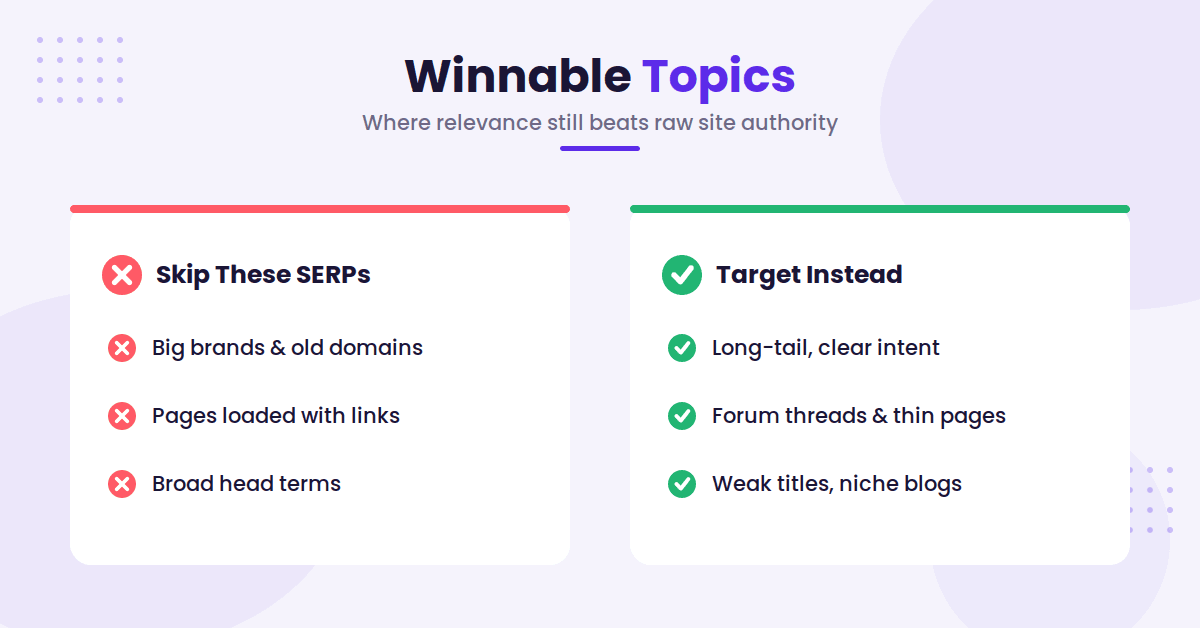
Instead, perform competitive analysis to find results where smaller sites already rank. Forum threads, niche blogs, weak titles, and thin pages are a good sign. Those SERPs matter because they show where relevance still beats raw domain authority.
It also helps to go long-tail first. A new site rarely wins a broad phrase, but it can win a narrow problem with clear intent. This long-tail keyword guide is a good filter for what to chase in your first few months.
Then group those ideas into a small cluster. One pillar page, a handful of support posts, and clear internal linking beat a messy blog every time. For a framework, this topical authority map guide is a solid place to start.
Above all, treat the score as a signal of progress. Google doesn’t rank pages by domain rating score, so don’t let that number decide your next move.
Publish Content Bigger Sites Can’t Fake
Once you have a winnable topic, publish the page a real person would save and share. That means firsthand detail, clear opinions, and proof.
Google’s recent shifts favor firsthand experience. Its helpful content guidance rewards pages made for people by someone who clearly knows the topic, ideally from having actually used or done the thing. That’s good news for a new blog, because real experience is the one thing a bigger, higher-DR site can’t fake well.
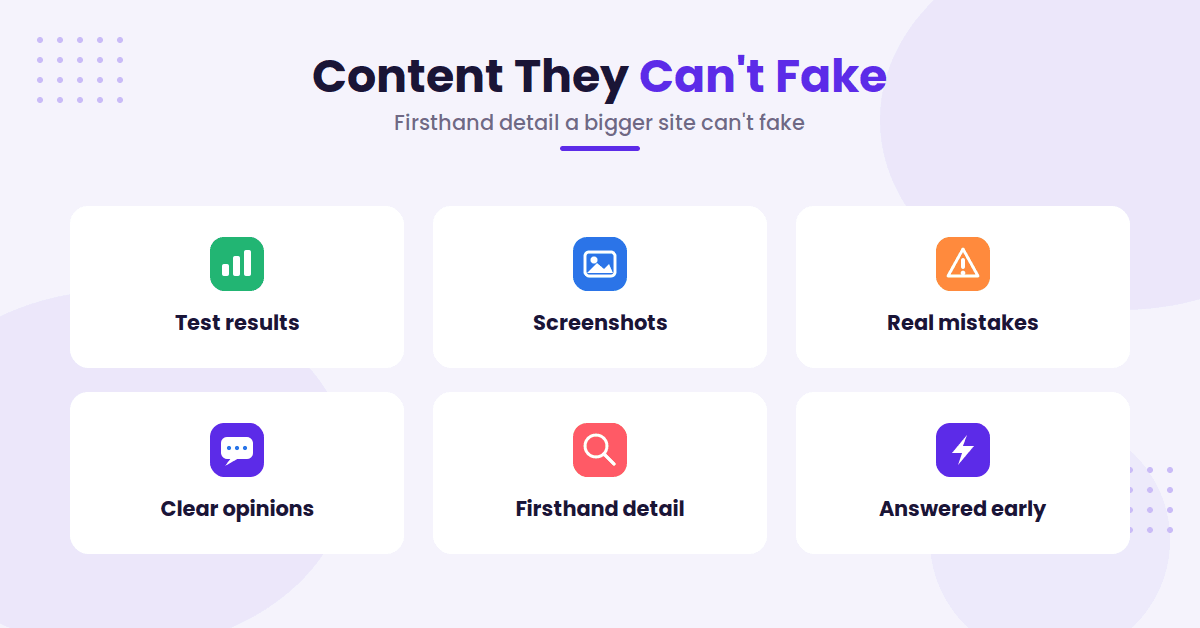
Small posts often rank because they include test results, screenshots, and the mistake that cost real time. Those details make a page feel lived-in instead of recycled.
Formatting should be simple and fast to scan, and the core question gets answered early. Headings match reader intent, and paragraphs stay short. When a repeatable process helps, lean on a practical SEO content strategy so each post has one clear job.
This matters even more with AI Overviews and other zero-click results. When an answer is tight, specific, and quotable, it can still win attention even when the click doesn’t happen right away.
AI can help with research and rough drafts, but the work can’t stop there. A low DR site can’t survive on bland copy. Real edits, examples, and point of view make the post worth ranking.
Build Authority With Links, Mentions, and Solid Technical SEO
Authority still matters, but you can build it in ways a new blog can afford. Start with link-worthy assets: original comparisons, mini case studies, templates, and free tools. Then promote them where the right people already spend time, through simple outreach and by showing up in your niche.
Guest posts, podcast appearances, expert quotes, niche communities, and creator roundups still work, and unlinked brand mentions count too. In 2026, what matters less is a perfect backlink profile and more whether real sites and real people talk about the work. Aim for links from relevant sites, and don’t lose sleep over so-called toxic links; Google says it ignores the spammy ones on its own, so the disavow tool is rarely needed.
A few links from relevant sites do more for a new blog than a big pile of generic ones. The same rule holds for topics: go narrow, build depth, then expand.
Technical basics matter more than many bloggers admit, especially as part of Technical SEO. If Google struggles to find your pages, great content sits unseen.
Keep navigation simple, add internal links as you publish, and submit a clean sitemap. This XML sitemap setup guide helps if indexing is slow.
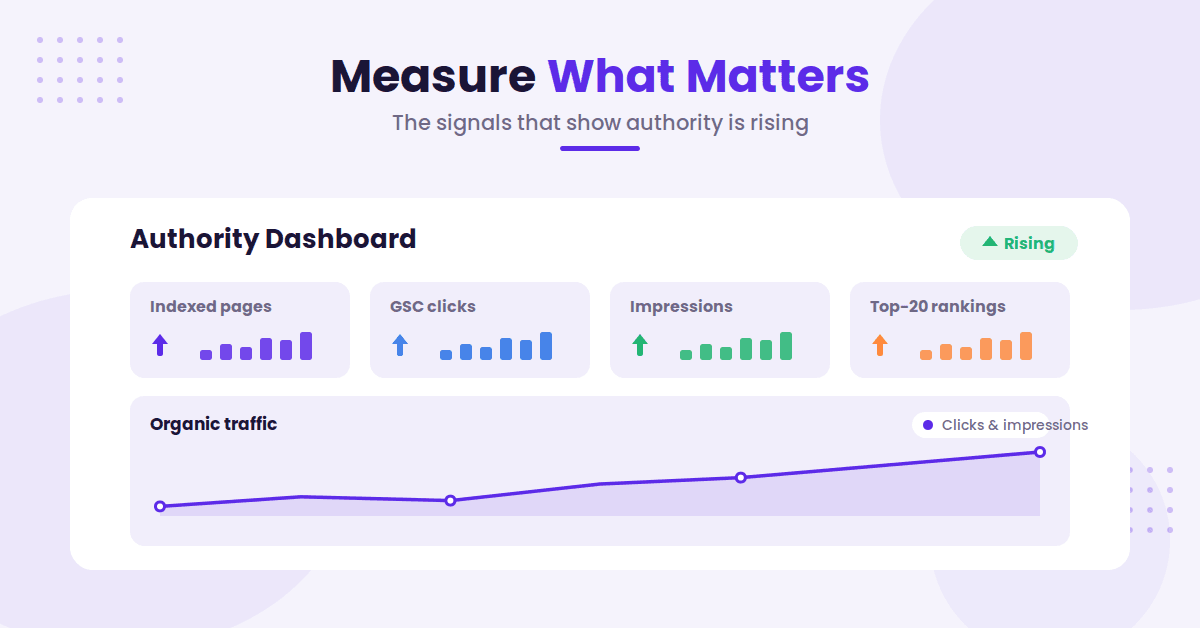
A useful dashboard focuses on indexed pages, Search Console clicks, impressions on target queries, links from relevant sites, and pages breaking into the top 20. When those numbers rise, the plan is working, even before DR catches up. If new posts index slowly, you can manually submit URLs to nudge discovery.
FAQs About Low Domain Rating SEO
A few questions that come up often:
Does Domain Rating Matter for Google Rankings?
Not directly. Domain Rating from Ahrefs is a third-party estimate, separate from Moz’s Domain Authority, and neither is a direct Google signal.
Domain Rating can help spot link gaps, but a page-level score (Ahrefs’ URL Rating or Moz’s Page Authority) is often a better read for a specific article. What matters more is topical fit, page quality, and actual rankings.
How Many Posts Should a New Blog Publish First?
Start with one small cluster, usually six to ten connected posts. That gives Google a clearer topic signal than publishing ten unrelated articles.
Should I Build Links or Publish More Content First?
Do both, but content comes first. A natural backlink profile starts with great content, and promotion works better once there are a few pages worth sharing and linking to.
Final Thoughts on Low Domain Rating SEO
New blogs don’t win by looking big. They win by being sharper, more useful, and easier to trust.
That approach beats stronger domains again and again. Pick smaller battles, publish pages with real experience, and measure progress with clicks and rankings.
Website authority is a byproduct of value. By ignoring the vanity Domain Rating score and focusing on organic traffic, a new blog gradually gains the strength to compete for bigger terms. The score will follow.

RightBlogger Co-Founder, Ryan Robinson teaches 500,000 monthly readers how to grow online businesses and shares SEO tips from his blogging experience.
Automated SEO Blog Posts for Your Site
Research, write, publish, and share from one account.
7-day free trial. Cancel anytime.





Leave a comment
You must be logged in to comment.
Loading comments...