Best LLM SEO Analysis Tools That Are Worth Paying For
AIclicks leads at $49 monthly, while LLMrefs suits agencies and Miniloop automates content production.

Let’s cut straight to it: If I had to pay for just one of the LLM SEO tools out there, I’d pick AIclicks for most bloggers and content creators. It gives me the clearest answer to the one thing that matters now: my AI visibility. Am I showing up inside AI answers or not?
That’s the real split in this market. Some tools help you to write better posts. Others tell you whether ChatGPT, Gemini, Perplexity, and Google AI Overviews are actually surfacing your brand in generative AI results. Both are important, but at different stages of the process.
A quick note on terminology before we dig in: you will see this called LLM SEO, GEO (generative engine optimization), or AI search optimization. They all describe the same goal, getting your content surfaced and cited inside AI answers. So when people search for the best generative engine optimization tools or GEO tools, these are the platforms they mean.
Key Takeaways
- ✍️ AIclicks is my best overall pick for tracking AI visibility.
- 📊 LLMrefs gives the best value if I manage multiple sites or clients, with scalable SEO metrics for high-volume tracking.
- ⚙️ Miniloop is the pick when the bottleneck is actually producing content. Automates the full SEO workflow from keyword discovery to CMS publishing.
- 🔎 Semrush and Ahrefs still matter for keyword rankings, but I wouldn’t buy them only for LLM tracking.
- 🧠 Surfer helps with content optimization, yet it’s not a full AI visibility tool.
Quick Comparison: LLM SEO Tools at a Glance
| Tool | Starting Price | AI Platforms Tracked | Prompt Tracking | Best For |
|---|---|---|---|---|
| AIclicks | $59/mo | Starter: pick 3 engines; higher plans add more (ChatGPT, Gemini, Perplexity, Claude, Grok, Google AIO, etc.) | Yes | Solo creators and bloggers |
| LLMrefs | $79/mo | Multiple AI search engines | Yes (keyword-focused) | Agencies and multi-site managers |
| Miniloop | Custom (free trial) | Rank tracking (not LLM citations) | No | Teams scaling SEO content production |
| Semrush | $139/mo | Google AI Overviews | Limited | Teams already using Semrush |
| Ahrefs | $129/mo | Brand Radar (multiple LLMs) | Limited | Teams already using Ahrefs |
| Surfer | $49/mo | Basic citation tracking | Basic | On-page content optimization |
Prices checked September 2026 against each vendor’s pricing page. AIclicks Starter is $59/mo month-to-month; Ahrefs Lite is $129/mo.
What Makes an LLM SEO Tool Worth Paying For
The table above gives you the quick view. Here is what to actually look for when you are deciding which tool deserves your money.
A good LLM SEO analysis tool should ideally tell you which prompts trigger your brand mentions, which AI search engines include those brand mentions, which competitors beat you, and what source citations those systems seem to trust.
That’s why the market is changing so fast. Classic rankings still matter, but discovery now happens inside generative AI results too.
You also want stable data. Random one-off prompt checks are fun, but they don’t help you plan content. You need prompt clusters, share of voice trends, competitor gaps, and at least some location tracking. If you publish for clients or multiple sites, that becomes even more important.
One more thing: content structure still counts. If your post is messy, thin, or vague, no tracking tool can save it. That’s why it’s still important to pay attention to strategy and structure, including semantic relevance and topical authority. For more on this, check out our guide to Generative Engine Optimization (or our GEO vs SEO breakdown if you want the framework first).
The LLM SEO Tools I’d Actually Consider
AIclicks Is the Best Overall Buy
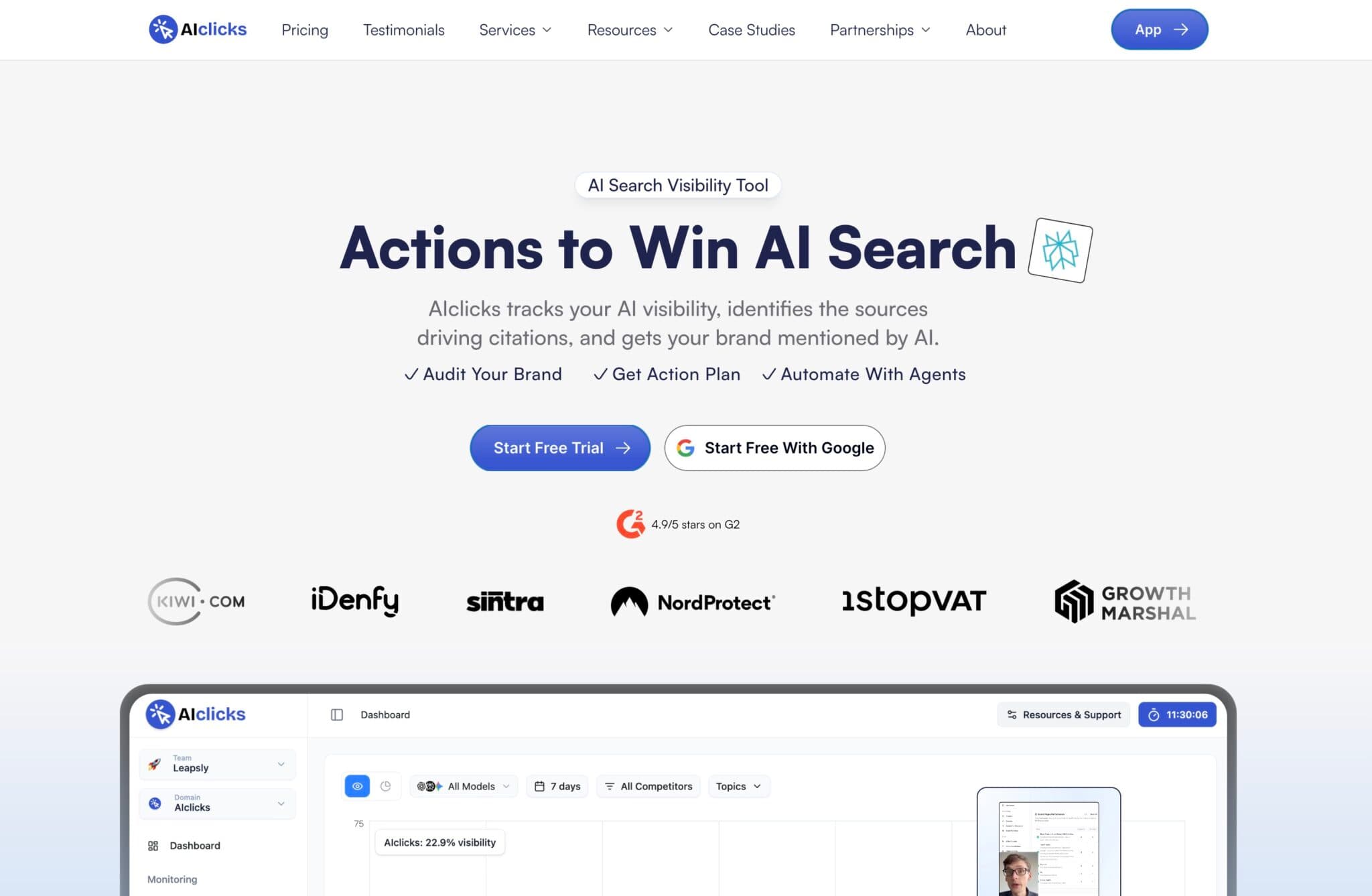
For most bloggers, AIclicks looks like the best balance of focus, usability, and price in LLM tracking software. It has entry pricing around the affordable small-business range (from $59/month on monthly billing; annual is cheaper — confirm current rates on AIclicks pricing), and the feature set is strong enough to justify it.
What I like most is the prompt-level view with prompt tracking. You can see which questions lead to mentions and source citations across AI search engines like ChatGPT, Perplexity, Gemini, Claude, Grok, and Google AI Overviews. That’s useful because it turns “AI visibility” into something concrete.
I also like the geo auditing and competitor tracking. If you’re trying to grow in one specific country first, that matters a lot.
LLMrefs Is the Smart Pick for Agencies
If I ran several client sites, I’d lean toward LLMrefs. Pricing starts at $79 per month, and you can try it out for free.
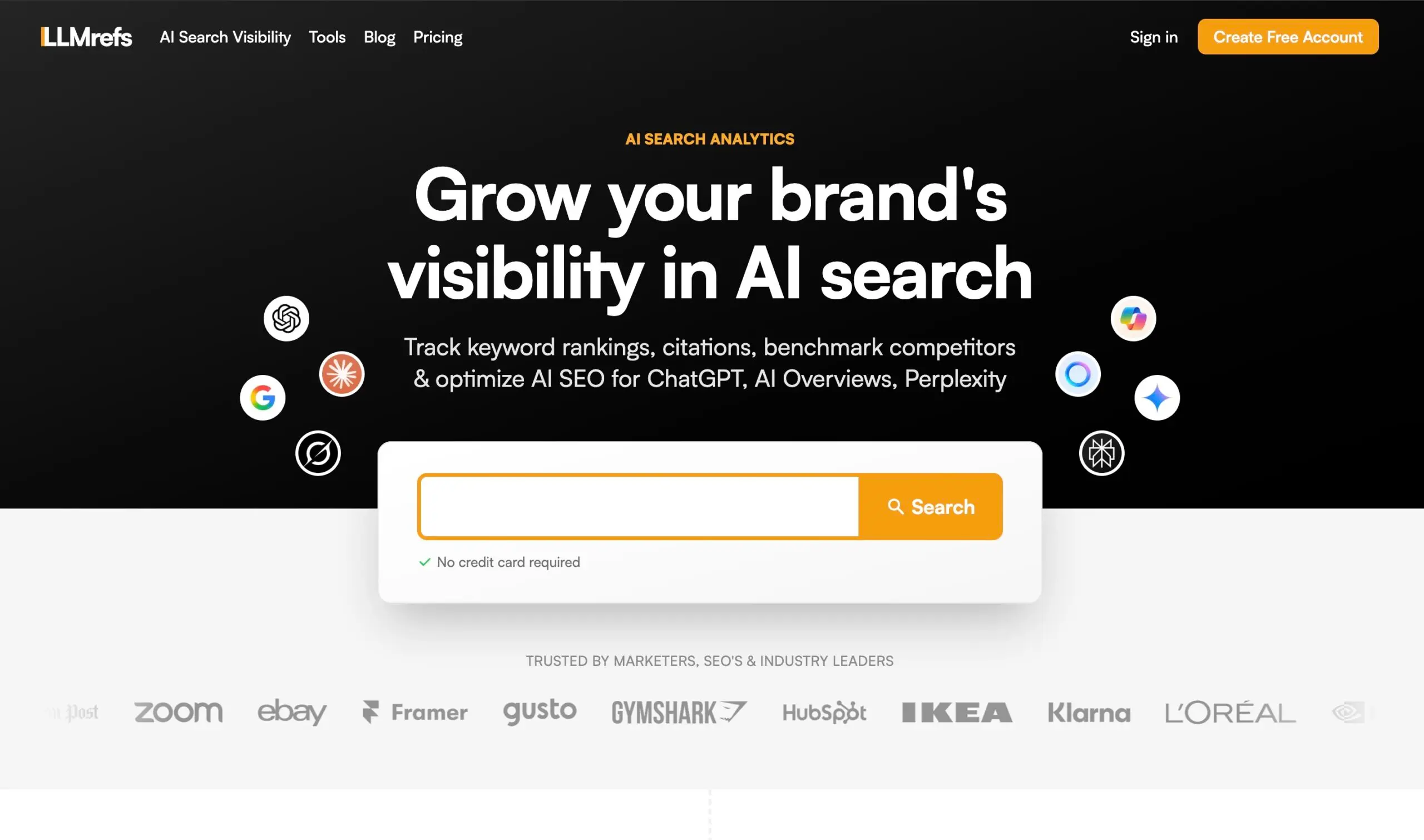
Its biggest strength is scale. Instead of testing random prompts manually, it builds keyword-focused prompt sets and tracks share of voice and keyword rankings across AI search engines. This offers you cleaner reporting and less guesswork.
For a solo blogger, it’s probably more than you need. For an agency, it makes a lot of sense.
Miniloop Automates the SEO Workflow End-to-End
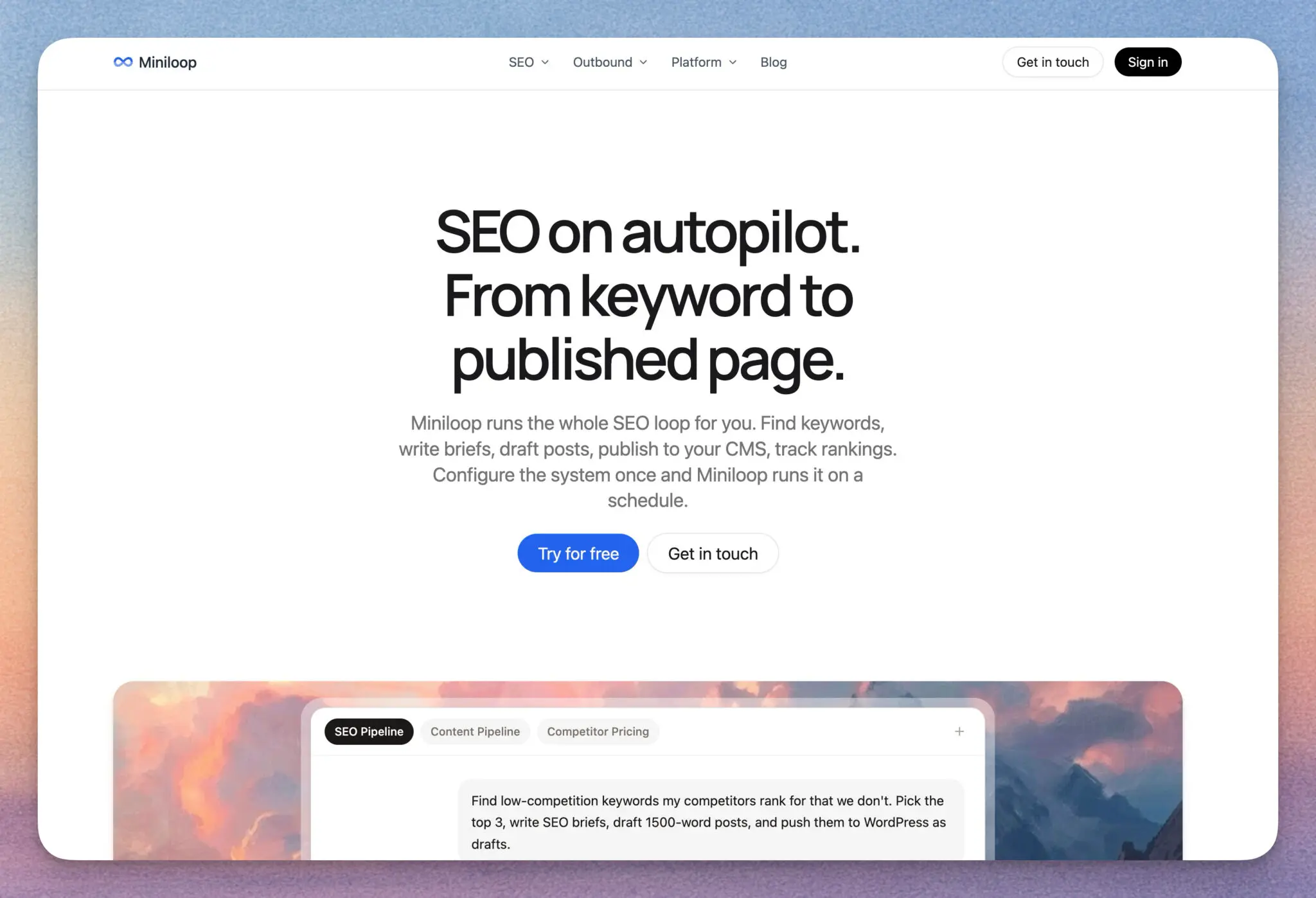
Miniloop is the odd one out on this list. It’s not a visibility tracker. It’s an AI SEO automation platform that handles the workflow feeding those trackers: keyword discovery, brief generation, draft writing, CMS publishing, and rank tracking on a schedule.
The setup pulls keyword opportunities from your existing stack (Ahrefs, Semrush, or Search Console), then generates SEO content briefs and full drafts that push directly into WordPress, Sanity, Contentful, or Webflow. Daily rank checks run in the background with Slack alerts on movement, and the system suggests internal links across your blog as new posts go live.
Pricing isn’t listed publicly (you start with a free trial or contact sales). The pitch is that it lets a small content team ship five drafts a week instead of one. If you’re already paying for Ahrefs or Semrush and want to scale production without hiring, this is the gap it fills. If your goal is to find out whether ChatGPT is citing your brand, you want one of the trackers above instead.
Semrush, Ahrefs, and Surfer Still Have a Place
I wouldn’t ignore the old guard. Semrush and Ahrefs still do important work for keyword research, backlinks, and content opportunities that drive organic search traffic. If you already pay for one of these, absolutely use its AI features or build a hybrid SEO stack with dedicated LLM tracking software instead of rushing into a second subscription.
Still, I wouldn’t buy either one just for LLM SEO. Their AI tracking feels more like an add-on than the main event.
Surfer (SurferSEO) is more about on-page optimization, though it does offer an AI tracker too.
Tip: If your real problem is weak structure and missing subtopics, fix the article with an AI SEO Editor or improve answer-ready formatting with an Answer Engine Optimizer tool before paying for a tracker.
How to Actually Do LLM SEO (Step-by-Step)
Knowing which tools exist is one thing. Knowing what to do with them is another. Here is a simple workflow you can follow whether you use a paid tool or start with manual checks.
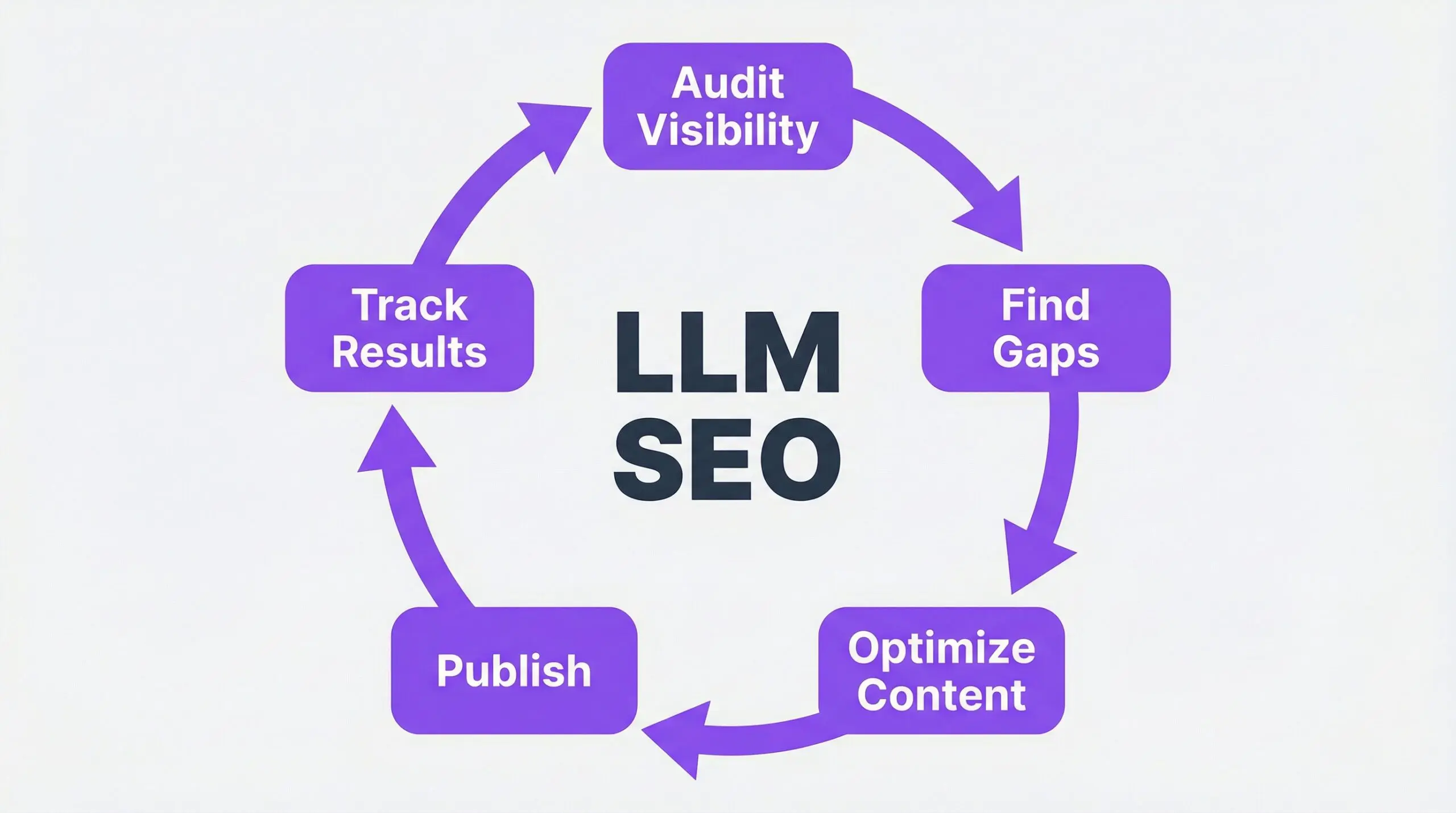
Step 1: Check Your Current AI Visibility
Open ChatGPT, Perplexity, or Google AI Overviews and search for your main topics. Are you being mentioned? Are competitors showing up instead? For a structured version of that check, run the 10-minute audit in our guide to getting cited by ChatGPT; it scores three prompts and tells you which fix to start with. Before paying for a tool, you can also surface likely-AI-Overview queries for free inside your own Google Search Console: here’s how to find AI Overview keywords in GSC. And if you already use RightBlogger, check the AI Brand Monitor first: it runs your buyer-intent prompts on ChatGPT, Gemini, Perplexity, and Claude and is included on every plan, so your baseline visibility read is already paid for. If you want a dedicated standalone tracker on top of that, that’s where a tool like AIclicks pays for itself.
Step 2: Identify Your Content Gaps
Look at the prompts where competitors appear and you do not. These are your gaps. Pay attention to which sources AI cites in its answers, because that tells you what format and depth it trusts.
Step 3: Fix Your Content Structure
AI models pull from content that answers questions directly. That means clear headings, short paragraphs, direct answers in the first sentence of each section, and FAQ sections that match real queries. Structured data helps too, since it makes your facts easy for models to extract. An Answer Engine Optimizer can help speed this up.
Step 4: Publish and Distribute
Publish your optimized content and repurpose it across platforms. The more places your content appears with consistent messaging, the more likely AI models are to recognize and cite your brand. Tools like RightBlogger’s autoblogging planner can automate the publishing side so you can focus on quality.
Step 5: Track and Iterate
Check back in your LLM SEO tool after a few weeks. Are your mentions increasing? Are new prompts triggering your brand? Use that data to decide which content to update next. This is not a one-time fix. It is an ongoing loop. RightBlogger’s Site Agent can handle parts of it for you, refreshing low-CTR meta descriptions and adding internal links across your published posts on a recurring schedule.
Which One Is Actually Worth It?
If you follow the workflow above, you need a tool that supports every step: visibility checks, prompt tracking, competitor gaps, and progress over time. For most creators, AIclicks is the paid tool I would buy first.
It solves the biggest problem with LLM SEO tools: vague reporting. Instead of a soft AI visibility score, you get concrete data on brand mentions, competitor gaps, sentiment analysis, and performance across zero-click searches.
You see exactly which prompts trigger your brand and which ones don’t, so you know where to focus your content efforts next. That is the kind of clarity that makes a subscription worth paying for.
LLMrefs is a good alternative, especially if you need multi-project reporting. And if your actual bottleneck is producing the content that gets cited (not measuring whether you’re cited), Miniloop sits in a different category entirely. It automates the SEO workflow itself, so a tracker has something to track.
Frequently Asked Questions About LLM SEO Tools
Is Semrush Enough for LLM SEO?
It can be enough if you already use it and only want basic AI visibility, such as in Google AI Overviews. If LLM tracking is your main reason to subscribe, I’d suggest you pick a more focused tool.
Do I Need a Separate Tool If I Already Use Surfer (SurferSEO)?
Usually, yes. Surfer helps you improve the page itself through on-page SEO, technical SEO, and structured data. It focuses on long-tail keywords and NLP term coverage for better content optimization. It does offer a tracker to check citations, but it’s not as advanced as dedicated tools like AIclicks.
What’s the Cheapest Tool Worth Trying First?
LLMrefs costs from $79/month and offers a free tier. For most solo creators, though, AIclicks is the better first paid pick: Starter is $59/month on monthly billing, and yearly billing is cheaper (AIclicks advertises up to 29% off — confirm the current annual rate on AIclicks pricing).
Final Thoughts
Most LLM SEO tools sell promise. The ones worth paying for sell clarity.
If you’re spending real money on LLM SEO tools, you want proof that boosts organic search traffic and keyword rankings, prompt data, competitor gaps, and clear next steps for Answer Engine Optimization in generative AI results. Quality still matters, with E-E-A-T and on-page SEO at the core.
Right now, AIclicks is the one I’d trust first, and LLMrefs is the backup pick when scale matters more than simplicity.

Article by
RightBlogger Co-Founder Ryan Robinson teaches 500,000 monthly readers how to grow online businesses and shares practical SEO advice.



Automated SEO Blog Posts That Work
Try RightBlogger for free, we know you'll love it.
7-day free trial. Cancel anytime.





Leave a comment
You must be logged in to comment.
Loading comments...