How to Promote Embeddable Tools and Earn Natural Backlinks
A focused, useful tool earns placements when its embed is effortless and targeted outreach puts it before relevant publishers.

Securing embeddable tools backlinks is rarely the result of simply launching a shiny new asset. Instead, these links are earned through a strategic link building plan centered on genuine utility. When you build something that provides real value to another website, you increase the likelihood of adoption while setting the foundation for sustainable organic traffic to your own site.
That goal sounds simple, but many teams miss the mark. They launch a calculator, widget, or mini tool and hope links appear on their own. They rarely do.
The real win comes from making your tool inherently useful, frictionless to embed, and easy for other publishers to talk about.
If you want to earn natural backlinks from embeddable tools, you must think like a publisher and a product builder at the same time. That combination is what turns a good idea into an essential resource that people actually want to keep on their websites.
Key Takeaways for Embeddable Tools Backlinks
- The most effective backlinks from embeddable tools are born from genuine utility, not marketing hype. If your tool solves a specific, recurring problem, users are far more likely to host your widgets and embeds on their own websites.
- A successful strategy prioritizes backlink quality over sheer quantity, ensuring that every earned link provides long-term authority to your site’s link profile.
- A strong embed also requires low friction. If the code is simple to copy, the attribution remains clear, and the tool performs perfectly on mobile devices, the path from initial interest to successful implementation becomes much shorter.
- Promotion is equally vital because a tool page by itself is often overlooked. When you pair a functional tool with targeted outreach, high-quality supporting content, and a clean, easy-to-use embed box, it begins to travel across the web and earn valuable links naturally.
Build a Tool People Want To Keep On Their Site
The first step is not promotion. It is fit.
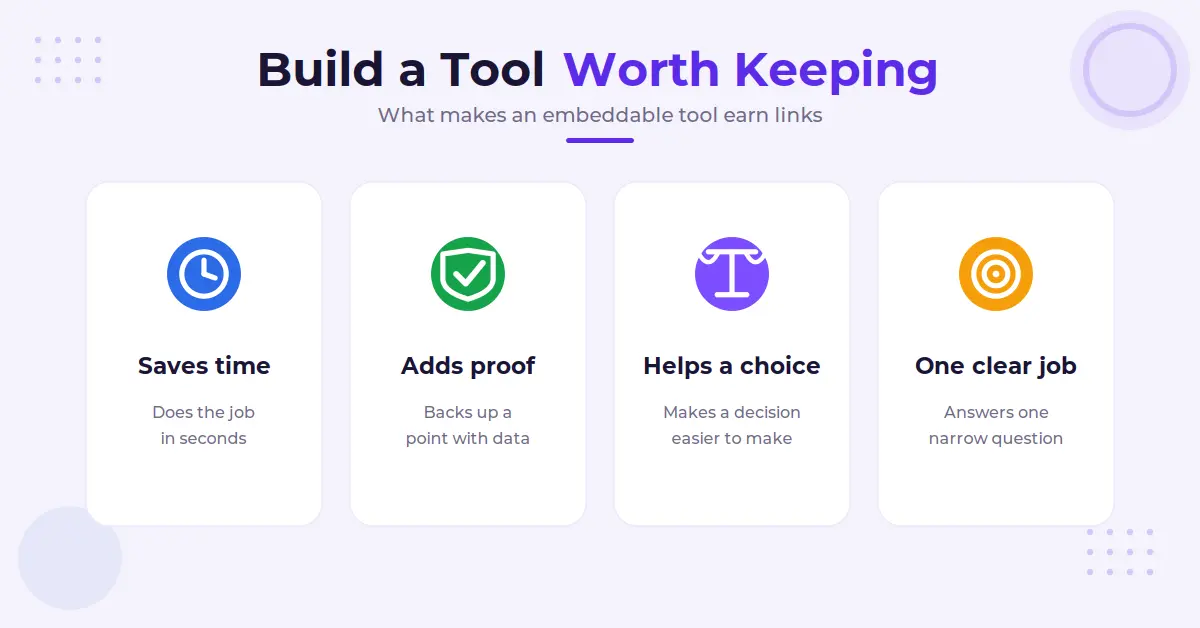
A tool earns links when it saves time, adds proof, or helps the reader make a choice. Think of a calculator, scorecard, checklist generator, comparison widget, or interactive chart. The tool should answer one narrow question fast.
That narrowness is essential for link relevance. A broad tool tries to do too much and often feels forgettable.
Conversely, a focused tool does one thing well, making it much easier for a site owner to place it beside a relevant post, product page, or one of those high-value resource pages. When your tool provides genuine utility, it is far more likely to earn editorial backlinks from sites that hold significant domain authority.
You also want a clear reason for someone to show it off. If the output looks good in a blog post, sales page, or newsletter, it gets shared more often. If the result is bland, the embed will likely die in a draft folder.
I like to ask one simple question before launch: Would I still want this tool if I had no SEO goal at all? If the answer is yes, you are on the right track to creating something that earns links naturally.
This is where a tool page and a content engine start to work together. If your team needs help building supporting pages around the tool, RightBlogger’s AI writing and SEO toolkit can speed up the drafts without turning the voice into mush.
Make the Embed Code Frictionless
A lot of embeddable tools fail because the embed section is hidden, clunky, or awkward. If people have to hunt for the code, you have already lost some of them.
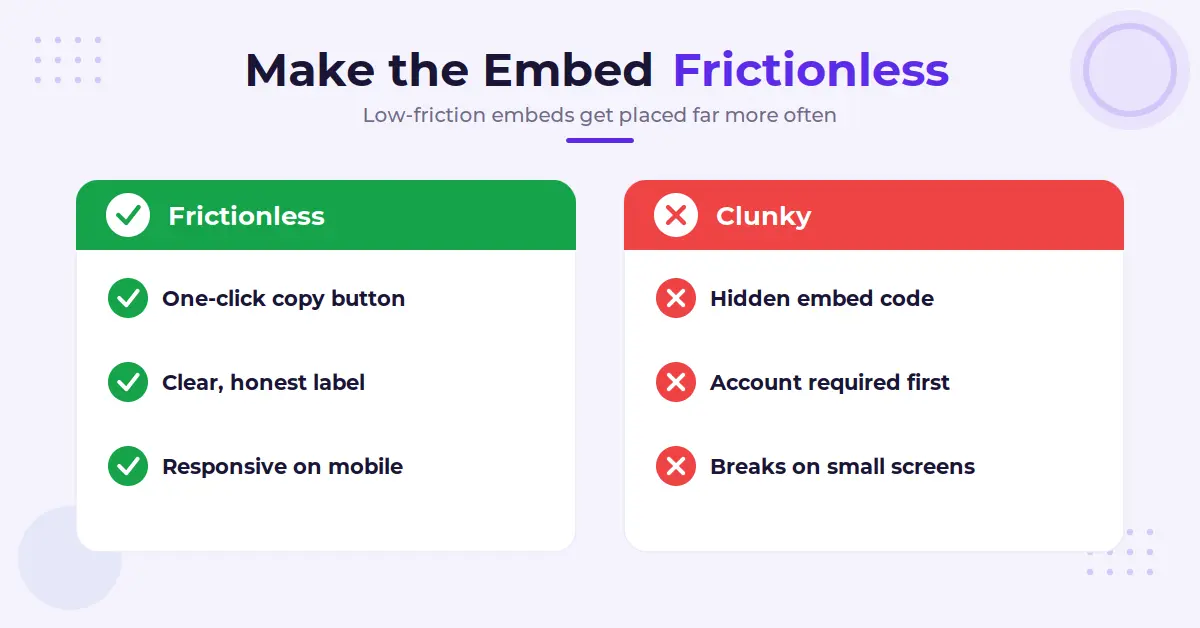
Put the embed box where it is easy to spot. Use a clear label, a copy button, and a short line that explains what people get.
Do not wrap it in extra steps or ask for an account before they can copy the code. Do not make them guess whether the tool is responsive.
The best embed code is boring in the right way. It should feel like a copy, paste, publish moment, not a mini project.
If you want a good model for that kind of setup, this roundup of content types that earn backlinks puts interactive assets in the same bucket for the same reason. The pattern is simple: the less effort it takes to place the tool, the more places it lands.
The embed itself should be responsive, lightweight, and clean. If the tool breaks on mobile or stretches awkwardly inside a content block, publishers will skip it. A nice-looking widget is helpful, but a reliable one is what actually gets used.
Attribution also needs to be plain and fair. Providing a default credit line allows you to influence the anchor text naturally, but it should remain unobtrusive to ensure high backlink quality.
Remember that while you ideally want followed links for SEO authority, some platforms may default to nofollow links for embedded content. Keep the credit line concise so that publishers are comfortable keeping it on their site rather than stripping it out. Clear, transparent credit usually works much better than clever or overly aggressive branding.
Find the Right Places To Promote It
Promotion is where most teams either go too broad or too quiet.
Blast every channel at once and you rarely get traction; launch quietly with no distribution and the tool sinks. Aim instead for a small set of places where your tool matches the audience’s daily work. Viewing this phase as a proactive link building strategy allows you to be more intentional about where your tool lives.
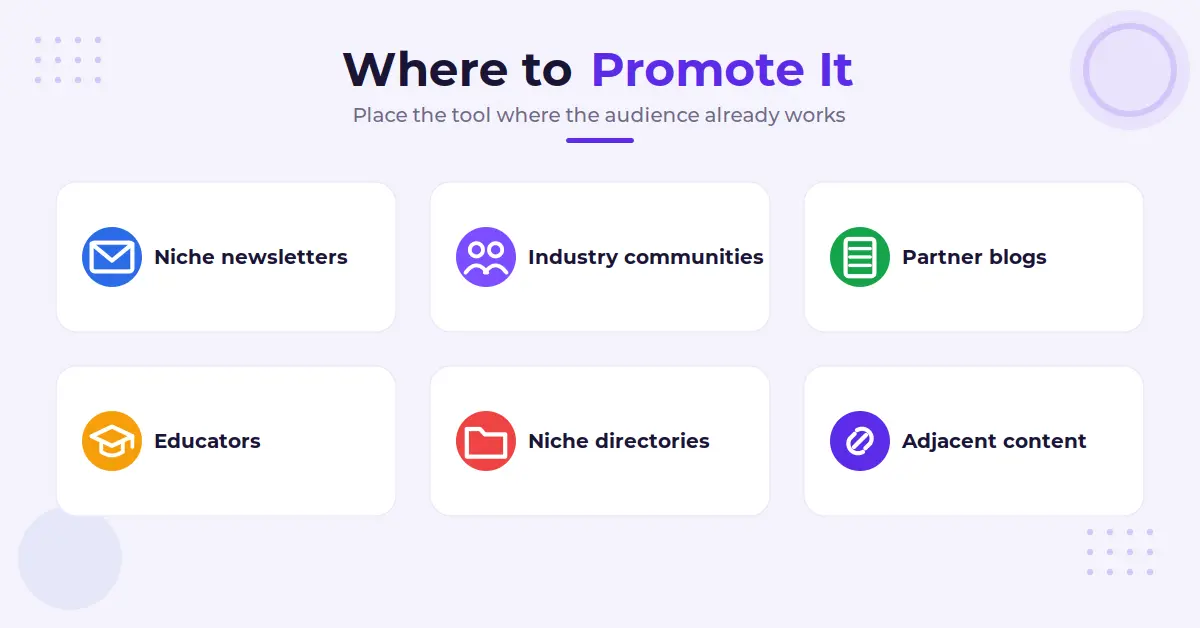
Start with the people who already care about the problem. This includes niche newsletters, industry communities, partner blogs, and educators who teach the topic. Additionally, hunt for niche directories that host specific tool types.
By getting your tool featured in these focused spaces, you increase the likelihood of gaining high-quality, relevant traffic. This is also one of the few link plays that works from a standing start, which makes it worth a look if you are still building authority on a newer site. This approach also helps diversify the number of unique referring domains pointing to your site, which is a significant factor in strengthening your overall search authority.
If the tool helps their audience do something faster, they have a genuine reason to share it.
This is also where a solid asset strategy helps. A useful guide on linkable assets keeps circling back to the same truth: original assets earn more attention when they are easy to reuse and easy to refresh. That is the right mindset for embeddable tools too.
You can also promote through adjacent content. A comparison post, a how-to article, or a use-case page can introduce the tool in a more natural way than a cold launch announcement. The tool gets context, and the reader gets a reason to trust it.
If you are running a broader content operation, an automated SEO and publishing system can help keep those supporting pages moving without slowing the team down.
The goal is not to shout everywhere. It is to place the tool where it feels useful, then let the utility of the tool do the rest.
Turn Outreach Into Helpful Pitches
Outreach for embeddable tools should feel like a useful heads-up, not a plea. The same rules that make ordinary backlink outreach work apply here, except you are handing over something they can use rather than asking for a favor.
Unlike guest blogging, which requires writing unique content for every site, or chasing HARO backlinks, which can be time-consuming and unpredictable, promoting a tool is highly scalable. You build the asset once and leverage it across dozens of relevant sites.
Start by choosing the right targets. Writers, bloggers, educators, analysts, and niche publishers are often better fits than generic link prospect lists. They care about resources that help their readers, which means they prioritize utility.
When you reach out, keep the message tight. Explain what the tool does, who it is for, and why it might help their audience.
If there is a specific article, resource page, or newsletter where the tool fits, mention it. That shows you did the homework.
A good pitch does not beg for a link. Instead, it positions the tool as a valuable addition that earns backlinks naturally. Your goal is to help the publisher think, This tool truly belongs here.
I have seen better reply rates when the embed code is included right in the message body. That removes the awkward back-and-forth. If they like the tool, they can act on it while the idea is still fresh.
A line like this is usually sufficient: I built this for readers who need a quick way to compare options, and I thought it might be a helpful addition to your resource page. It is plain, direct, and builds trust.
Also, do not stop after one round of outreach. If the first person says no, that is fine. A polite decline can still show you where the tool is weak or where the angle needs a sharper fit to secure quality backlinks in the future.
Create Supporting Content Around the Tool
A tool page alone rarely carries the whole job.
You need surrounding content that gives the tool more paths into search, social, and outreach. Think use-case articles, FAQ pages, examples, comparison posts, and launch notes.
Each piece gives the tool another reason to be discovered, while effectively spreading link equity from your primary tool page to other important sections of your site. This holistic approach to content helps improve overall search engine rankings for related keywords, signaling to Google that your site is a comprehensive authority on the topic.
This is where the tool stops being a standalone asset and starts acting like a small content hub. One page answers the main question, while the others answer the follow-up questions people always have.
You can also make the support content specific by writing for different buyer stages. A beginner post can explain the problem, a mid-funnel post can show a comparison, and a deeper post can show how to use the output inside a blog post, sales page, or report.
If you are moving fast, use RightBlogger’s content creation tools to draft those support pieces without losing control of the final wording. That matters when you need quantity, but you still want the pages to sound like they belong to the same brand.
The nice thing about supporting content is that it compounds. One tool can feed several posts, and those posts can point back to the tool. Then, the tool page looks less like a one-off and more like a resource worth citing.
Measure More Than Backlinks
Backlinks matter, but they are not the whole story.
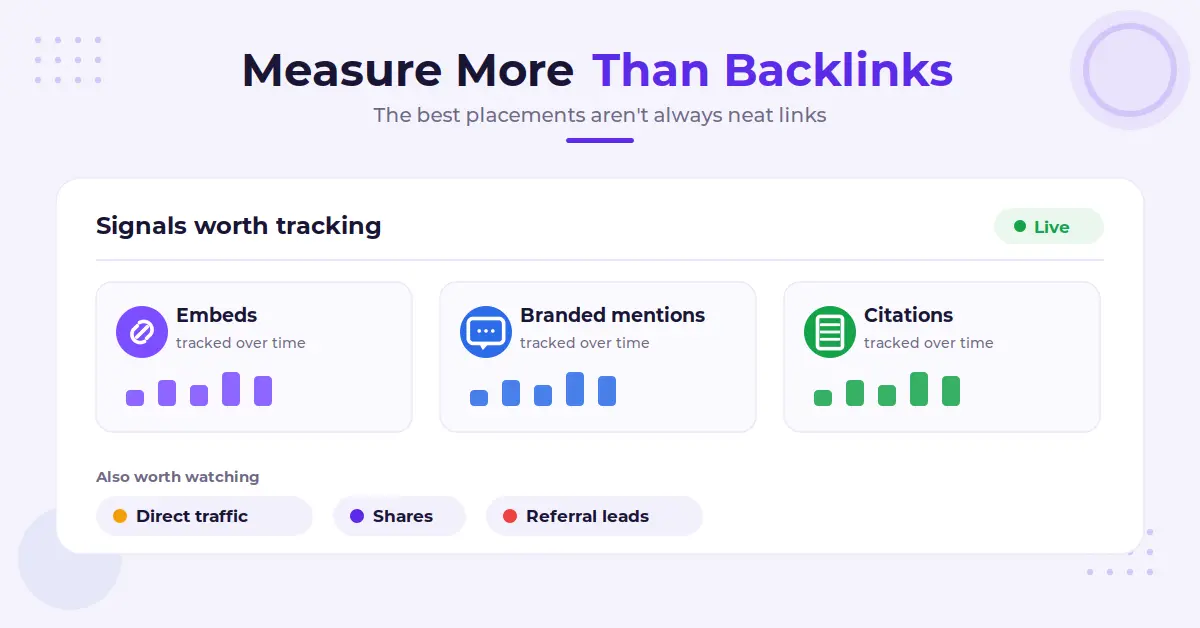
A good embeddable tool can earn embeds, branded mentions, direct traffic, shares, citations, and referral leads. If you only watch backlink counts, you miss the bigger picture.
That matters because some of the best placements do not show up as neat little link wins.
A publisher might embed the tool without a strong anchor. A newsletter might mention it by name.
A creator might screenshot it and recommend it in a thread. Those moments still move the brand forward.
Treat embeds, citations, downloads, and unlinked mentions as real outcomes in their own right. A reusable asset earns attention in more formats than a link report can capture, and judging it on links alone will make a successful tool look like a failure.
To gain a complete understanding of your tool’s success, use a backlink analysis tool to track your progress. Watch authority score, domain rating, and the count of referring domains to gauge the impact on your overall link profile.
Beyond those technical metrics, track the pages that host your tool, the anchor text variety, the referrals that come from those placements, and the searches that start using your brand name. These signals tell you whether the tool is earning genuine attention or just collecting shallow links.
If the individual links are weak but the embeds are strong, you may still have a winner. The goal is not to force one metric. The goal is to see the real value your tool creates.
Common Mistakes That Kill Link Earns
A weak tool cannot be rescued by a loud launch.
- If the tool is too generic, people will not remember it.
- If the page is messy, people will not trust it.
- If the embed code is hidden, people will not use it.
Small cracks like that kill the chance for natural backlinks fast.
Another common mistake is over-branding. A giant logo block, a forced credit line, or a clunky pop-up can make the tool feel like an advertisement. Publishers want something useful for their readers, not a promotional asset they need to babysit.
You must also avoid practices that look like paid links or excessive sitewide links, as these can trigger spam factors that penalize your domain authority. If your tool ends up appearing on low-quality sites, webmasters may eventually feel the need to disavow links, which defeats the purpose of your outreach efforts. Focus on maintaining high standards for where your tool is hosted from the very beginning.
Stale tools also lose steam. When the output depends on fresh data, keep it updated.
Refresh the examples whenever they start to feel dated, and revisit the surrounding article if it has aged. Old assets get passed over, even when the functionality of the tool itself is fine.
Do not ignore mobile either. A tool that looks great on desktop but breaks on a phone is dead weight. Many publishers review assets on mobile first, and if the experience feels off, they will move on to something else.
One final trap is thinking promotion can fix a bad fit. It cannot.
If the tool does not solve a real problem or fit into a common publishing use case, outreach will feel like an uphill battle the whole time. Focus on quality and utility, and the natural link growth will follow.
Frequently Asked Questions
Here are a few additional questions you might have about earning embeddable tools backlinks.
How do I know if my tool is a good candidate for earning backlinks?
A tool is a strong candidate if it solves a narrow, recurring problem and provides genuine utility to a specific audience. Before launching, ask yourself if you would use the tool even without an SEO goal; if the answer is yes, it is likely valuable enough to earn natural backlinks.
Why is the embed code design critical to my link building strategy?
Embed code that is hidden, clunky, or requires account registration creates friction that discourages publishers from using your tool. The best embed process is simple and transparent, allowing users to copy, paste, and publish your widget in seconds without additional obstacles.
Should I prioritize followed or nofollow links for my embeddable tools?
While followed links are preferred for SEO authority, many platforms may default to nofollow links for embedded content, which is perfectly acceptable. Focus on getting your tool placed on relevant, high-quality websites, as the brand visibility and natural traffic from those placements provide long-term value beyond just the link attribute.
How can I measure the success of an embeddable tool beyond backlink counts?
You should track broader engagement metrics, such as direct traffic, branded mentions, and the variety of domains that host your tool. Sometimes the most valuable placements appear as citations or shares rather than traditional links, so look for a combination of signals that confirm your tool is providing real utility.
Final Thoughts on Embeddable Tools Backlinks
The easiest way to think about embeddable tools backlinks is this: build something useful, make it easy to copy, then put it in front of the right people. That simple sequence does more than a generic link campaign ever will.
When a tool solves a real problem and feels painless to embed, the backlinks show up as a side effect of usefulness. That is the part many teams miss. They focus on the link and forget the reason someone would place the tool on their page in the first place.
Furthermore, if your tool allows for user input or customization, it can serve as a form of valuable user-generated content that naturally attracts more backlinks over time.
If you fix the product, the embed box, and the promotion plan, the links stop feeling forced. They start to look like what they should be, which is a natural result of building something truly worth sharing.

Article by
RightBlogger Co-Founder Ryan Robinson teaches 500,000 monthly readers how to grow an online business and is a recovering side project addict.


Automated SEO Blog Posts That Work
Try RightBlogger for free, we know you'll love it.
7-day free trial. Cancel anytime.





Leave a comment
You must be logged in to comment.
Loading comments...