Rank for Long Tail Keywords Using AI Blog Tools (Any Niche)
Build a repeatable workflow to find winnable phrases, draft useful posts, and grow traffic with linked content clusters.


If you feel like you are writing your heart out and Google still ignores you, you are not alone. A lot of bloggers keep targeting broad keywords and wonder why nothing ranks.
The switch happens when you build a system around AI blog writing tools for long tail keywords. Once that system is in place, posts in tiny subtopics start climbing into the top 10 and pulling in super-targeted readers who actually convert.
This post walks you through the exact process that works across different niches, from finding long tail keywords, to feeding them into AI tools, to hitting publish on content that can rank and get traffic for months or years.
Why Long Tail Keywords Matter More Than Big Keywords
Long tail keywords are longer, very specific phrases like best gluten free bread machine recipes for beginners instead of bread recipes.
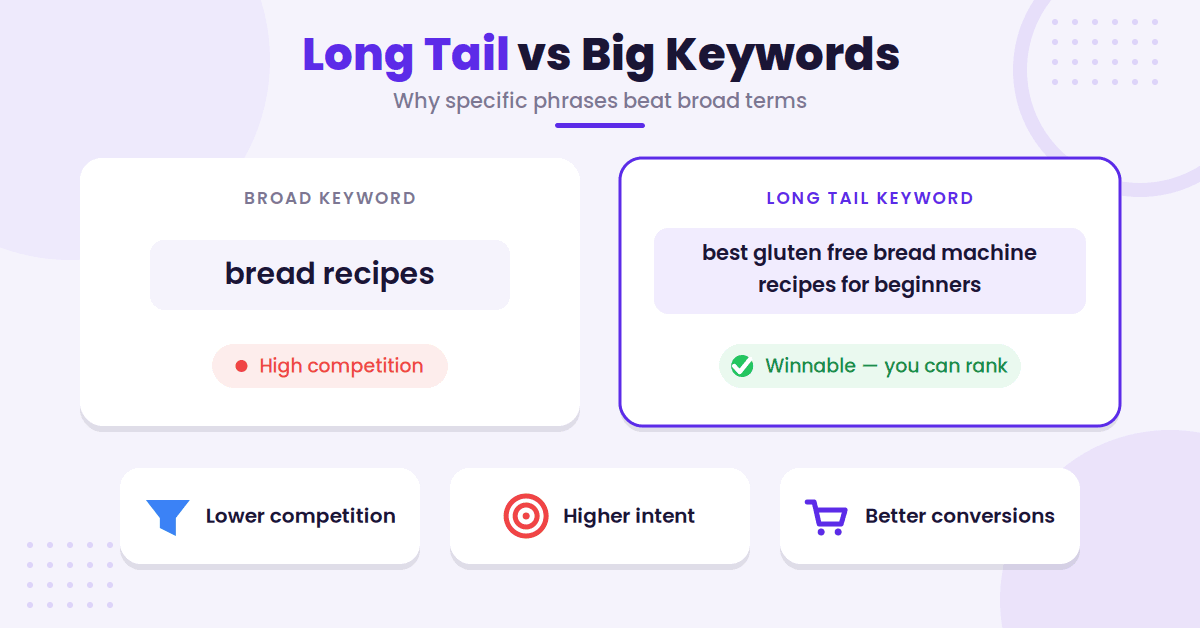
Here is why they matter so much for bloggers:
- Lower competition: Fewer sites target them, so you can actually rank.
- Higher intent: People who search long phrases know what they want.
- Better conversions: Those readers are closer to buying or subscribing.
For a deeper dive into examples, this long-tail keywords guide is a great place to start. It shows how a vague keyword turns into dozens of specific search terms that are actually winnable.
Once you stop chasing trophy keywords and focus on long tails, your traffic graphs finally start to look interesting.
Step 1: Find Long Tail Keywords In Any Niche
Before AI can write anything useful, you need the right inputs. That means you need a steady stream of long tail ideas.
Here is how I usually do it.
Start With an AI-Powered Keyword Tool
The best tools give you volume, difficulty, and variations in one place. An AI tool such as RightBlogger’s free keyword research tool makes this easy.
A basic workflow:
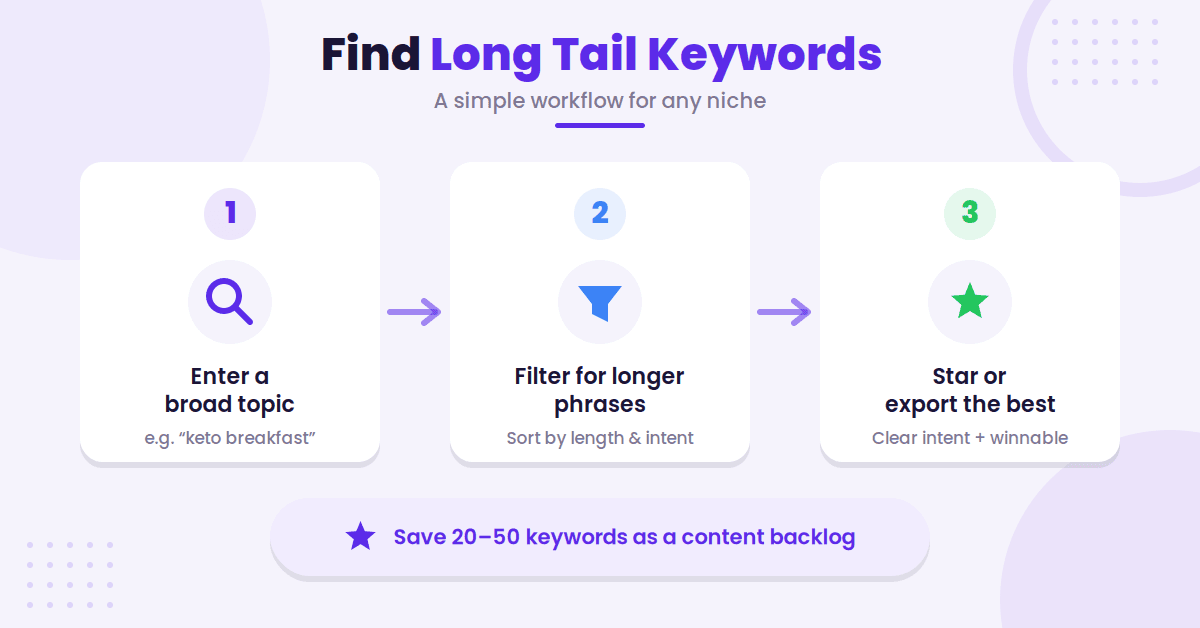
- Enter a broad topic, like keto breakfast or email newsletter ideas.
- Sort or filter for longer phrases.
- Star or export the ones that:
- Have clear search intent.
- Match something you can actually write about.
- Have keyword difficulty that is not insane.
You can do this for any niche: gardening, SaaS, parenting, you name it.
Use Specialized Long Tail Generators for Extra Ideas
Sometimes you want even more depth or angle ideas. That is when a dedicated long tail tool helps. Two that work well:
- RightBlogger’s free keyword research tool, useful for quick seed to ideas research.
- Free Long-Tail Keyword Generator (AI), handy when you want volume and difficulty next to each phrase.
There is no need to obsess over the numbers. Just look for patterns:
- Questions people keep asking.
- Very specific situations or problems.
- Phrases that clearly look like someone is ready to act.
Save 20 to 50 keywords at a time and treat that list like a content backlog.
Step 2: Turn Each Keyword Into a Smart Outline With AI
Once you have a list of long tail terms, run each one through AI to turn it into an outline. This is where AI tools really start paying off.
Here is what to ask the AI to do for each keyword:
- Confirm or clarify search intent.
- Suggest a working title.
- Create an outline with H2s and H3s that match the search.
- Suggest 3 to 5 related subtopics or supporting questions.
For example, if the keyword is keto breakfast ideas for busy moms, ask AI for:
- A title that clearly mentions the keyword.
- Sections like What makes a keto breakfast?, Quick grab-and-go options, and Prep the night before.
- A short FAQ that aligns with real questions people would ask.
If the outline feels off, tweak it. A quick note like Cut the fluff, make it more practical, add one section about mistakes to avoid does the job.
AI is great at doing the heavy lifting, but it works best as an assistant, not a boss. Always adjust the outline so it matches your voice and what you know about the niche.
Step 3: Use AI Blog Tools To Draft Faster (Without Sounding Robotic)
This is the fun part. Take the outline, then ask an AI blog writer to draft each section. Tools like ChatGPT, Jasper, Gemini, and others can all help here.
For a quick comparison of several AI writing tools, this breakdown of AI writing tools for content creation is a helpful reference. It shows how different tools handle blog content, tone, and SEO.
Here is how to keep the draft human and useful:
- Feed it context: tell the AI who your audience is, what you want them to do, and your general tone.
- Work section by section: generate content one heading at a time, not the whole post at once.
- Inject personal stories: pause the AI and add your own examples, screenshots, or case studies.
- Keep sentences short: if the AI writes long, winding sentences, trim them.
- Emoji tip: add them sparingly. A little 🔥 or ✅ in the right place can help skimmers, but too many make the post feel like a text message thread.
At the end of this step, you have a complete draft that is clear, structured, and closely tied to a specific long tail keyword.
Step 4: Optimize Your Post For Your Main Keyword (Without Overdoing It)
Now polish the draft so it has a real shot at ranking.
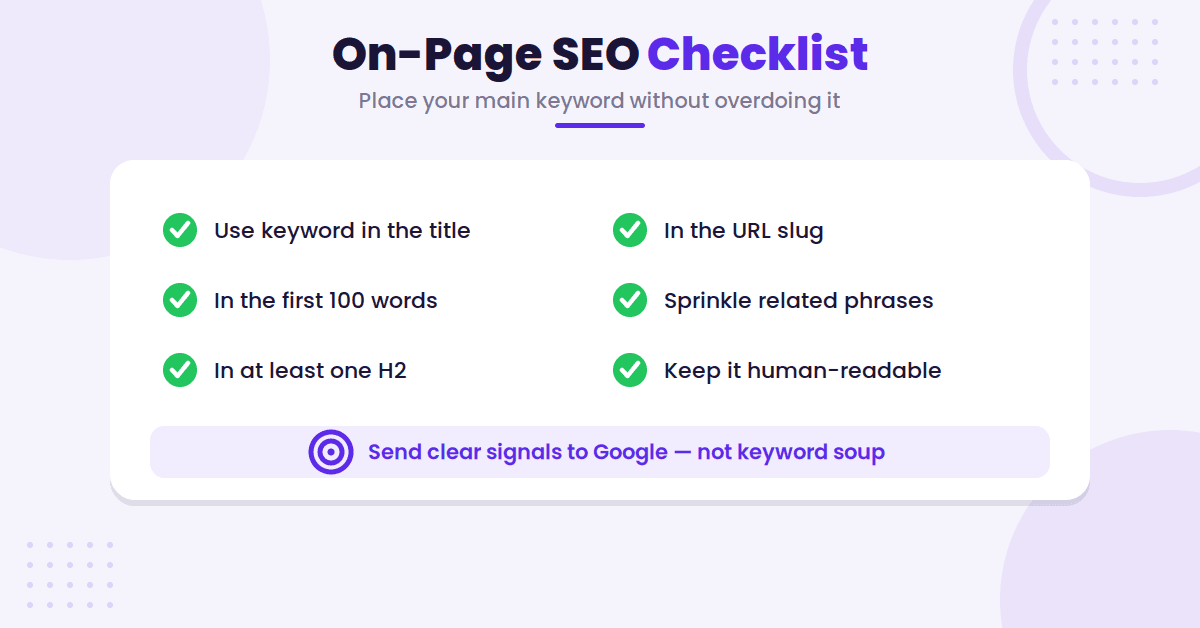
Here is a quick on-page checklist:
- Use the main long tail keyword in:
- Title
- First 100 words
- At least one H2
- URL slug if you can
- Sprinkle in related phrases the tools suggested.
- Make sure it reads like something a real human would say.
For more detail on this part of the process, our guide on going from keyword to finished blog post gives a nice overview of how to align structure, headings, and keyword variations for better rankings.
The goal is simple: send clear signals to Google about what the post is about, without turning it into keyword soup.
Step 5: Use Internal And External Links Like A Pro
AI tools can help you create content fast. Smart linking helps that content win.
Here is what to focus on.
Internal Links That Keep Readers on Your Site
Link new posts to related posts, and older posts to new ones, whenever it makes sense. For example:
- From a broad SEO guide to a post about long tail keywords.
- From a tools review to an in-depth tutorial about keyword research.
- From a new article to a keyword idea generator if the reader might want more keyword ideas.
Each link should feel like a natural next step, not a random plug.
External Links That Add Trust
You saw a few examples earlier. Link out to trusted tools and guides when:
- They support data you mention.
- They help readers take action faster.
- They show you are not just making claims in a vacuum.
Linking to helpful tools like a long tail keyword generator or long-tail keyword ideas with search data gives readers extra resources and makes your post feel more complete.
Google also likes pages that play well with the rest of the internet, not just sites that hoard attention.
Step 6: Turn One Long Tail Keyword Into A Whole Content Cluster
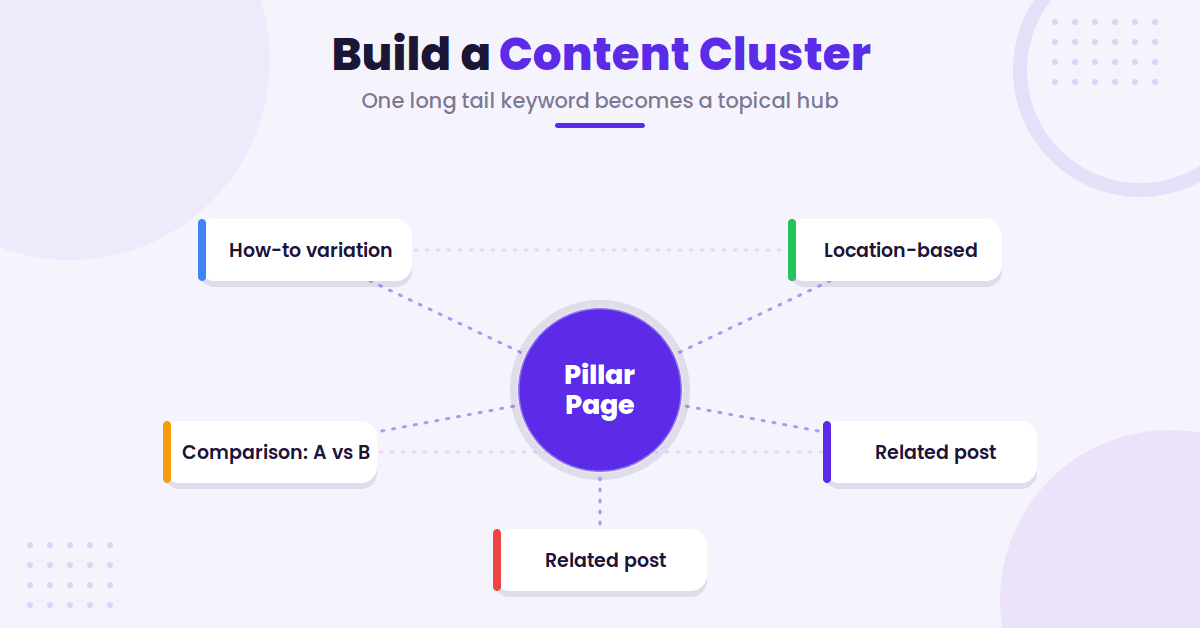
Once a post around one long tail keyword starts to rank, create a small cluster around it.
Here is how to do it:
- Take the main keyword and plug it back into your keyword tool.
- Look for:
- How to variations.
- Location-based versions.
- Comparison keywords like tool A vs tool B.
- Map out 3 to 7 related posts that all link to each other and, when relevant, back to a central pillar page.
AI makes this much easier because you are not starting from scratch every time. You already know your topic, tone, and structure. You are just adjusting the angle.
Over time, clusters like this send strong topical signals to search engines and help your whole site rank better, not just one post.
FAQs on Ranking Long Tail Keywords
Here are a few common questions that come up once you start using AI blog tools for long tail keywords.
Do long tail keywords get enough search volume to be worth targeting?
Yes, long tail keywords are worth targeting even though each one brings less traffic than a broad keyword. Because they have lower competition and higher intent, they are far easier to rank for, and the readers they attract are usually closer to buying or subscribing.
When you build a whole cluster of long tail posts, the traffic from many small, winnable searches adds up to more than a single trophy keyword you may never rank for.
Will Google penalize my blog for using AI blog writing tools?
No, Google does not penalize content simply for being written with AI, as long as it is helpful, accurate, and genuinely useful to readers. What matters is quality and search intent, not the tool you used to draft it.
That is why it helps to treat AI like an assistant rather than a boss: add your own stories, examples, and edits so the final post still feels human.
How long does it take for a long tail keyword post to rank?
It varies, but long tail keyword posts often rank faster than broad keywords because there is far less competition to fight through. A well-optimized post targeting a specific, winnable phrase can start climbing within a few weeks to a few months, especially on a site that already has some authority.
Newer sites usually take longer, which is another reason to focus on low-competition long tail terms first.
Can I use the same long tail keyword in more than one blog post?
It is best to give each long tail keyword its own dedicated post so you do not compete against yourself in search results. When two posts target the same phrase, Google is not sure which one to rank, and they can end up weakening each other.
Instead, use closely related variations, such as how-to angles, comparisons, or location-based versions, so each post in your cluster targets a slightly different search.
Final Thoughts on AI Blog Tools for Long Tail Keywords
If you put AI in front of weak keywords, you just publish more content that nobody reads. When you pair AI blog writing tools for long tail keywords with a simple system, you get something much better: focused content that ranks, fast drafts that still feel human, and an audience that arrives ready to act.
Here is what to do next:
- Pick one niche topic you care about.
- Generate 20 to 50 long tail keywords with a reliable tool.
- Choose one keyword and run it through the outline and drafting steps in this post.
- Publish, link it smartly, and watch how it performs.
You do not need to outwrite the internet. You just need to be the clearest, most useful answer to the specific questions your readers are already typing into search. Start there, and let AI help you move faster without giving up your voice.

RightBlogger Co-Founder, Ryan Robinson helps creators use AI and SEO to grow online businesses. He is also a recovering side project addict.




Automated SEO Blog Posts for Your Site
Research, write, publish, and share from one account.
7-day free trial. Cancel anytime.





Leave a comment
You must be logged in to comment.
Loading comments...