AI Ethical Issues: Is it Ethical to Use AI for Content Creation?
A survey of 81 creators reveals who discloses AI use, alongside practical steps to fact-check, edit, and set a disclosure policy.

With more and more bloggers and businesses using AI (artificial intelligence) to create content, you might be wondering what AI ethical issues this brings up.
Whether you’re fully on board with AI or you’ve never used it before, you’re probably aware of at least some of the concerns about AI. We’re going to focus on generative AI here, the kind of AI that creates content, images, or videos, rather than on other uses of AI, such as in healthcare, medicine, or manufacturing.
The good news? Although these ethical challenges can be concerning, there’s also a lot you can do to avoid problems. And with generative AI, you’re not facing quite the same level of AI algorithm issues as with, say, autonomous vehicles!
We’ll also look at what creators actually do about disclosure. We surveyed 81 of them, and half never tell readers when AI helped.
We’re going to run through the main ethical considerations that are cropping up, then explain how to solve many of these. (Hint: good, ethical use of generative AI means having a human in the mix too!)
Blog Automation That Keeps Your Posts Ranking
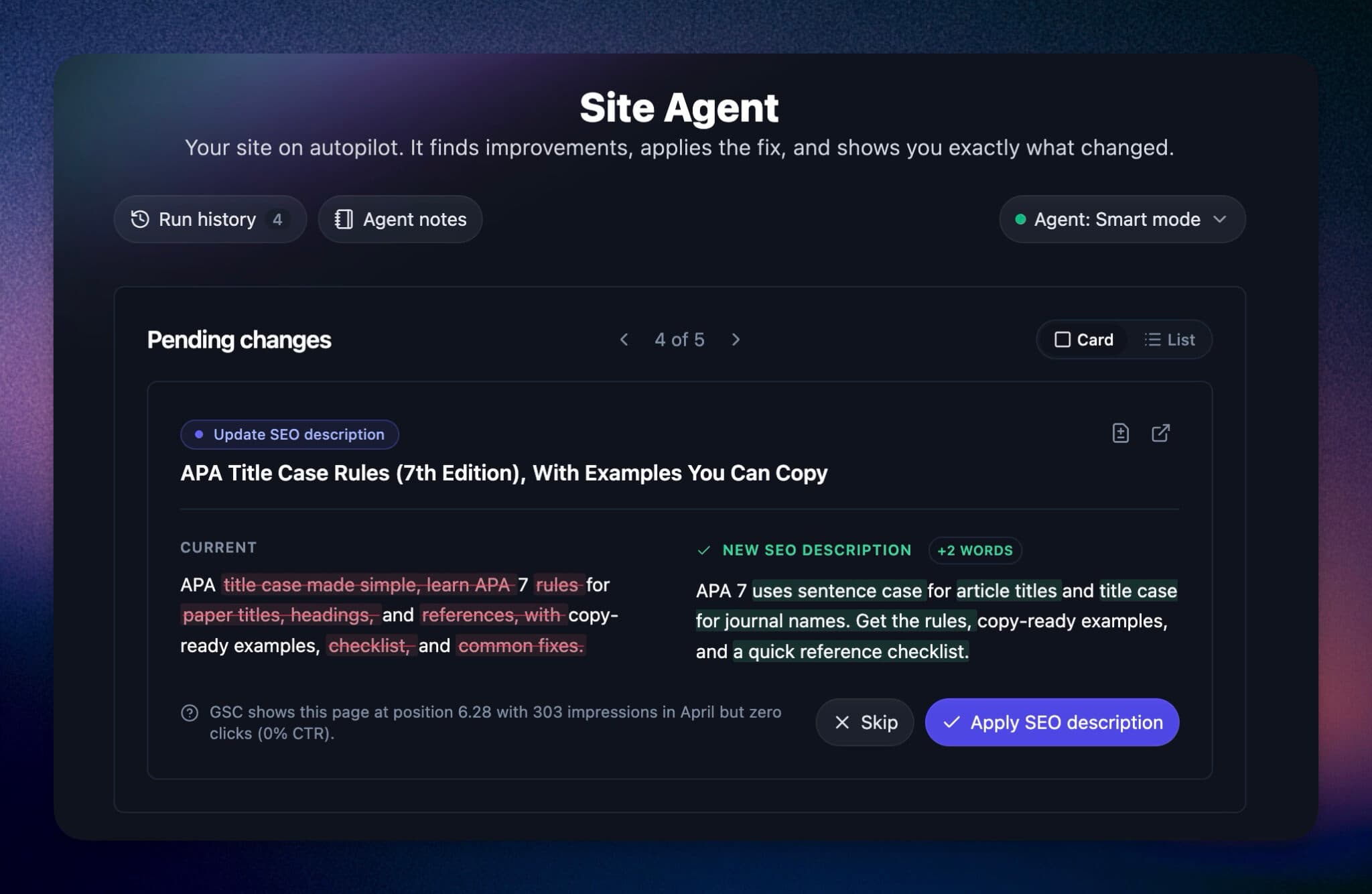
RightBlogger finds keywords, writes SEO articles, and publishes them to your blog. Then its Site Agent uses your Search Console data to keep older posts in shape, adding internal links, sharpening weak meta descriptions, and fixing stale years and broken links. Join 51,000+ bloggers using it to grow traffic from Google and ChatGPT.
The Main Ethical Challenges of Artificial Intelligence (Generative AI)
1. Generative AI Can Accidentally Produce Harmful Content
As a blogger or business owner, you want to create genuinely helpful content that makes people’s lives better or easier in some way.
One big concern with generative AI is that it can potentially produce content that might be harmful to someone’s well-being. Obviously, that can happen intentionally, when someone hacks or “jailbreaks” ChatGPT or another AI platform to deliberately get around the safeguards that are in place. But it can also happen unintentionally, through poor prompting and/or poor editing.
A famous example is when Google AI’s overview recommended eating a small rock each day, in response to the query How many rocks should I eat per day? The AI picked up on information from a satirical article by The Onion, and summarized this as if it was factual.
Obviously, most people aren’t going to believe that they should eat rocks! But AI can easily pick up plausible-sounding misinformation online, or even “hallucinate” false information. This can have serious consequences for real people, like when ChatGPT incorrectly included a professor’s name in a list of legal scholars who had sexually harassed someone.
2. Generative AI Can Be a Confident (Unintentional) Liar
Sometimes AIs like ChatGPT will include a fact or statistic in a passage of text that looks completely plausible … but when you double-check, it turns out to be totally made up.
This happens because of how ChatGPT works. Essentially, the underlying algorithms aim to come up with a plausible next word. So it might produce something that looks like lots of other facts, statistics, or even URLs on the web … except that it’s totally wrong.
If you’re using GPT-5, which is the version RightBlogger uses, then your AI can search the web in real-time to find accurate information. Even so, AI will sometimes “hallucinate” a fact, statistic, or even a web link to a source. To use AI ethically, you should be sure that you fact-check your content.
This is particularly important when individuals or companies are involved. For instance, AI could come up with a plausible lie insinuating someone has carried out a crime. Publishing this wouldn’t just be unethical, it could also get you sued for libel.
3. Generative AI Tools Can Cause Copyright and Other IP Challenges

Another problem with AI is that it can potentially get you into legal trouble if you accidentally take someone’s copyrighted work or IP. While AI won’t quote word-for-word from a published piece, it may draw so heavily on someone’s work that it creates a “substantially similar” output, and this would be a copyright infringement.
Other forms of IP (Intellectual Property) could also come into play here. For instance, you might ask AI to come up with potential names for a product or course, and it could use someone’s trademark.
4. Generative AI Could Amplify Existing Biases
LLMs (Large Language Models) like GPT and Claude use massive datasets, including text from the web, from books, articles, and more, which are likely to include some biased or outdated language.
Image generation AIs draw on popular existing images, even though these may be biased. In one example, Midjourney created only images of men for more specialist (senior-sounding) job roles.
We might think this was a fluke … but it likely comes from the data that Midjourney has been trained on. This bias was already apparent years before the rise of AI: back in 2017, Google was mostly showing images of white men in a search for “doctor”.
With the rapidly rising use of AI for content creation, it’s easy to see how biases could become increasingly amplified. As more and more AI generated articles and images are published online, AI models are going to be trained on that data … baking in these biases even more strongly.
5. Generative AI Uses a Lot of Energy (Environmental Concerns)

When you use a RightBlogger tool or enter a ChatGPT prompt, it probably feels like the response comes back easily and effortlessly. But behind the scenes, AI is using a surprising amount of computational power in vast data centers in order to respond to you.
In 2022, international data centers were using 460 terawatt hours of electricity … and this is likely to double (or more) by 2026, in large part because of the use of AI. Researchers have found that AI systems are using around 33 times more energy to carry out a task than a specialized, task-specific system would use.
Creating images is a lot more resource-intensive than creating text: generating just one image with AI could take us as much energy as fully charging your smartphone.
And this doesn’t even take into account the energy used to train LLMs (via machine learning) in the first place, with University of Washington’s Sajjad Moazeni explaining that it can take as much as “10 gigawatt-hour (GWh) power consumption to train a single large language model like ChatGPT-3. This is on average roughly equivalent to the yearly electricity consumption of over 1,000 U.S. households.”
6. Generative AI Works Can’t be Easily Copyrighted
Another major concern about using AI for your content is that you might not have any legal recourse if someone else rips off your content.
Currently, for a work to qualify for copyright protection in the U.S., it needs to be an “original work of authorship.” The government explains that “Works are original when they are independently created by a human author and have a minimal degree of creativity.”
Images or written words produced by an AI aren’t created by a human author … and even if you make changes or edits, it may not be considered to involve sufficient human creativity to be protected by copyright.
In one real-world case in Europe, someone who’d created an AI image tried to sue another company after it used that image on its website. But the court ruled that because it was created by AI, it wasn’t subject to copyright.
The law may change regarding copyright, but as it stands, anything you create by AI (even if you used your own creativity in prompting or editing it) may well not be protected.
7. Some Clients Don’t Like Freelancers to Use Generative AI
Freelancers may run up against ethical issues if their client doesn’t want them to use generative AI in their work … especially if their freelance rates are based on the assumption that they’ll be using AI assistance.
This gig on the ProBlogger job board, for instance, states “All content should be original, thoroughly researched, and human written (we check all content for plagiarism and AI).”
Some people argue that it’s fine to use AI without telling clients, so long as the finished piece is just as good (or better!) as it would be if fully human-written.
Others believe you shouldn’t use AI at all, or that you should always disclose it to clients or stakeholders.
One huge problem here is the unreliability of AI detectors. Some freelancers who’ve never touched generative AI have still run into problems with their work getting flagged as being AI-written.
8. Most Creators Don’t Tell Readers They Used AI
Section 7 is about what you tell your clients. This one’s about what you tell your readers, and it’s the question almost nobody answers out loud.
RightBlogger surveyed 81 bloggers, SEOs, freelancers, and founders in 2026 and asked them directly: do you disclose to readers when AI helped write a post?
Half said never.
Only 10% always label AI-assisted posts. Another 30% do it sometimes, when it feels relevant. The remaining 10% don’t use AI in published content at all, so the question doesn’t apply to them.
Set those non-users aside and the picture gets sharper. Among people who actually publish AI-assisted content, more than half never mention it.
Here’s the part worth sitting with. When you split respondents in our State of Blogging survey by how much of their content is AI-assisted, the heaviest users stand apart from everyone else.
The State of Blogging
The more AI someone uses, the less likely they are to say so
% who never tell readers AI helped, by how much of their content is AI-assisted
Not shown, too few respondents to report: “0% — all human-written” (4). Any group under 8 is left out.
View the data
| Always — labeled on every AI-assisted post | Sometimes — when it feels relevant | Never | Not applicable — I don't use AI in published content | Respondents | |
|---|---|---|---|---|---|
| 1 – 25% | 15.4% | 53.8% | 15.4% | 15.4% | 13 |
| 26 – 50% | 8.3% | 33.3% | 50% | 8.3% | 24 |
| 51 – 75% | 14.3% | 50% | 28.6% | 7.1% | 14 |
| 76 – 100% | 8% | 8% | 84% | 0% | 25 |
Source: State of Blogging survey, April–May 2026. 76 of 81 respondents answered this question.
Among creators whose content is 76–100% AI-assisted, 84% never disclose it. Only 8% always do.
The middle of the range bounces around, and those groups are small enough that you shouldn’t read a trend into them. But that top band is 25 people, and it’s stark. Disclosure is most common among creators who barely use AI, and rarest among the ones using it for nearly everything.
So is that unethical?
There’s a reasonable case that it isn’t. If you’ve fact-checked the piece, added your own expertise, and taken responsibility for every claim in it, the tool you used is arguably your own business. You don’t tell readers which grammar checker you ran, either.
There’s an equally reasonable case that it is. Readers who’d feel misled if they found out are, by definition, being misled. And “would my audience be annoyed to learn this?” is a decent ethical smell test for most things.
What’s harder to defend is the pattern in the data: disclosure quietly disappearing exactly where there’s the most to disclose.
Other Concerns About AI Development
Some other issues or ethical dilemmas that you may come across when using AI applications are:
- Data privacy and data protection (a human rights issue), particularly if you’re putting prospects’ or customers’ personal data into an AI system.
- Bigger-picture concerns about AI, like job displacement due to automation, or worries about the impact of AI technologies on the world more broadly.
- Unexpected weaknesses caused by the use of AI that could open up cybersecurity concerns within your business.
- Strong objections from artists and writers whose work has been used as training data for AIs, without permission or attribution.
- The “black box” nature of AI, where it’s not always clear why the AI has given a particular response to a prompt.
To be a responsible AI user, you’ll want to stay on top of potential issues and be informed about relevant legislation, e.g. the European Union’s GDPR law about data protection.
No one is expecting you to become a computer science expert or to lobby policymakers, but you do need to reflect on how you’re using new technologies in your business before the point at which a customer asks an awkward question on social media.
Using a Human Editor Solves Many Ethical Concerns About AI
You might feel daunted by this list of ethical issues with AI … but I really don’t want to put you off the use of generative AI tools! There are so many advantages to using AI and let’s face it, AI is definitely here to stay, regardless of any ethical implications.
What’s important is that you aim to use AI as ethically as possible. The key to doing that is to always have human beings in the mix! Don’t simply publish AI content without editing it first: instead, make sure your content is factual, unbiased, and genuinely helpful to readers.
Step 1. Edit Content for Anything Incorrect, Harmful, or Biased
As a bare minimum, you should always read through your AI-generated text to see whether it contains anything incorrect, harmful, or biased. The same goes for images.
Look out for:
- Facts and figures. Find a reliable source (such as a government website, academic paper, or reputable newspaper article) to check that these are correct. Sometimes AI simply makes things up.
- Links to resources. AI models like GPT and Gemini are getting better at including real URLs rather than just inventing them, but it’s still important to check all links are working and that they give an accurate source for pieces of information in your text.
- Unconscious bias. Perhaps you’ve generated AI images to go with your article and they’re all of white individuals, or they’re all young people, and you want to represent a border section of society.
Step 2. Add Your Own Personal Touch to AI Content (Easier to Copyright)
If you do want your work to have a good chance of being protected under copyright law, you’ll want to add as much human creativity as possible.
This could be done when prompting, when editing, or both.
When prompting, you could:
- Train the AI on your own personal style and tone (RightBlogger’s MyTone makes this easy)
- Give lots of detail about exactly what you want, you’ll get a better result and it’ll be easier to show how your creativity shaped the AI’s output.
- Include specific details that you want the AI to add into the piece. With RightBlogger, you can add these in the Additional Instructions section of most tools.
Then when editing, you might:
- Rewrite the introduction to include a personal story, and/or add examples from your own experience throughout the piece.
- Blend together AI-written text and human-written text. For instance, you might get the AI draft your article, then you could add in your own entirely human sections.
- Edit any sentences that feel a bit clunky or “AI-like” so that they read in a more human way.
All of these changes will give you an even better article … and they’ll hopefully also give you a better chance of being able to protect your work.
Step 3. Use AI for Brainstorming (Not Just Generating Text)
If you want to steer clear of some of the more complex problems above, like heavy energy use and some clients’ distaste for AI, then how about using AI for brainstorming instead of for producing whole articles?
Most clients won’t know or care if you use AI at the idea-generating stage … but this can still save you a lot of time. Even if you write your own outlines, or use ones provided by the client, an AI-generated outline could help draw your attention to anything you’ve missed. You can feed this into your decision-making process, while not letting the AI take over from you on being creative.
Using AI for brainstorming will produce much shorter pieces of output, so you’re not using so much energy either. Try tools like RightBlogger’s Post Ideas generator and Blog Post Outline generator to get you started.
Step 4. Decide Your Disclosure Policy Before You Need One
Pick your position now, while it’s abstract, rather than in the moment when a reader asks you directly.
Any of these three is defensible, so long as you actually hold to it:
- Always disclose. A short line in your byline area or at the end of the post. Simplest to defend, and increasingly common in newsletters.
- Disclose when it’s material. If AI shaped the substance, the research, the analysis or the recommendations, say so. If it tightened your grammar, don’t bother.
- Don’t disclose, but be ready to answer honestly. If someone asks, tell them the truth without spin.
What doesn’t work is having no policy at all. You’ll end up making the call under pressure, and talking yourself into whichever answer is convenient.
If you write for clients, check their rules first. That’s Section 7’s problem, and their contract beats your policy every time.
Whether you think AI is the best invention since the printing press or whether you’re concerned about its impact on the world, one thing’s clear: AI is here to stay. As a blogger or content creator, you need to understand these issues around the ethics of AI.
Some of the ethical issues associated with AI aren’t going to vanish overnight. But you can do a lot to solve them in your own AI content creation process by adding human input at the outlining and editing stages, and by thinking about how best to use AI as part of your writing process.
If you’d like to explore how to be an effective and ethical AI user, sign up for a free RightBlogger account. You can try out all our 90+ tools (though the free account has usage limits, so our energy use doesn’t skyrocket!) We’ve got tools like a Keyword Research Tool, a YouTube Video to Blog Post generator, an Ad Copy generator, and much much more.
Blog Automation That Keeps Your Posts Ranking
RightBlogger finds keywords, writes SEO articles, and publishes them to your blog. Then its Site Agent uses your Search Console data to keep older posts in shape, adding internal links, sharpening weak meta descriptions, and fixing stale years and broken links. Join 51,000+ bloggers using it to grow traffic from Google and ChatGPT.

Article by
Ali Luke is a freelance writer and author who blogs about writing, freelancing, and blogging at Aliventures.com. She lives in Leeds, UK.



Automated SEO Blog Posts That Work
Try RightBlogger for free, we know you'll love it.
7-day free trial. Cancel anytime.





Leave a comment
You must be logged in to comment.
Loading comments...