Expert Quote SEO for AI Search in 2026
Use short, named expert quotes near key answers, then track AI citations and targeted traffic to measure their impact.

A page can look polished and still get ignored by AI search. In many cases, that happens because the content feels thin, generic, or too polished to trust.
In 2026, expert quote SEO is one of the fastest ways to solve that problem. A named quote gives a page a real voice, a unique point of view, and a reason to be cited instead of skimmed.
Because modern search engine optimization increasingly rewards authority and credibility, expert perspectives help strengthen both user trust and AI visibility. When integrated into a broader digital marketing strategy, they add the depth AI models look for when synthesizing answers.
The goal is not to stuff quotes throughout a page. The goal is to use them where they add proof, clarity, and value to your content.
Key Takeaways for Expert Quote SEO in AI Search
Keep these rules close when you build your SEO strategy and develop quote-led content:
- AI search engines favor pages backed by credible sources. If a page feels vague or lacks depth, it is easy for AI systems to skip, which can negatively impact your search rankings.
- A good quote adds something new to the conversation. It should provide a unique perspective rather than simply repeating the information in the surrounding paragraph.
- Integrating sourced quotes is an essential part of a comprehensive search engine optimization approach that builds trust with both users and algorithms.
- Put quotes near the answer. Buried quotes often lose their value and fail to influence how AI interprets your expertise.
- Use real names and titles. Full context helps both human readers and automated search systems verify your information.
- Support the quote with proof. A relevant statistic, case study, or source link makes the insight much stronger.
- Skip empty authority. If a quote could be attributed to anyone without adding value, it is likely too soft to help your positioning.
If the page does not need a quote, leave it out. Weak authority often looks worse than having no quote at all.
Why Expert Authority Still Wins in AI Search
AI search is not reading for charm. It is looking for clean signals, clear claims, and content that feels safe to reuse.

A strong quote helps with all three. It remains a primary method for demonstrating E-E-A-T (Experience, Expertise, Authoritativeness, and Trustworthiness) as outlined in Google’s Search Quality Rater Guidelines.
That matters more now because discovery is getting tighter. Search Engine Land’s 2026 AI search predictions point to a shift where answers, decisions, and transactions sit closer together.
In that environment, pages that look like dependable source material have a better chance of being surfaced. By leveraging expert voices, you build legitimate authority in your niche and signal to both algorithm updates and human readers that your content is a verified resource.
The quote only works if the page around it is solid. If your content structure is messy, even a sharp expert line can get lost.
That is why developing an effective SEO content strategy is essential for increasing your search rankings before you start chasing citations.
“A quote is proof.” That is the core move. Give the page a named voice, then make that voice say something useful.
Readers feel the difference immediately, and AI systems do too.
What Makes a Quote Worth Citing
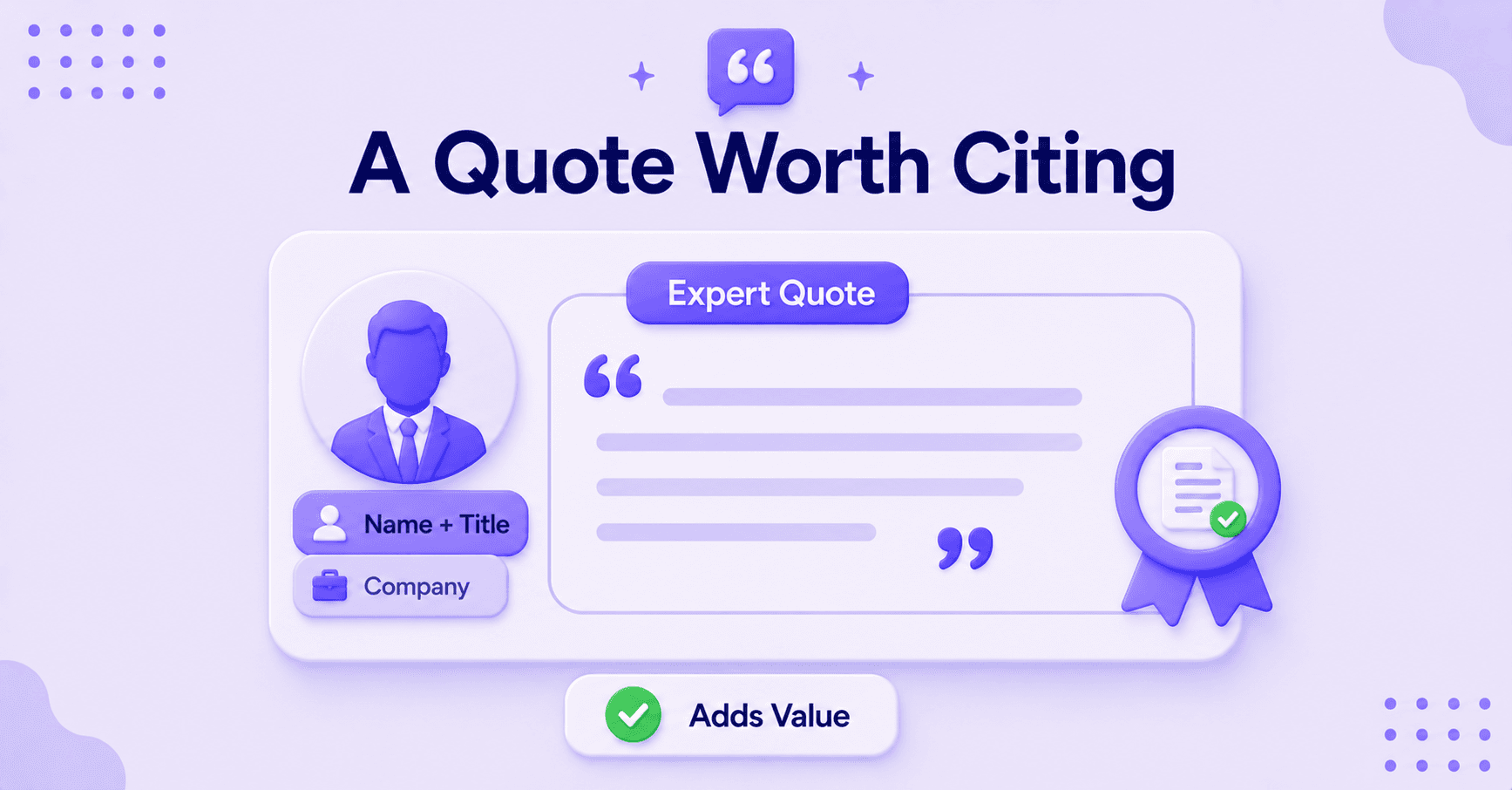
A useful quote does one job well. It clarifies the claim, adds a fresh angle, or gives the reader a detail they cannot get from the paragraph alone.
Characteristics of a Strong Expert Quote
Short beats long here. A quote should be clean enough to stand on its own if it gets lifted into a summary, snippet, or AI answer box.
If it only works with five lines of setup, it is too weak.
The safest format is simple:
- Full name
- Job title
- Company
- Date, if it matters
That gives the quote a face and a frame. Without that context, it reads like a floating opinion rather than authoritative evidence, and adding author schema markup makes that credibility explicit to search engines too.
The best quotes also sound like a person talking. A weak line says, “We think this is important.”
A stronger one says, “Readers trust pages that answer one question cleanly, then back it up with a real source.” One line gives air, while the other gives direction.
If you want the quote to match the page, start by aligning it with your keyword research. Your quotes should address the specific nuances of your long-tail keywords, ensuring the content answers the exact questions your relevant audience is asking.
When your expert insights provide unique value, they help your page stand out in search engine results and serve as a magnet for organic backlinks from other publications.
The Specificity Test
If the line could live under any company logo, it isn’t specific enough.
That test is brutal, but it works. Specificity is the whole point.
By grounding your quotes in the intent behind your content creation, you ensure that the expert voice acts as a bridge between the reader and the answer they are seeking.
Where to Place Quotes for Maximum Visibility
Placement changes everything. A strong quote in the wrong spot can still get buried, where it does nothing for the reader or for your visibility in search.
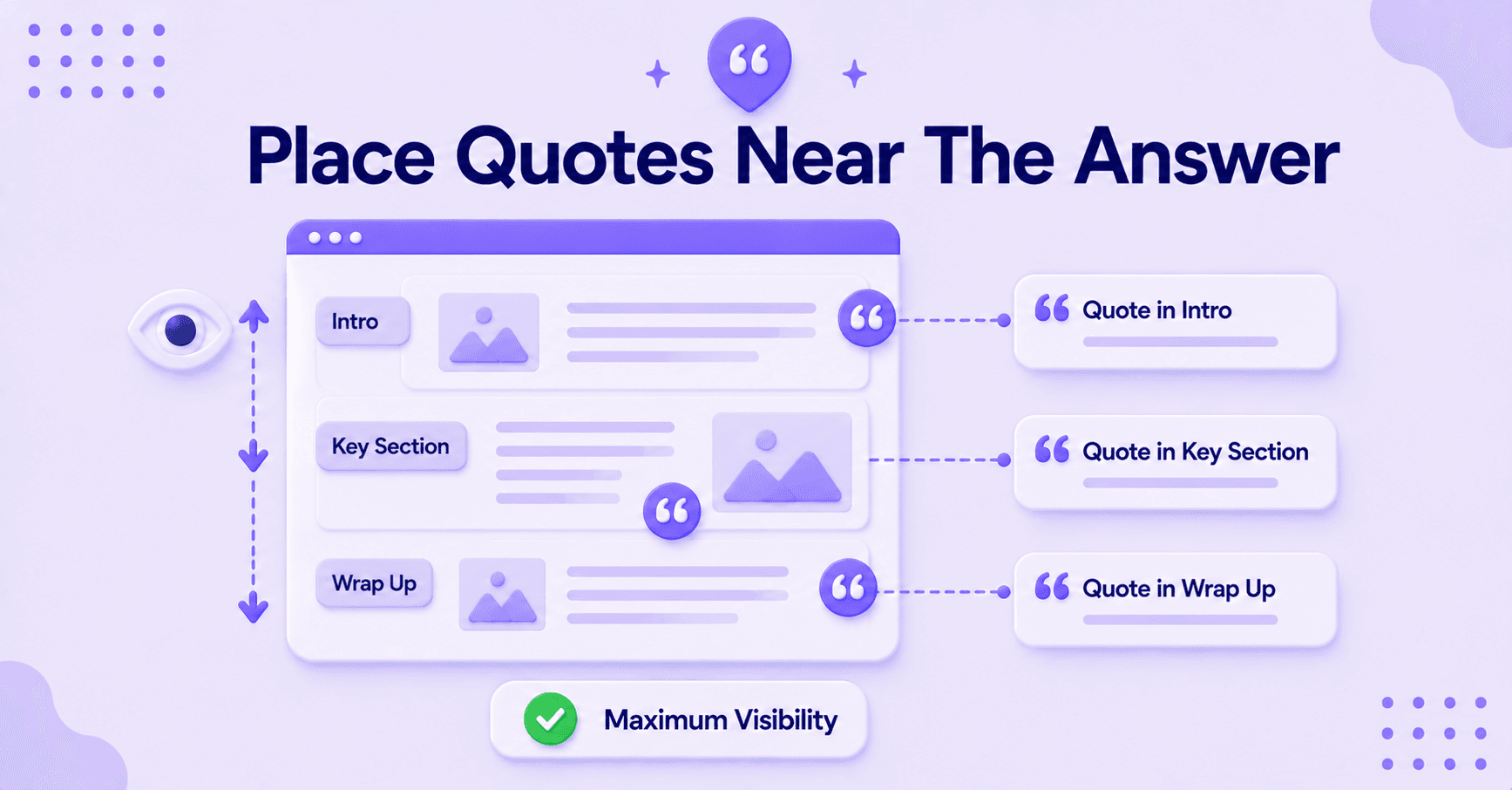
For most pages, the best place is near the top, close to the main answer. If the page opens with a clear claim, the expert quote should follow quickly.
That gives the reader and the search engine the same signal at the same time. Placing your expert evidence where it lands with the most impact keeps readers engaged instead of bouncing.
Placement Guidelines for Long Content
Long guides need a little more planning.
- One quote near the intro
- One quote inside the most important section
- One quote in the wrap-up
That is usually enough. You do not need a quote in every header, as that gets noisy fast and disrupts the natural flow of the content.
Think about what happens if the quote is removed. Does the page still read well?
If yes, the quote is likely doing its job as a supporting pillar. If the answer is no, the page may be leaning on the quote too hard.
Taking a user-centric approach to placement means the expert voice should complement your own while the page carries the core substance itself.
This is also where topic planning matters. If you are building a cluster of related posts, organizing content with semantically similar keywords helps you see which pages deserve expert input and which ones do not.
Not every article needs a heavyweight quote. Focus your resources on the main pages that drive the most traffic.
The best placement feels almost invisible. The quote appears right when the reader wants proof, providing a seamless transition between your analysis and external validation.
That is why this strategy works. It does not interrupt the reader’s journey.
Instead, it sharpens the content and bolsters your overall authority.
How to Build Quote-Led Content Without Sounding Stiff
A lot of quote-heavy content reads like a press release with better formatting. Readers can spot that immediately.
1. Ask Better Questions
The fix is simple. Ask better questions.
Instead of asking an expert for a general comment, ask for a sharp point of view. Questions like “What do teams get wrong?” or “What makes a page easier to trust?” pull out better responses than “Can you share your thoughts?”
Let the expert be a little direct. A quote with a small edge is easier to remember than a safe, polished sentence.
A mild disagreement is fine too. It gives the line shape.
2. Frame the Quote Properly
Context matters on both sides of the quote. Set it up with one sentence that tells the reader why this person matters.
Then explain why the quote matters after it lands. That keeps the page human.
When teams write around a quote for their content marketing, they often over-explain it. Don’t.
Say enough to frame the idea, then move on. The quote should do the heavy lifting, so keep marketing jargon out of the way.
A clean, punchy quote is also easier to reuse across formats. It can live in the article, as a highlight for content promotion on social media, in a summary, or in a media pitch.
That kind of reuse is valuable because it keeps the same message consistent across every channel.
If you are building several related pages, the angle matters even more. Keeping each quote tied to one clear topic stops the set from turning into a pile of generic advice.
3. The Final Test
If the quote sounds like marketing copy, the reader skips it. So does the machine.
That is the real test. Plain language wins.
How to Measure Whether Quotes Are Working
Do not start with vanity metrics. Likes are nice, but citations are better.
Look for pages that start appearing in AI answers, summaries, and cited excerpts. Check whether the page experiences an increase in organic search traffic or improves its Google rankings after the quote goes live. The cleanest place to watch that is Search Console, and you can pull those numbers into Claude to compare a page before and after.
Monitor changes in click-through rates on pages that already had impressions. Those are often cleaner signals than raw traffic spikes.
When evaluating success, focus on the rise of targeted traffic rather than total volume.
Compare Similar Pages
A simple before-and-after check works well here. Compare pages with named expert quotes against similar pages without them.
Keep the topic, intent, and format as close as possible. If the pages with quotes get more pickup, you have a signal worth repeating.
Furthermore, perform a regular competitive analysis to see how rivals are using expert voices to capture similar snippets. You will often find that this strategy doubles as effective link building, as being cited naturally leads to authoritative backlinks.
This lines up with SEO.com’s take on AI search principles, which keeps crawlability and trust at the center. The quote helps, but only after the page is easy to read and easy to trust.
Focus on the Right Metric
The real question is not whether the quote looked good. It is whether the page provided enough value to get reused.
That is the metric that matters.
A quote that gets likes but never gets cited is decoration.
Track the right thing, and the strategy becomes clear quickly. Track the wrong thing, and you end up polishing noise.
FAQs About Expert Quote SEO in AI Search
Below are additional questions you might ask for.
Do Expert Quotes Help AI Search Results?
Yes, when they add genuine value to the conversation. A quote attributed to a credible SEO expert gives the page a distinct voice and serves as a powerful trust signal for search algorithms.
However, the quote must earn its place. If it simply repeats the information already stated in the surrounding text, it will not contribute to quality traffic. Always prioritize a user-centric approach by ensuring the insight actually helps the reader solve a problem.
How Long Should an Expert Quote Be?
Brevity is key. One to three sentences is usually the sweet spot.
This length allows an expert to express a nuanced idea without turning their contribution into a long speech. If a quote requires a full paragraph, consider splitting it up or tightening the phrasing to keep the reader engaged.
Should Every Page Have an Expert Quote?
No. Overusing them can diminish their impact.
Reserve expert quotes for pages where authority and trust matter most, such as high-value guides, product comparison pages, and answers to complex industry questions. Use them strategically on content designed to attract quality traffic rather than every single post on your site.
What Makes an Expert Quote Feel Real?
Specificity is the most important factor. Include real names, professional roles, and a clear, actionable point of view.
A quote feels authentic when it sounds like a professional who understands the work rather than someone trying to sound impressive for the sake of it. The best user-centric quotes are plain, direct, and easy for your audience to trust.
Final Thoughts on Expert Quote SEO
A page can look polished and still miss the mark if it does not give AI search a reason to trust it. That is why expert quote SEO works best when the quote is real, short, and placed where the answer lives. Working these insights into your wider SEO strategy pays off over months.
By consistently working with a qualified SEO expert to weave credible, authoritative voices into your content, you will eventually gain better visibility in AI systems. Use quotes to add proof. That one move can turn a plain article into a reliable source that both human readers and machines are more willing to cite.

RightBlogger Co-Founder, Ryan Robinson teaches 500,000 monthly readers how to grow online businesses. He is a recovering side project addict.
Automated SEO Blog Posts for Your Site
Research, write, publish, and share from one account.
7-day free trial. Cancel anytime.





Leave a comment