SEO Case Study: How We Grew a Hiking Website from 529 to 4,569 Monthly Organic Clicks in 3 Months
See how search-led trail guides, firsthand expertise, and connected topic clusters earned clicks across 860+ queries.


New content sites rarely struggle because the writing is bad. They struggle because a fresh domain has no authority and no search footprint, so even strong pages stay invisible at first. Getting a brand-new site to rank quickly is a very different challenge from rescuing an old one.
Hike with Ryan is a new niche site we built from the ground up using RightBlogger’s blog automation system. Starting from almost nothing, it grew from 529 to 4,569 monthly organic clicks between March and May 2026, an 8.6x jump in a single quarter.
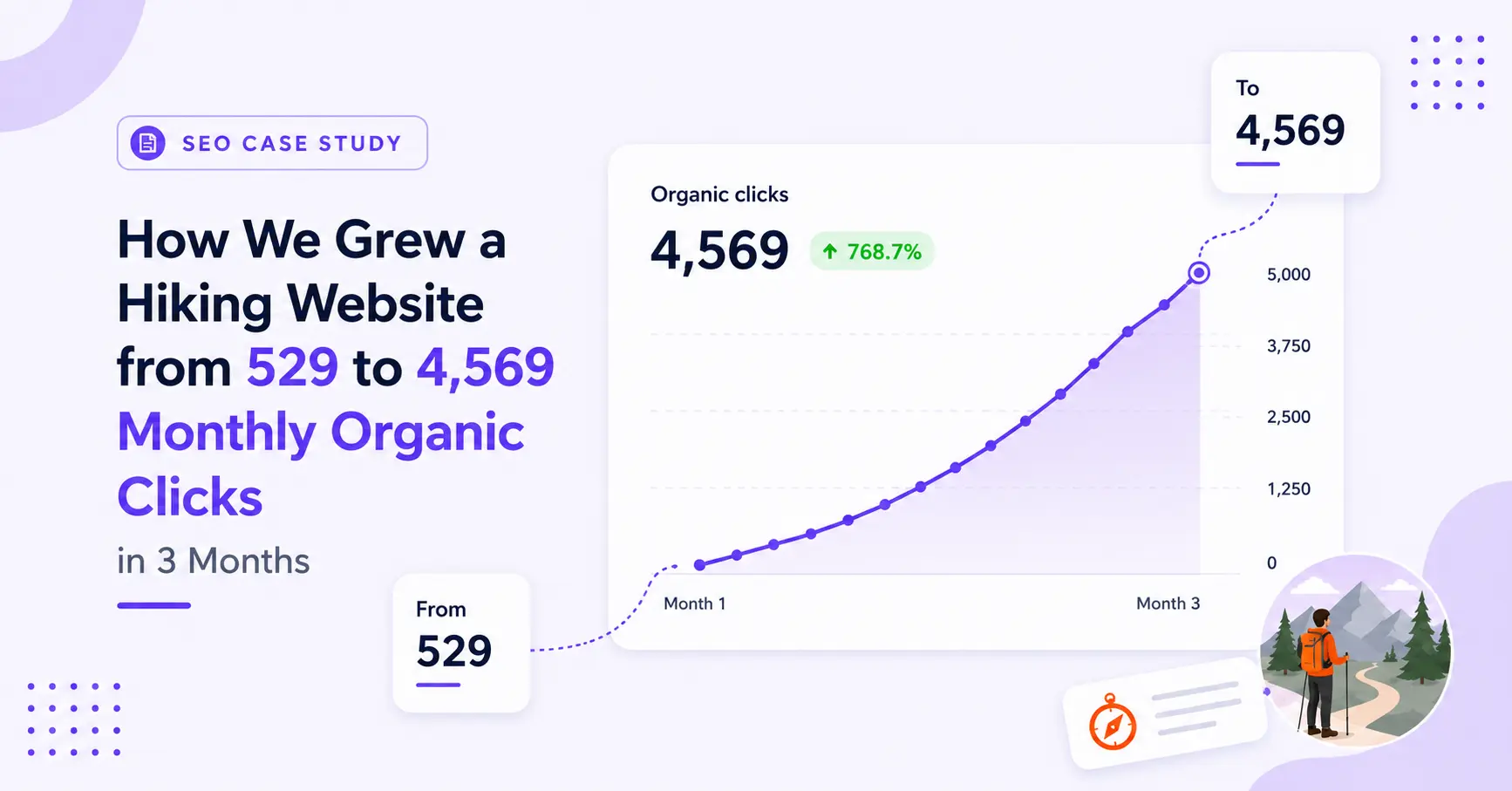
Here is the exact system we used to get a new site ranking that fast, and why the growth keeps compounding instead of leveling off, all thanks to RightBlogger’s blog automations.
The Challenge: Building Search Visibility for a New Website
I brought the one thing a new site can’t manufacture: real, first-hand hiking expertise and a voice that reads like an actual person on the trail.
For years, I’ve spent my weekends exploring trails across the country, and grew up hiking with my dad in California, with Yosemite practically in my backyard, and I’ve since visited all 50 US states. That experience became the foundation of every guide published on Hike with Ryan.
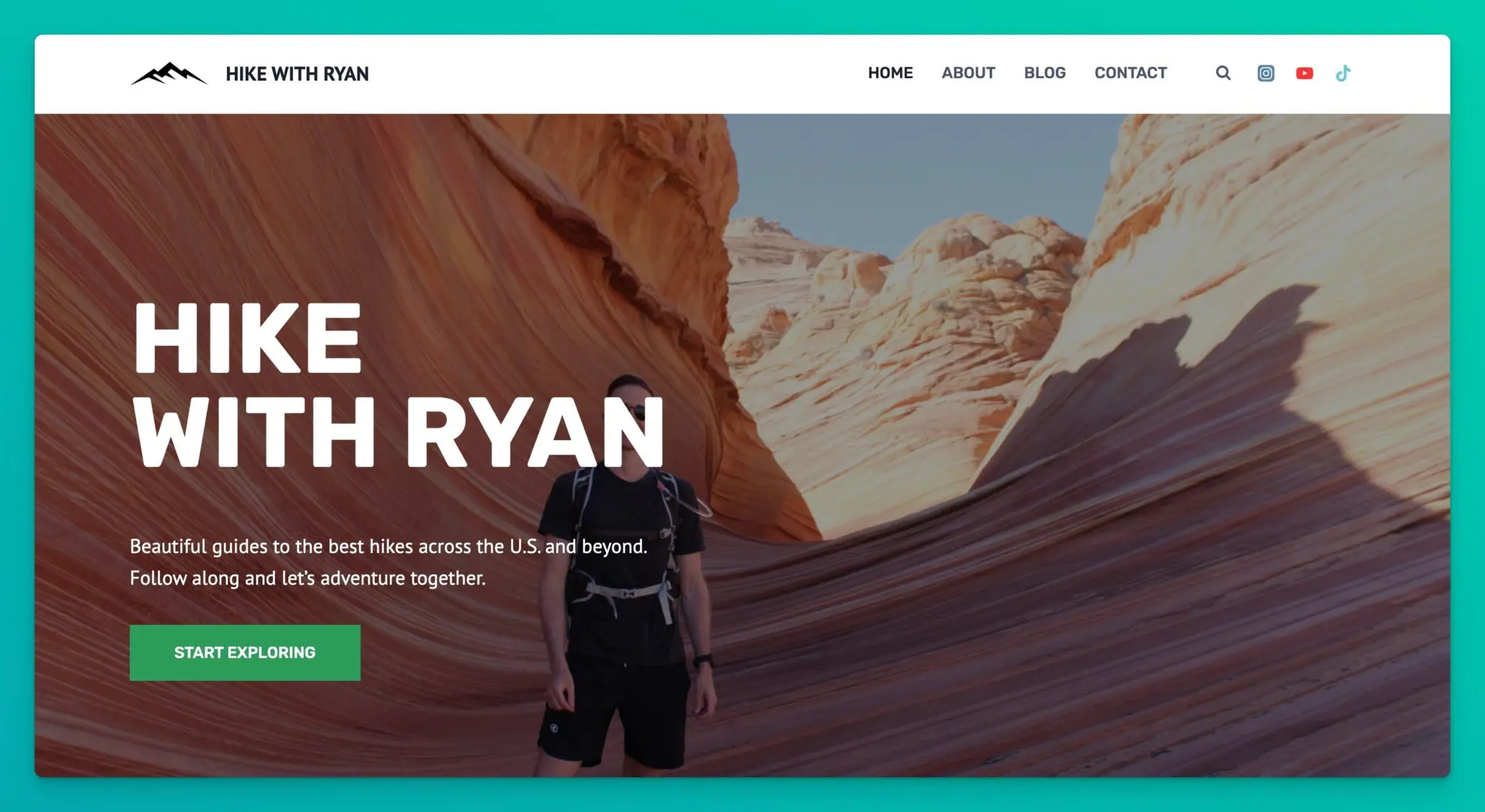
I’m also the founder of Refresh and RightBlogger, so this was a really fun case study. Hike with Ryan is my own hiking blog, making it the perfect environment to test our full content strategy and put RightBlogger to work at scale.
The challenge wasn’t content quality. The challenge was visibility.
The site only began publishing with autoblogging in February 2026, building its content library essentially from scratch. By March, the first month of our measurement window, it was earning roughly 17 organic clicks per day, or about 529 clicks for the month, while holding an average position of 8.9.
For a site that new, ranking near the edge of page one was a promising start. The expertise was there. The content was there. What was missing was the content engine needed to scale the library, capture more search demand, and turn near-page-one rankings into meaningful traffic.
Our SEO Strategy: Building a Search-Driven Content Engine
The site didn’t need a technical fix. It needed a focused publishing engine producing destination- and trail-specific guides built around real, validated search demand.
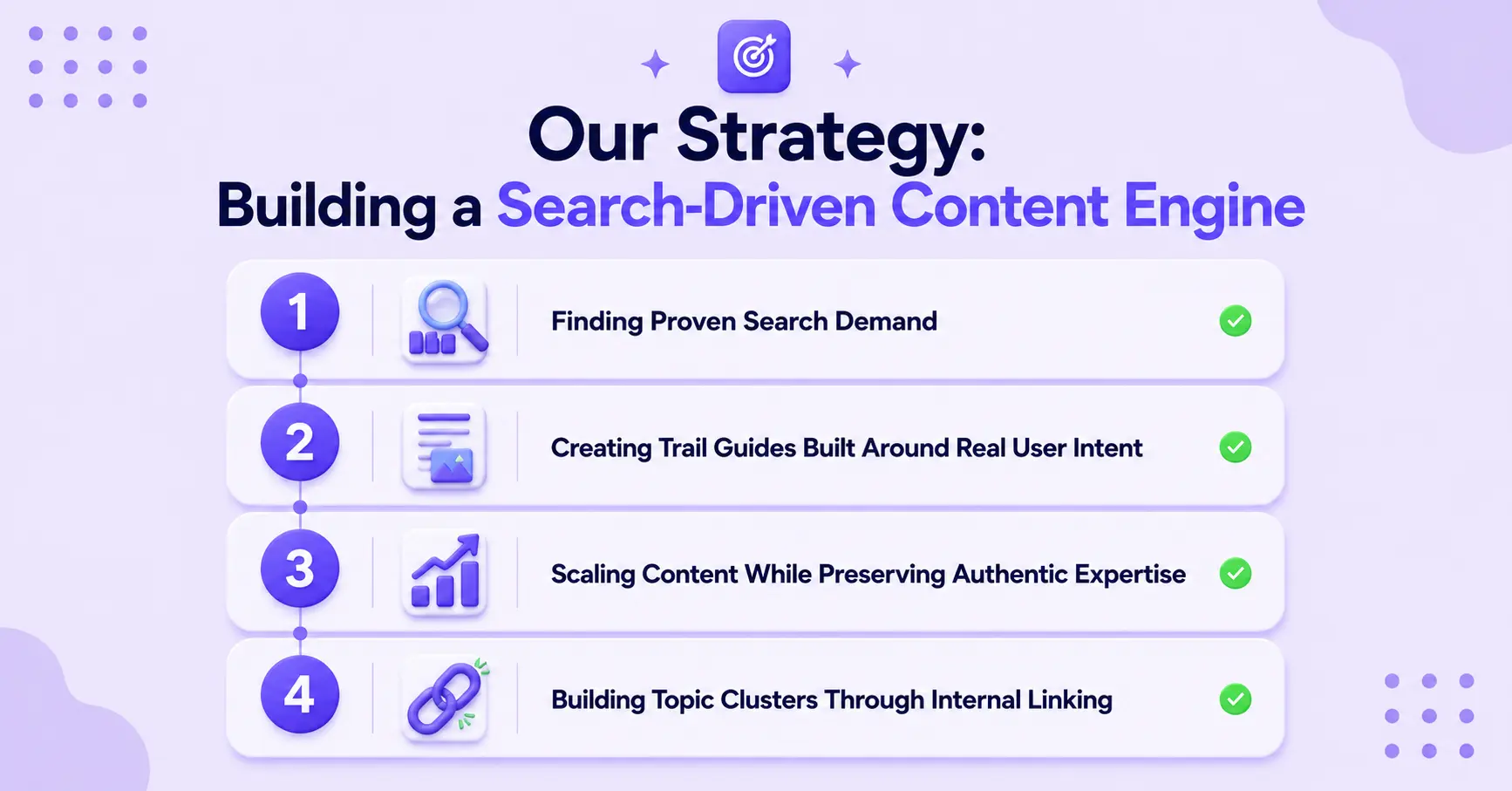
We organized the growth work for this site around four principles.
1. Finding Proven Search Demand
Rather than guessing, we used Google Search Console and keyword research to find where real hiking demand met competition we could realistically beat. That pointed us to national-park itineraries, permit and lottery guides, “best hikes in [state]” round-ups, and park maps.
Every topic had to clear one bar: a genuinely useful guide could rank for it. We published against data, not opinion.
2. Creating Trail Guides Built Around Real User Intent
Each guide was structured the way hikers actually search: where to go, how to get a permit, what to do in one or two days, where to camp, and how to read the map. The aim was to answer the full question behind a search on a single page.
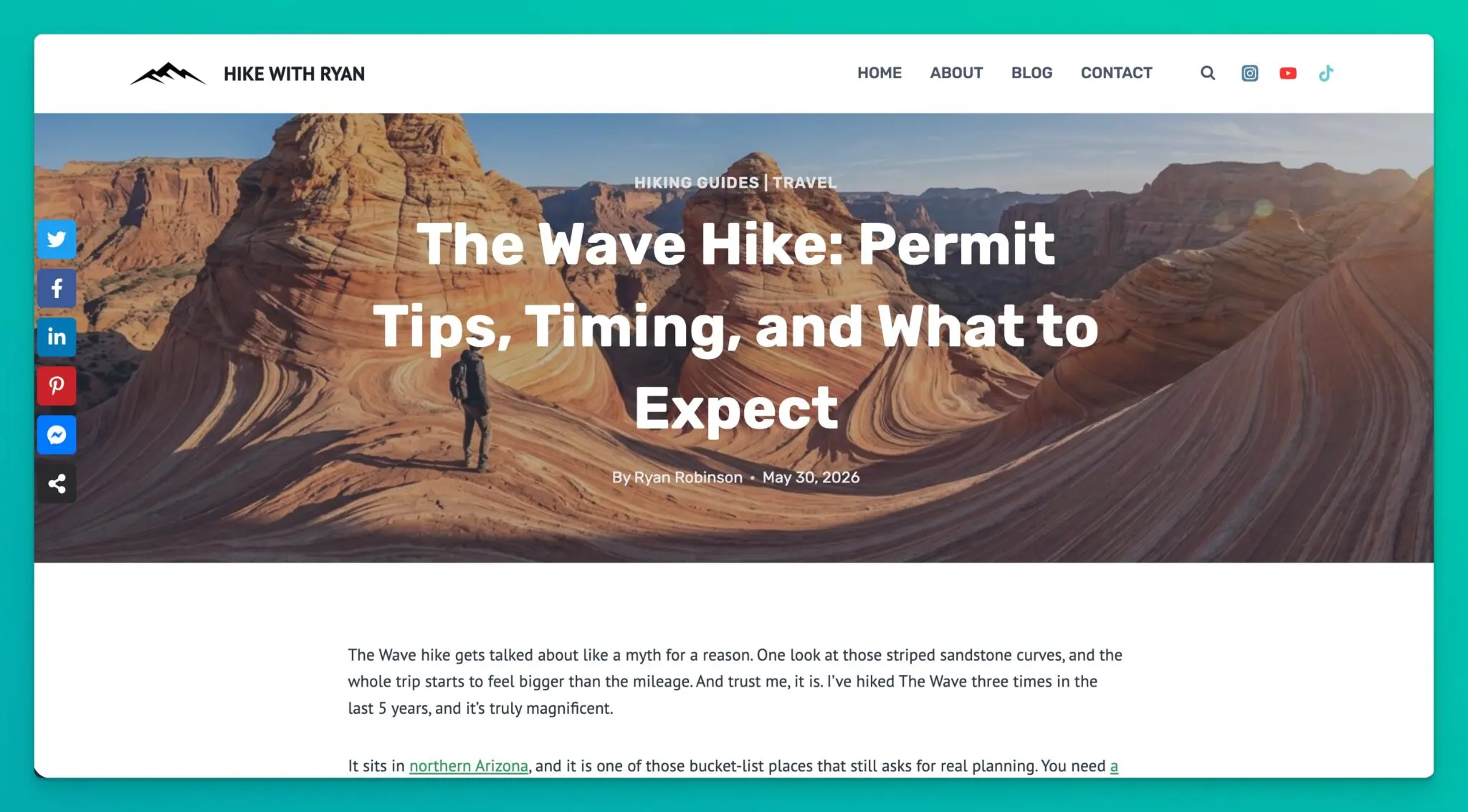
That depth is also what beats the thin, AI-generated travel filler crowding this niche. In hiking content, specifics and real experience are what make a guide worth ranking.
3. Scaling Content While Preserving Authentic Expertise
To build a library quickly, we leaned on RightBlogger’s autoblogging to scale production. But speed alone isn’t the point, so every guide kept Ryan’s first-person, tested-on-real-trails voice and his honest take on gear.
Generic outdoor content doesn’t earn trust, and it doesn’t rank. Pairing automation with a real publisher’s perspective lets us move fast without sounding like everyone else.
4. Building Topic Clusters Through Internal Linking
We treated the publishing schedule as architecture, not a stream of one-off posts. Each new guide linked to its siblings, so a Zion itinerary connected to its campground and Zion-to-Bryce pages, and a park map connected to the itineraries that used it.
Those clusters compound authority over time. Instead of scattered articles, the site started behaving like a connected library where each page lifts the ones around it.
The Results: More Traffic, More Visibility, Better Rankings
Across the three-month window (March 1 to May 30, 2026), every key metric moved in the same direction and kept moving. Here’s the first month of the window against the last.
| Metric | March (Month 1) | May (Month 3) | Change |
| Organic clicks | 529 | 4,569 | 8.6x |
| Impressions | 94,946 | 580,796 | 6.1x |
| Average position | 8.9 | 7.3 | up 1.6 spots |
| Click-through rate | 0.56% | 0.79% | 1.4x |
Over the full quarter, the site delivered 6,475 clicks from 866,589 impressions at a 0.75% click-through rate. The multiples here are striking on their own.
But the number we’d point a strategist to isn’t in the table. It’s the slope. Average daily clicks climbed from about 17 in early March to more than 150 by late May.
The growth also accelerated month-over-month. May alone delivered 4,569 clicks, more than twice what March and April produced combined.
That pattern is the real headline. It isn’t a spike that fades, but a library that keeps gaining, with the steepest climb in the most recent weeks.
The Content Driving Organic Growth
The growth didn’t come from one breakout post. It came from a whole library pulling together.
Across the window, 117 different pages earned organic clicks. The top of that list reads like a tour of the U.S. national-park system, full of itineraries, permit guides, and state round-ups.
The Half Dome Permit Lottery Guide Led the Way
The standout was the Half Dome Permit Lottery guide. On its own, it drew 909 clicks from 123,208 impressions at an average position of 5.8.
It wasn’t alone. Several guides each cleared 400 clicks, and eight cleared 250. Here are the ten highest earners in the window:
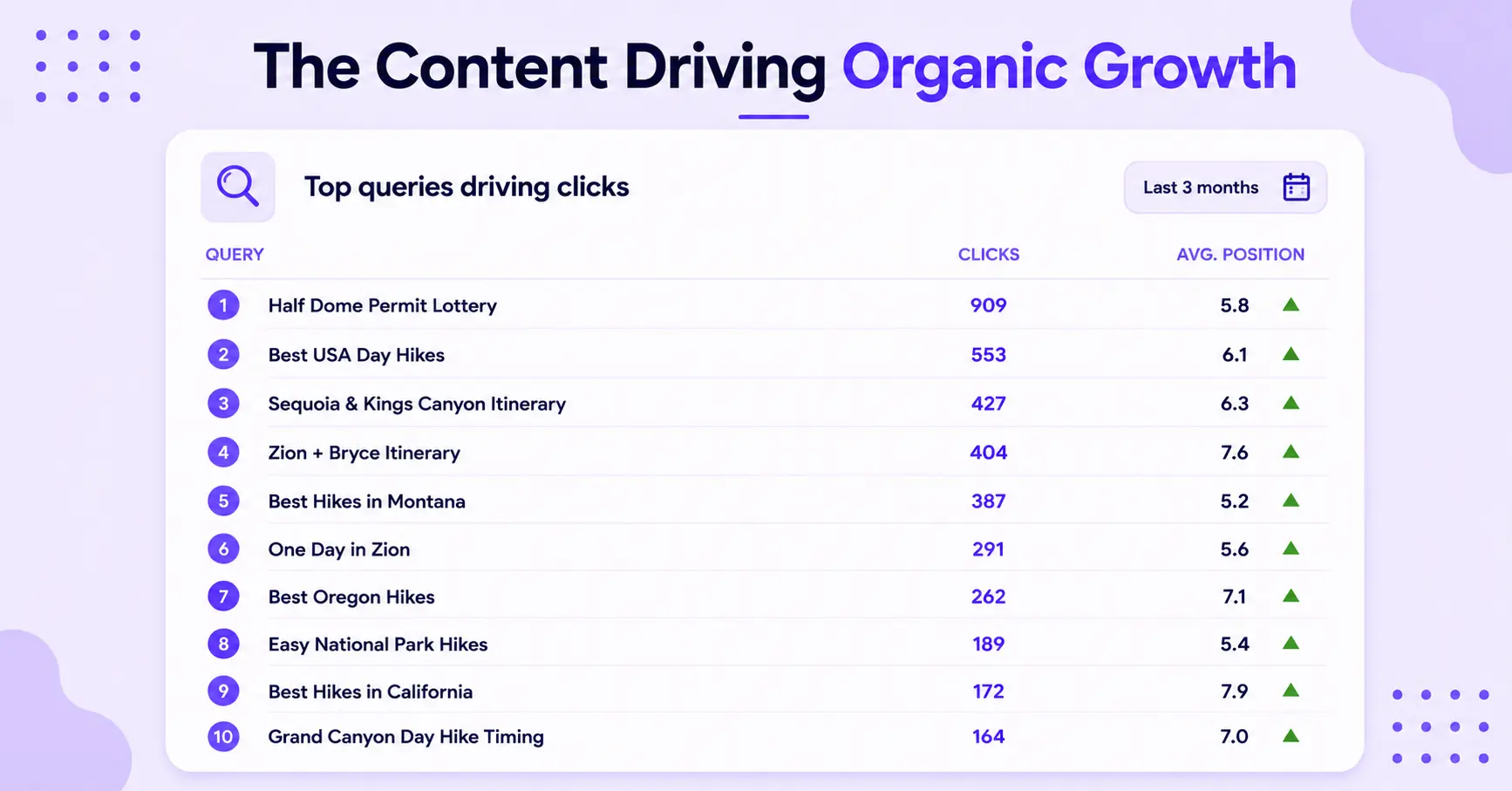
Every page on that list targets a distinct national-park or regional search. Together they show what happens when a library is built piece by piece around real demand.
Ranking Across Hundreds of Hiking Searches
A curve like this always invites one question: did you just get lucky with a single keyword? The query data says no.
Across the window, the site appeared for more than a thousand distinct queries and earned clicks from over 860 of them. That spread is the mark of topical authority, not a lucky one-off.
The demand fell into a few clear clusters:
- Roughly 600 clicks across 200-plus “best hikes in [state/region]” queries
- 470+ clicks across national-park itinerary searches
- 410+ clicks across the Half Dome permit and lottery cluster
- 300+ clicks across Zion and Bryce trip planning
- Over 100 clicks across park-map queries
Plenty of these reached the top three spots, including best hikes in montana (pos 1.8), half dome permits 2026 (pos 3.1), and hikes in montana (pos 3.2). A site that ranks for a single query is one algorithm update away from losing everything. A site ranking across a thousand has real staying power.
Why this SEO Strategy Worked
We’re wary of case studies that hint at some secret trick. There wasn’t one here, just a few disciplines applied consistently.
- We started from real demand, not opinions. Every guide targeted queries with verified search volume and beatable competition. We didn’t publish because a trail felt important, but because the data said the page could rank.
- We kept the publisher’s voice. RightBlogger scaled production while Ryan’s first-person, trail-tested perspective kept the work distinct. Honest writing earns trust in this niche, and it ranks better too.
- We built an architecture, not a feed. Itineraries, maps, permit guides, and lodging pages were deliberately linked into park clusters. The site grew like a library rather than a stack of unrelated posts.
- We let the data set the pace. Early results showed which clusters pulled hardest, namely permits, two-day itineraries, and state “best hikes” pages, so we invested there instead of spreading thin.
What’s Next for Hike with Ryan?
One quarter in, the trajectory is still climbing, which is exactly what a healthy content engine should do as its library grows.
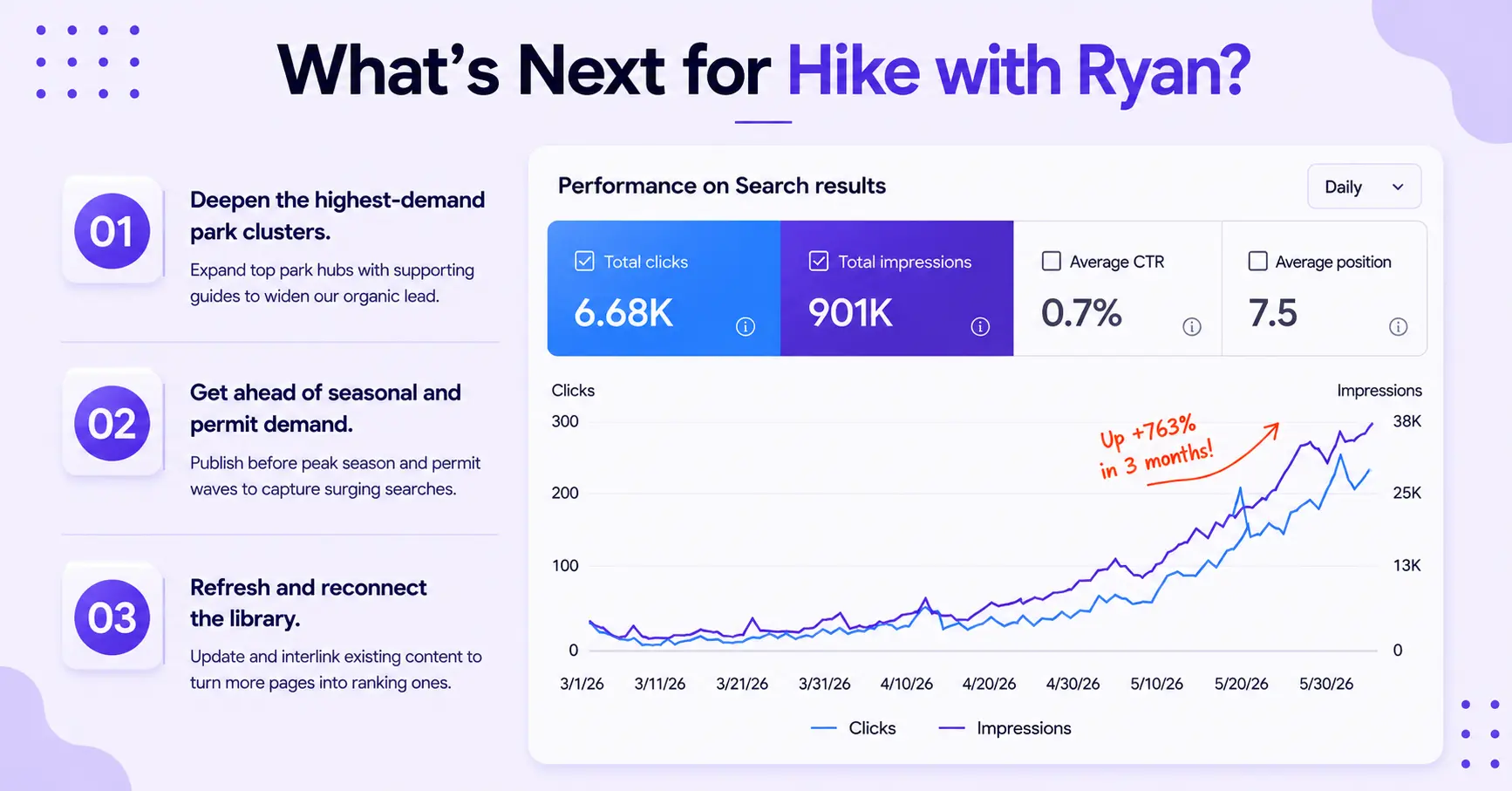
The next 90 days focus on three moves.
- Deepen the highest-demand park clusters. Half Dome, Zion + Bryce, Sequoia & Kings Canyon, and the Montana and Oregon pages already rank, so they now get supporting “what to do,” campground, and nearby-trail guides to widen their lead.
- Get ahead of seasonal and permit demand. Searches like half dome cables, timed-entry reservations, and summer itineraries spike as booking season opens. We publish before those waves rather than chasing them.
- Refresh and reconnect the library. Existing maps, itineraries, and lodging pages get updated to current standards and linked more tightly together, turning quiet pages into ranking ones.
The whole point of an organic content engine is that it keeps working. Paid traffic stops the moment you stop paying, while guides like these keep earning long after they go live.
Ready to Take Your Website Traffic to New Heights?
If you’re building a content brand and your rankings haven’t caught up to your editorial quality, that gap is closable, often faster than you’d think. The same engine that took Hike with Ryan from 529 to 4,569 monthly clicks in a quarter is built into RightBlogger, ready to do the same for your site.
The same goes if you’re running content for a roster of clients. RightBlogger handles that too, giving each client their own brand voice, calendar, and reporting in one workspace. That way, you can scale output without scaling headcount.
Whether it’s one site or twenty, that’s the difference between content that simply exists and content that earns. Try RightBlogger today.
Blog Automation That Keeps Your Posts Ranking
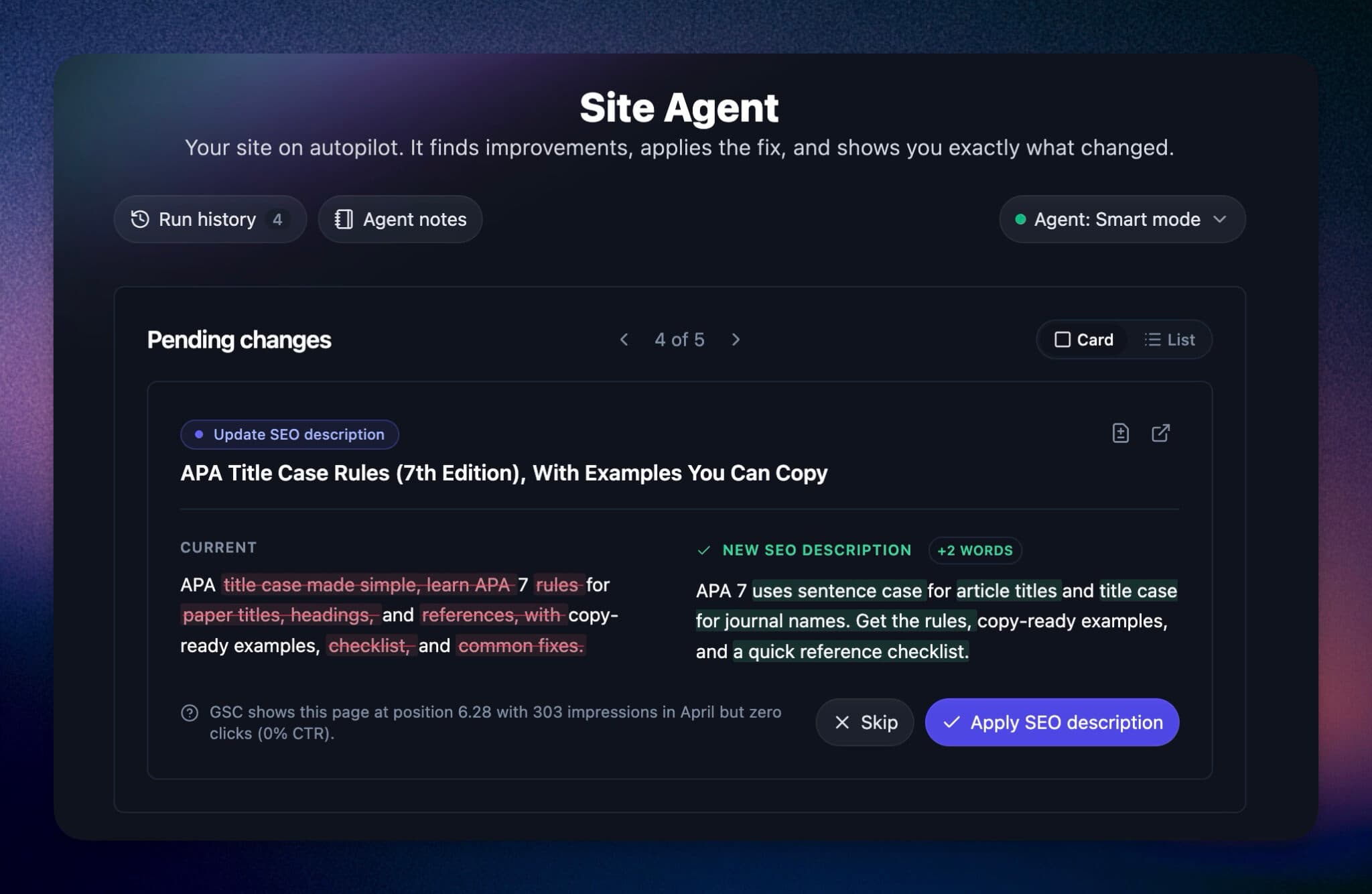
RightBlogger finds keywords, writes SEO articles, and publishes them to your blog. Then its Site Agent uses your Search Console data to keep older posts in shape, adding internal links, sharpening weak meta descriptions, and fixing stale years and broken links. Join 51,000+ bloggers using it to grow traffic from Google and ChatGPT.

Article by
RightBlogger Co-Founder, Ryan Robinson is a hiking expert and SEO creator who has visited all 50 U.S. states.



![How to Automate Blog Posts in 2026 [Step-by-Step Guide]](/_next/image?url=https%3A%2F%2Fcms.rightblogger.com%2Fwp-content%2Fuploads%2F2025%2F12%2Fautomate-blog.jpg&w=384&q=75)
Automated SEO Blog Posts for Your Site
Research, write, publish, and share from one account.
7-day free trial. Cancel anytime.





Leave a comment
You must be logged in to comment.
Loading comments...