16 AI Marketing Tools Worth Using in 2026 (By Category)
Compare 16 picks across six categories, with honest fit, pricing, free-tier limits, and reasons to skip each.


Searching for the best AI marketing tools to grow your business in 2026? You’re not alone, my friend. I’ve tested, reviewed, and even built a bunch of these myself over the past few years, and the honest answer is: most “top 10” lists are padded with tools you don’t actually need, and skip a few you do.
“AI marketing tools” covers a lot of ground in 2026: writing, SEO, design, video, automation, analytics, and social. The honest list is bigger than 10 tools, smaller than 50, and depends on what part of your stack you’re trying to upgrade.
This guide covers 16 AI marketing tools worth using right now, organized by what they actually do. Each entry has the same format: what it’s good at, who it’s best for, where the free tier ends, and what to skip it for. No padding, no fake top-10 list with our own tool at #1, no anti-AI detection tools (those aren’t marketing tools).
The 6 categories of AI marketing tools
- LLMs and AI writing: ChatGPT, Claude, Jasper, Copy.ai
- AI SEO and content optimization: Surfer SEO, Frase, RightBlogger
- AI editing and grammar: Grammarly
- AI design and image: Canva (Magic Studio), Midjourney
- AI video and audio: Runway, Descript, ElevenLabs
- AI marketing operations: HubSpot Breeze, Brand24, Zapier
You don’t need all 16. Most marketers use 3-5 across two or three categories. The point of the list is to help you pick well in the categories that matter for your work.
LLMs and AI writing
1. ChatGPT
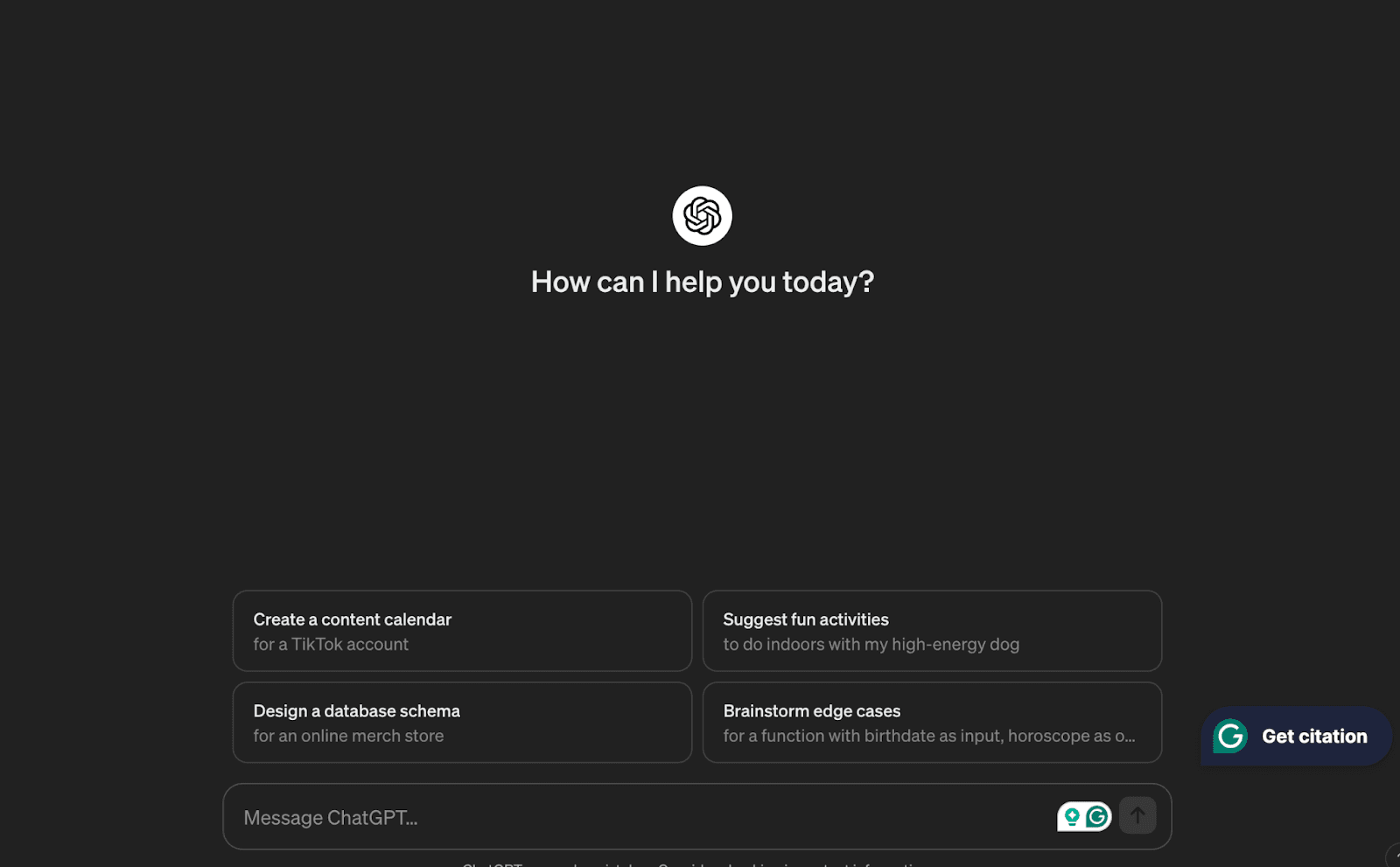
ChatGPT is the default starting point for most marketers. The free tier handles brainstorming, briefs, outlines, and most short-form content. The paid tier (Plus, $20/mo) gets you GPT-5 reasoning, image generation, and unlimited file uploads.
Best for: the planning and drafting layer of nearly every marketing task. Use it for first drafts, then edit hard.
Skip if: you need long-form content that sounds genuinely human without heavy editing, or you need real search-volume data (it doesn’t have that).
2. Claude
Claude (by Anthropic) has become the writer’s preference among marketers. Long-form output is cleaner than ChatGPT’s, instruction-following is sharper, and its long context window means you can paste in entire docs, transcripts, or competitor pages and ask for analysis.
Best for: long-form drafts, content audits, and any task where you’re feeding it a lot of source material. $20/mo for Pro.
Skip if: you need image generation, voice mode, or the ChatGPT plugin ecosystem.
3. Jasper
Jasper is built for marketing teams that need one writing tool across blog, ad copy, email, and social. The Brand Voice and Knowledge Base features keep output consistent at scale, and the template library covers most marketing formats.
Best for: in-house marketing teams of 3+ that publish across multiple channels and need brand-voice control.
Skip if: you’re a solo marketer ($69/mo entry plan, or $59 billed annually, is steep now that the cheaper Creator tier is gone), or you mostly write long-form blog content (a focused blogging tool is cheaper and tighter).
4. Copy.ai
Copy.ai leans into short-form marketing copy: ads, product descriptions, social posts, email subject lines. Less long-form than Jasper, but the workflow templates are well-tuned for marketers who write a lot of small pieces.
Best for: performance marketers and DTC operators who write high volumes of ad copy and product descriptions.
Skip if: long-form blog content is your main output, or you want a free tier (Copy.ai dropped its free plan when it repositioned as a go-to-market platform; paid plans now start at $29/mo).
AI SEO and content optimization
5. Surfer SEO
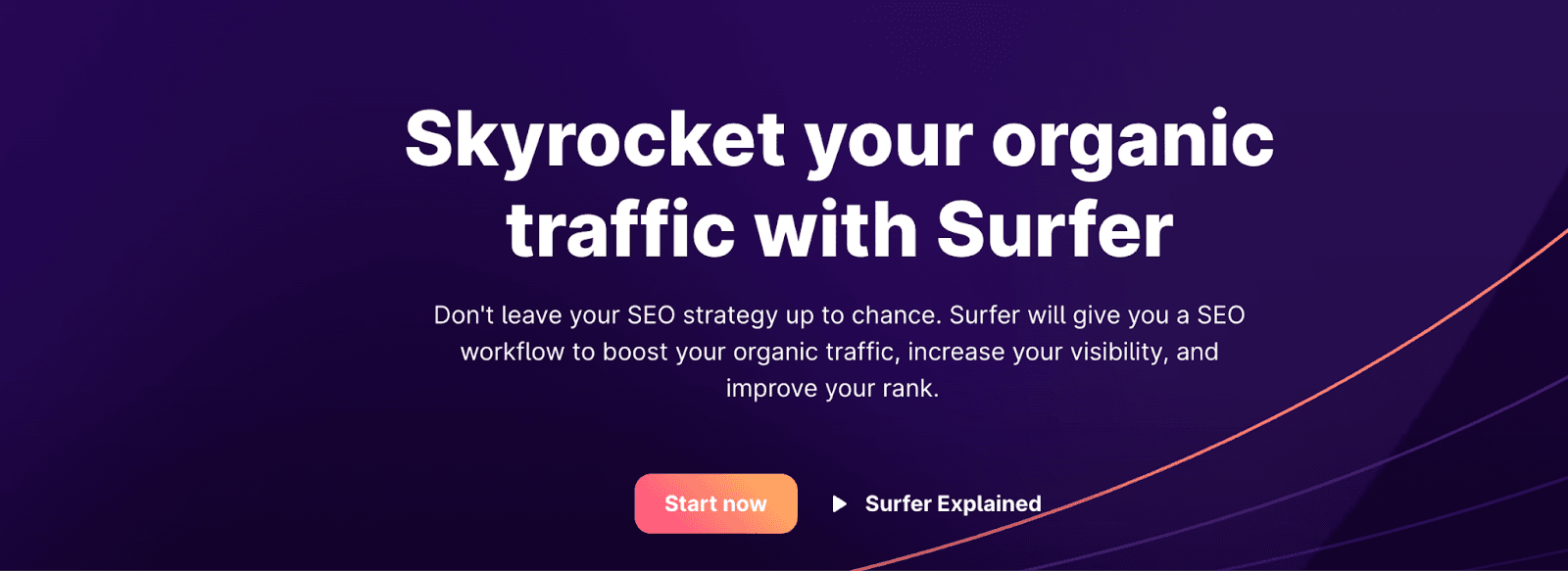
Surfer SEO scores your draft against the top-ranking pages for any keyword and tells you what to add, remove, or adjust. It’s the closest thing to a real-time on-page coach for content that needs to rank.
Best for: teams that already have a writing workflow and want a heavyweight optimization layer on top.
Skip if: you want one tool for the full draft-to-publish workflow (paid plans start at $49/mo and the standard tier is $99/mo, and it edits drafts you bring to it).
6. Frase
Frase combines content research, SERP-driven outline building, and AI drafting. The standalone GEO Score Checker (free) is genuinely useful for auditing existing content for AI-citation readiness.
Best for: middle-of-the-road buyers who want SERP-driven outlines plus AI drafting at a mid-range price (entry is now about $45/mo after Frase retired its old $15 solo plan).
Skip if: you want polished AI writing out of the box. Frase’s drafting needs more editing than the dedicated AI writers.
7. RightBlogger
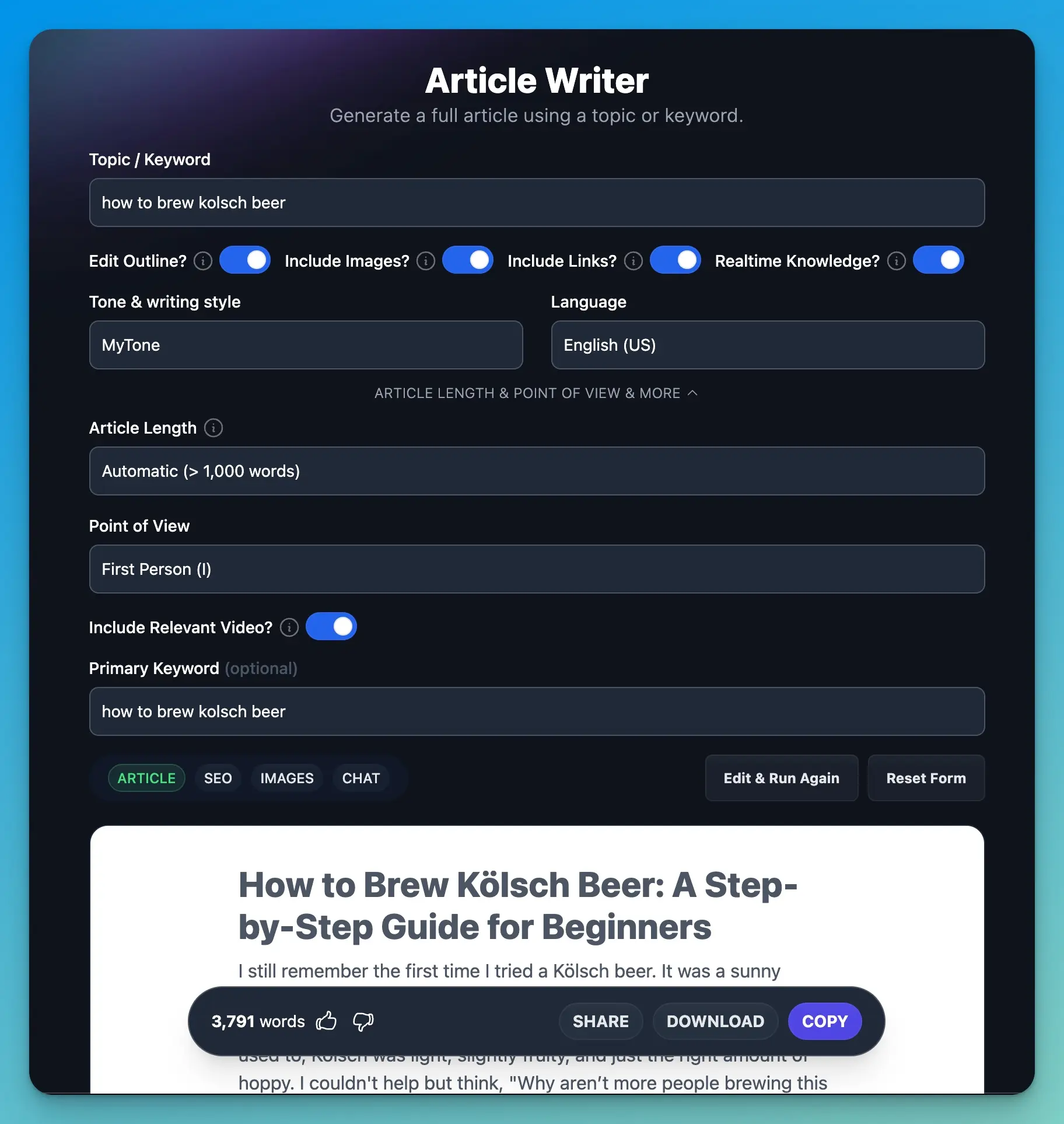
RightBlogger is built specifically for bloggers and content creators rather than enterprise marketing teams. It bundles an AI article writer, keyword research, content gap analysis, an SEO editor, autoblogging, a recurring Site Agent that maintains your published posts, and CMS publishing into one toolkit. Many of its tools are free to try with no sign-up, including a free ad copy generator and a UTM builder. Disclosure: this is our tool, so weigh accordingly.
Best for: bloggers, niche site owners, and small marketing teams who want a unified blogging workflow without article caps. Plans start at $49/mo with unlimited articles included.
Skip if: you need a multi-channel marketing tool that handles ad copy, email, and social alongside blog (Jasper or Copy.ai is a better fit), or you want a single-purpose SEO editor (Surfer is the choice).
AI editing and grammar
8. Grammarly
Grammarly is the default editing layer for most marketing teams. Its generative AI features (the old GrammarlyGO branding is gone; Grammarly now sits in the Superhuman product family) add tone shifts, rewrites, and ideation alongside the classic grammar, spelling, and clarity checks.
Best for: teams who want a single editing assistant across docs, email, browser, and Slack. Free tier covers grammar; paid plans ($12/mo billed annually, more month-to-month) add tone, rewrites, and brand voice.
Skip if: you write mostly in a single editor (e.g. Notion or Google Docs) where you’re already getting AI suggestions natively.
AI design and image
9. Canva (Magic Studio)
Canva’s Magic Studio bolts AI directly onto Canva’s design tooling: Magic Write for copy, Magic Resize for adapting one design to every social size, Magic Edit for image manipulation, and Brand Voice for consistency.
Best for: non-designers who need to ship branded social graphics, email images, and presentations fast. Free tier is generous; Canva Pro is $15/mo.
Skip if: you need pro-grade vector or photo work (Figma, Adobe).
10. Midjourney
Midjourney is the most aesthetically polished of the AI image generators. The output quality on style consistency, lighting, and atmosphere consistently beats general-purpose generators like GPT Image 2 and Stable Diffusion for marketing imagery that needs to feel premium.
Best for: blog hero images, ad creative, and brand visuals where polish matters. $10/mo entry plan.
Skip if: you need exact text rendering inside images (use Ideogram), or you want one-click integration with a design tool (Canva’s Magic Media is more convenient).
AI video and audio
11. Runway
Runway is the leading AI video generation and editing platform. The current Gen-4.5 model produces realistic short-form video from text or image prompts, and Aleph plus the in-app editor handle green-screen, motion brush, and inpainting tasks that used to require Premiere or After Effects.
Best for: short-form video ads, social cuts, and product visualizations. Plans from $15/mo.
Skip if: you mostly edit existing footage (Descript is faster for that), or you need talking-head AI avatars (HeyGen or Synthesia).
12. Descript
Descript edits video and audio by editing the transcript. Cut a word, the video cuts. Rearrange paragraphs, the recording rearranges. AI features include Studio Sound (cleans bad audio), voice cloning, and AI Speakers.
Best for: podcasters, video marketers, and content teams who want to edit recordings as fast as they edit text. Plans from $16/mo billed annually.
Skip if: you need generative video creation (Runway), or your editing needs are too pro-grade for transcript-based editing.
13. ElevenLabs
ElevenLabs is the leading AI voice generator. Voice quality is genuinely indistinguishable from real recordings, and the voice cloning feature lets you generate audio in your own voice for podcasts, video voiceovers, and audio versions of blog posts.
Best for: video voiceovers, audio versions of written content, and any task where you need broadcast-quality voice without recording. Free tier covers casual use; paid from $5/mo.
Skip if: ethical issues around voice cloning are a deal-breaker for your brand, or you only need basic text-to-speech (browser-native works).
AI marketing operations
14. HubSpot (Breeze AI)
HubSpot’s Breeze AI is HubSpot’s AI layer across CRM, marketing, sales, and service. Breeze Intelligence enriches contacts with company data, Breeze Copilot handles drafting and prospecting tasks, and Breeze Agents automate inbox triage and content publishing.
Best for: teams already on HubSpot who want their CRM and marketing automation to ship more AI-native workflows.
Skip if: you’re not on HubSpot. Breeze isn’t a standalone product; it’s an enhancement layer on the HubSpot platform.
15. Brand24
Brand24 is AI-powered social and web listening. Track brand mentions across social, news, blogs, podcasts, and reviews, with AI sentiment analysis and trend detection on top.
Best for: brands that need to monitor mentions, sentiment, and emerging topics in real time. Plans now start around $199/mo, so it is priced for businesses rather than hobby projects.
Skip if: you only need basic social monitoring (free tools like Google Alerts or Reddit search work for low-volume brands).
16. Zapier (with AI Agents)
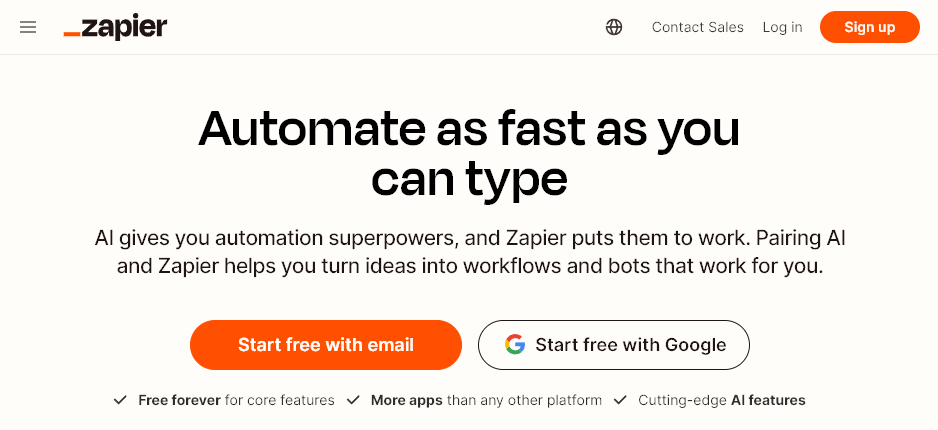
Zapier isn’t an AI tool by itself, but the new Zapier Agents and AI-powered Zaps let you automate marketing workflows that include AI steps: “summarize new HubSpot lead notes with ChatGPT and post to Slack,” etc. The AI inside the workflow makes the workflow worth running.
Best for: any marketing team using more than 3 SaaS tools that need to talk to each other. Free tier covers basic automations; paid from $19.99/mo billed annually.
Skip if: your stack is fully on one platform (HubSpot, Salesforce) where the native automations cover most of what Zapier would.
Quick comparison by category
| Category | Top pick | Best alternative | Free option |
|---|---|---|---|
| LLM / general AI | ChatGPT | Claude | Both have free tiers |
| Long-form writing | Jasper | Copy.ai | Jasper trial only; Copy.ai has no free plan |
| SEO content | Surfer SEO | Frase | Frase GEO Score (free) |
| Bloggers (all-in-one) | RightBlogger | (see SEO content row) | Free trial available |
| Editing | Grammarly | Native AI in your editor | Free tier covers basics |
| Design | Canva Magic Studio | Adobe Firefly | Generous free tier |
| Image generation | Midjourney | Ideogram (text) | None on Midjourney |
| Video generation | Runway | Pika, Luma | Limited free tier |
| Audio/video editing | Descript | CapCut | Free tier available |
| Voice | ElevenLabs | OpenAI TTS | Free tier available |
| CRM / automation | HubSpot Breeze | Salesforce Einstein | HubSpot has free CRM |
| Social listening | Brand24 | Brandwatch | Google Alerts (basic) |
| Workflow automation | Zapier | Make | Free tier on both |
AI marketing tools FAQ
Which AI tool is best for marketing?
There isn’t one. The right answer depends on your job. ChatGPT or Claude is the universal starting point for any marketer. From there, you stack tools by the work you actually do: Surfer for SEO content, Canva for design, Runway for video, HubSpot for CRM workflows. Most professional marketers settle on 3-5 tools.
What’s the best free AI marketing tool?
For pure usefulness on a free tier: ChatGPT (free GPT-6 Luna, with caps on uploads and images), Claude (free Sonnet with caps), Canva Magic Studio (generous free design tier), and Frase’s GEO Score Checker (free standalone tool). Most “free AI marketing tools” lists pad themselves with 7-day trials; these four are genuinely free.
Is ChatGPT good for marketing?
Yes, for specific tasks: drafting briefs, generating outlines, writing schema, brainstorming angles, rewriting copy in different tones. It’s not a substitute for tools that have real data (keyword volumes, search trends, CRM enrichment). Use ChatGPT for the writing and thinking layer, then pair it with tools that have proprietary data.
Can AI replace marketers?
Not in 2026, and probably not anytime soon. AI is excellent at execution layers (draft this, score this, resize this), but the strategic work (positioning, audience research, creative direction, judgment calls about brand voice) still needs human marketers. The marketers winning right now use AI to spend more of their time on strategic work.
How is AI used in digital marketing?
Most commonly: drafting content, generating images and video, automating workflows, personalizing email and ads, and analyzing customer data. The fastest-growing category in 2026 is AI-driven SEO and GEO (getting cited by ChatGPT, Perplexity, etc.). The categories above cover the full stack of where AI actually fits in marketing right now.
Picking your stack
Start with one universal LLM (ChatGPT or Claude) and add tools by category as you actually need them. The mistake most marketers make is buying a tool off a “best of” list before knowing which friction in their workflow it solves.
Pick one new tool, use it on a real project for two weeks, and decide if it earned the spend. Repeat. That’s how the strongest marketing stacks get built, one tool at a time, each one earning its slot.


RightBlogger Co-Founder Ryan Robinson tests and builds AI marketing tools, and teaches readers how to grow meaningful online businesses.

Automated SEO Blog Posts for Your Site
Research, write, publish, and share from one account.
7-day free trial. Cancel anytime.





Leave a comment
You must be logged in to comment.
Loading comments...