How to Use RightBlogger’s Knowledge Library
Add URLs, files, notes, or repositories, then assign sources to projects so AI uses relevant facts without mixing clients.
The Knowledge Library stores the source material you want RightBlogger to use, including your expertise, research, product details, and reference documents.
Your account library stores the source once. Project Knowledge controls which saved sources are used for a specific site or client, so information does not get mixed between projects.

Why Use a Knowledge Library?
AI can only use the context it receives. Adding accurate source material gives RightBlogger concrete facts, examples, and language to draw from instead of relying on general background knowledge.
Better Results When Using Tools
Knowledge gives the AI facts and source material. MyTone controls how the writing sounds. Use both when you want content that reflects your information and your voice.
Personalization
Use separate Projects for different sites or clients. Each project has its own selected knowledge, defaults, CMS connections, and learned preferences.
RightBlogger’s Knowledge Library: A Walkthrough
Ready to get started? Here’s how to use RightBlogger’s Knowledge Library.
Where to Find the Knowledge Library
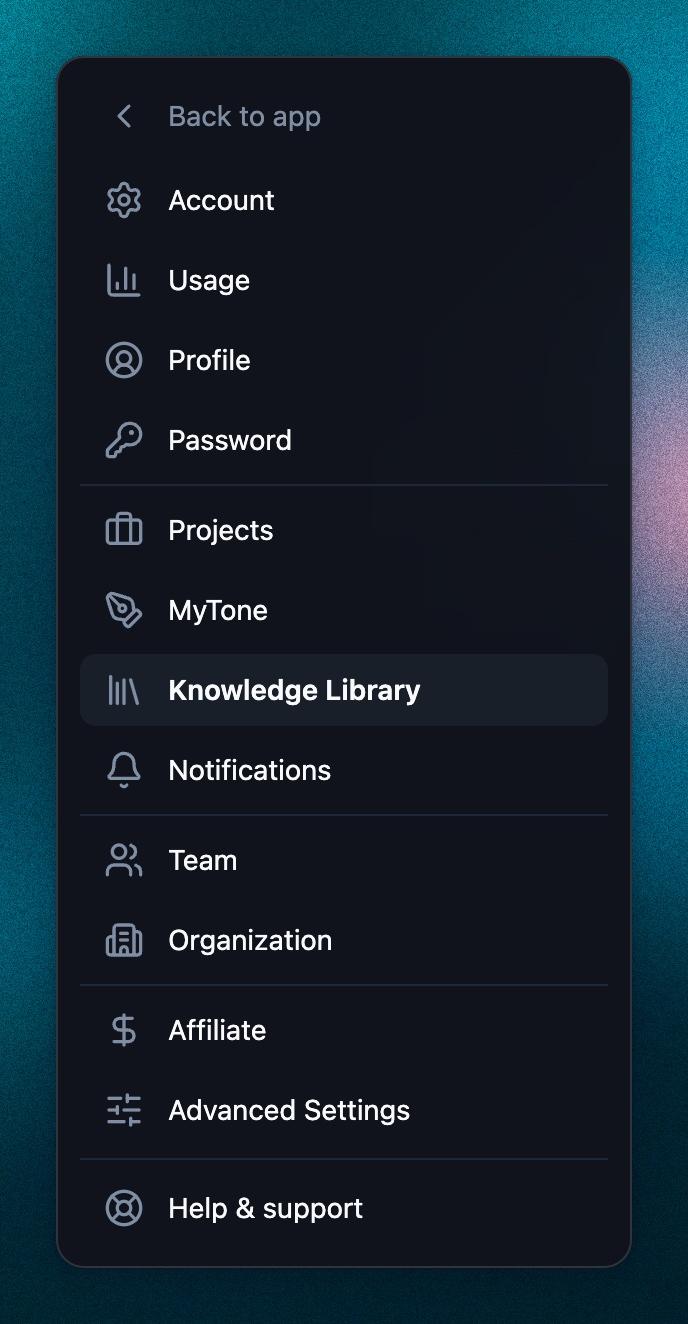
First things first, let’s find the Knowledge Library. Open your profile menu at the top of the screen, choose Account, then click Knowledge Library in the menu on the left. The Knowledge Library is included on every paid plan.
This page lets you manage all of your knowledge in RightBlogger.
How to Add Knowledge: Step-by-Step Instructions
Next, add sources to your Knowledge Library.
Click Add Knowledge at the top right of the Knowledge Library. You can add a URL, paste text, or upload a supported file.
Adding Knowledge via URL
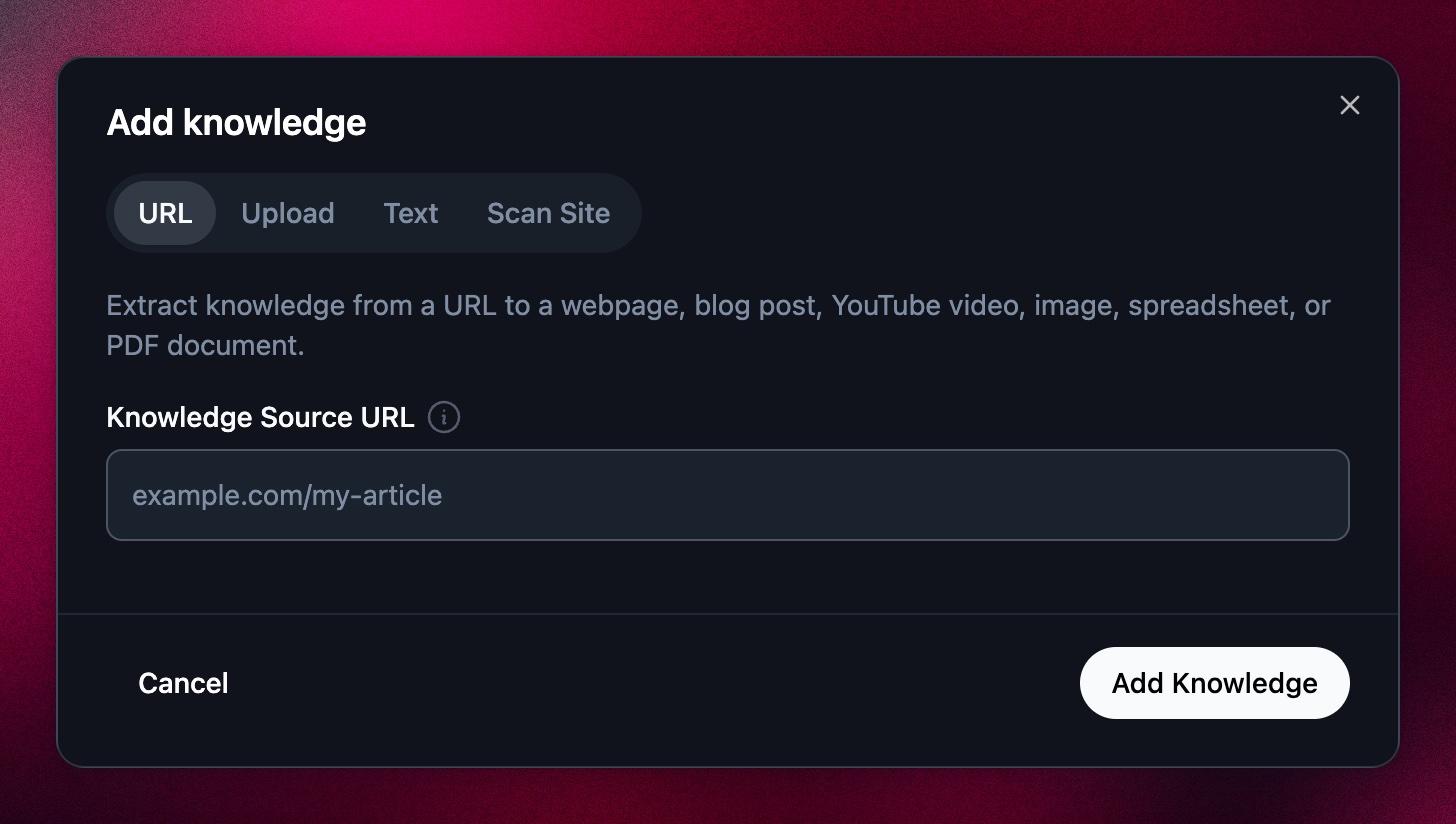
Paste the URL of a blog post, web page, PDF, image, spreadsheet, or YouTube video, and RightBlogger reads it and extracts the relevant information.
Adding Knowledge by Pasting Text
Sometimes, the information you want to add isn’t accessible via a URL. You can directly paste text into the Knowledge Library. This is perfect for adding snippets from books, offline documents, or even your own notes.
Uploading a File
You can upload PDFs, Word documents (.docx, not the older .doc), text files, CSV files, spreadsheets, OpenDocument files, and RTF documents. RightBlogger extracts readable text from the file and saves it as a knowledge item.
Using Knowledge Library
To use a saved source across a site or client, open the matching project’s Knowledge tab and add it under Project knowledge. That project can include individual library items and a Site Scan. The same tab holds Rules and memory: standing rules for the site and the ones learned from your feedback.
When you run a supported content tool with that project selected, RightBlogger automatically searches the project’s sources and sends the most relevant excerpts to the AI. It does not paste every saved document into every prompt. Site Agent also checks your project knowledge for facts when it edits your posts.

Need a source for just one run? Click Add Knowledge on a supported tool form, shown above, and pick up to 20 items. When the project has its own knowledge, the Use project knowledge switch on the same form turns it on or off for that run.
This keeps your source list reusable while preventing one client’s facts from appearing in another client’s content.
Managing Your Knowledge
Your Knowledge Library is a living thing, so you’ll want to keep it organized.
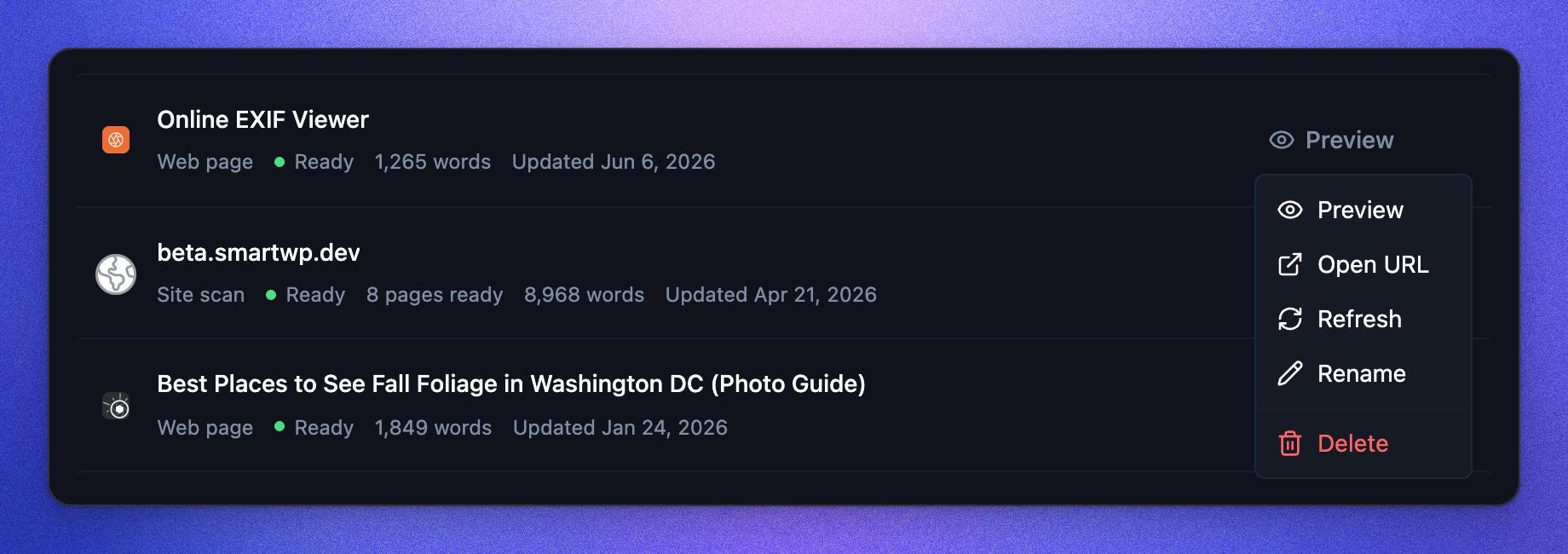
- Edit or delete an item: Open its action menu in the Knowledge Library. Deleting an item removes it from any project that uses it.
Learn From Your Repository
If your product’s code and docs live in a GitHub or Cloudflare Artifacts repository, RightBlogger can learn your product straight from it. This is especially useful for SaaS sites, where articles need to describe features the way they actually work.
- Open the project for your site and go to its Knowledge tab.
- Click Add Knowledge and choose the Repository tab.
- Choose Continue with GitHub and pick the repository, or paste a repository URL with a read-only token. If the project already publishes to that repository through the Git integration, click Learn from this repository.
What RightBlogger learns:
- Your product guide first. A
PRODUCT.mdat the root of the repository, written for your customers, is always learned first. If you don’t have one, the Repository card gives you a prompt you can paste into your coding agent to write it. - Your README, docs, and changelog. Each file becomes its own knowledge item, marked Repository in your library.
- Not your internals. Code, hidden folders, files written for your team, and anything containing a secret are skipped, and personal details are hidden. The card shows what was skipped and why.
When an article covers or mentions a specific feature, the article writer and Autoblogging can also check your repository’s code to see how that feature works, so the article gets the details right. Code is never quoted in an article, and secrets and personal details stay hidden.
RightBlogger re-syncs the repository every day and only re-reads files that changed. Use Sync now from the card’s menu after a big docs update. Repository items are read-only in the library: to change one, edit the file in your repository. Removing the repository deletes everything RightBlogger learned from it, and the repository itself is not changed.
Tips for Maximizing the Knowledge Library
Ready to become a Knowledge Library pro? Keep these tips in mind.
- Be Specific: The more specific information you add, the better the results.
- Keep it Updated: Regularly update your Knowledge Library with fresh information. For a URL source, open its action menu and click Refresh to refetch the page and update the item.
- Use Multiple Sources: Don’t be afraid to mix and match sources like blog posts, webpages, images, spreadsheets, PDFs, and YouTube videos.
- Check the extracted content: Open the item and review what RightBlogger saved. A word count confirms that text was extracted, but it does not prove the information is accurate.
Ready to Supercharge Your AI Content?
The Knowledge Library gives RightBlogger reliable source material. Add the sources you trust, attach them to the right project, and review generated claims before publishing.
Related Guides
Still need help?
Ask the AI assistant for an instant answer, or reach us directly and we will get back to you as soon as we can.
Automated SEO Blog Posts for Your Site
Research, write, publish, and share from one account.
7-day free trial. Cancel anytime.