How to Screen Record on Mac: A Full Step-by-Step Guide
Press Shift-Command-5 to record the whole screen, a selected area, or a window, and see what it takes to capture system audio.

Press Shift-Command-5 to open the Screenshot app. Record the entire screen, a selected portion, or — on macOS Tahoe 26 or later — a selected window. Options is where you pick a microphone, a save location (Desktop by default), on Tahoe a SDR (H.264) or HDR (HEVC) format, and on macOS 27 Golden Gate or later Include System Audio. Stop with Command-Control-Esc or the menu-bar Stop button. Official steps: How to record the screen on Mac.
On macOS 26 Tahoe and earlier, built-in tools record your microphone, not the sound playing on the Mac — use a virtual driver or a third-party recorder for system audio. On macOS 27 Golden Gate or later, open Options and choose Include System Audio. Official: How to record the screen on Mac. After you have the file, turn it into a tutorial with how-to video ideas.
Recording Screen with Audio on Mac Using Keyboard Shortcuts
The built-in path is the Screenshot app (Shift-Command-5), not a separate QuickTime toolbar. Record the entire screen, a selected portion, or on Tahoe 26 a selected window. In Options you can pick a microphone, show mouse clicks, set a timer, change Save to, on supported Macs choose SDR or HDR, and on macOS 27 Golden Gate or later Include System Audio. Official: Take screenshots or screen recordings on Mac.
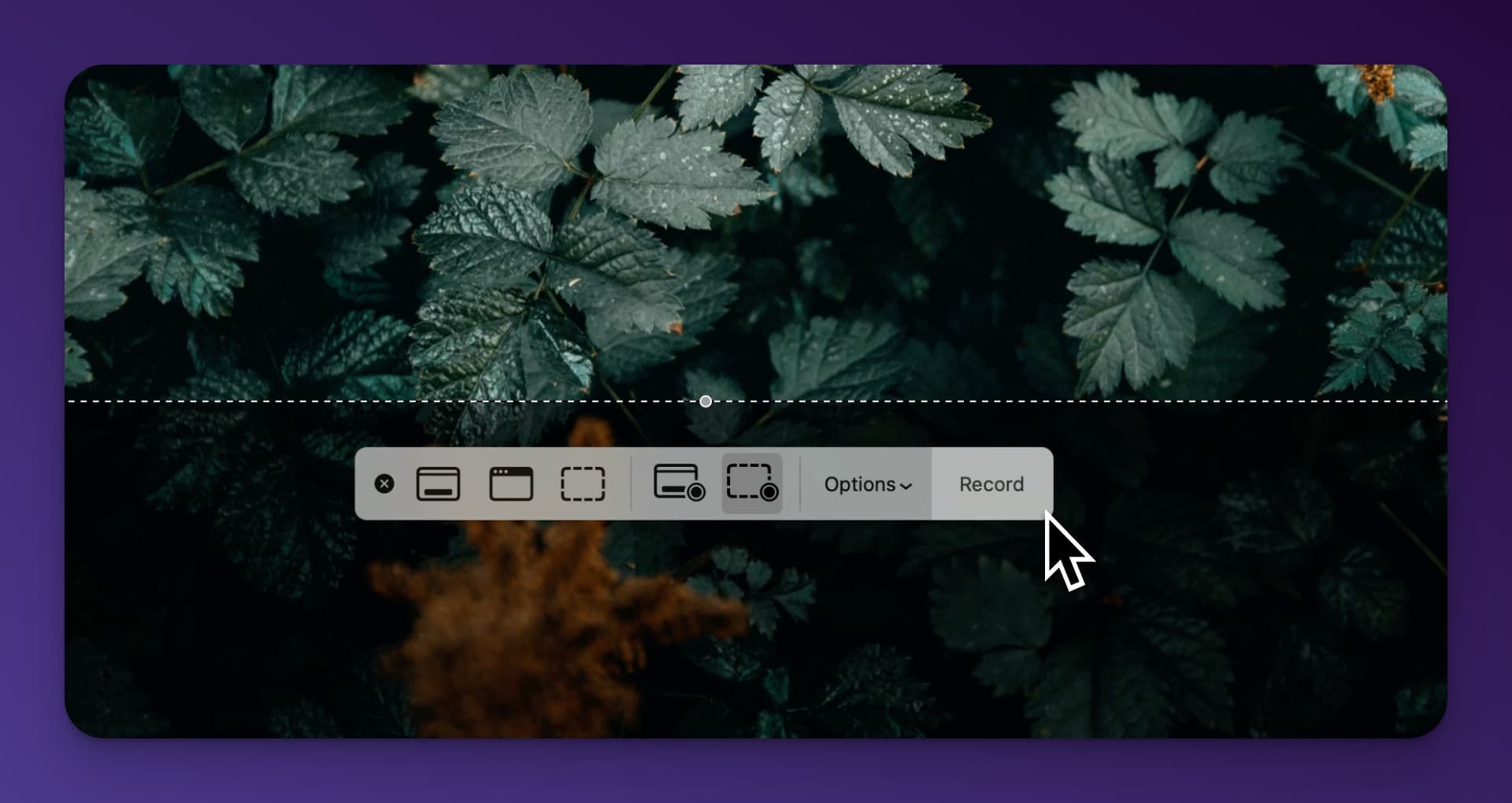
Here’s how to do it:
Step 1: Press “Command + Shift + 5” on your keyboard.
Step 2: The Screenshot toolbar appears. Pick Record Entire Screen, Record Selected Portion, or (Tahoe 26+) Record Selected Window.
Step 3: Open Options. Choose a microphone, Save to, on Tahoe 26 a capture format (SDR / H.264 or HDR / HEVC), and on macOS 27 Golden Gate or later Include System Audio. Then click Record (or click the window if you chose Record Selected Window).
Step 4: Stop with the menu-bar Stop button or Command-Control-Esc. Click the floating thumbnail if you want to trim before it saves.
By default the file lands on the Desktop as Screen Recording [date] at [time].mov. Microphone audio is included only if you picked a mic in Options. System audio (sound playing on the Mac) needs Include System Audio on macOS 27 Golden Gate or later; older macOS still needs a virtual driver or a third-party recorder. Some apps (Apple names the Apple TV app) will not let you record their windows.
Using QuickTime to Record Video and Audio on Mac
QuickTime Player, an Apple product, comes preinstalled on all Macs. You can open QuickTime via your applications folder or use spotlight to quickly open it (by hitting Command + Space) and typing QuickTime.
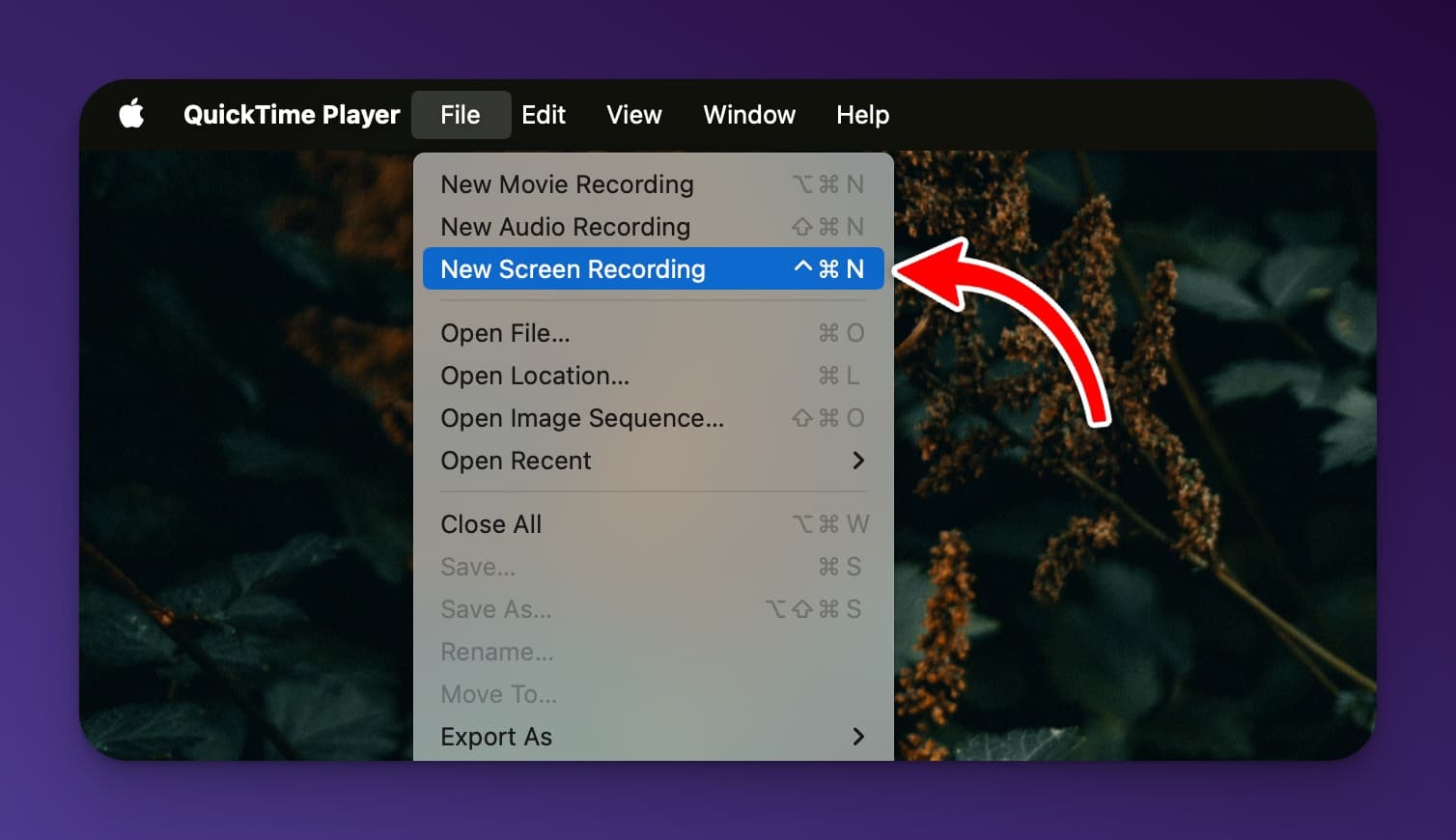
Here’s a quick guide:
Step 1: Open QuickTime Player from your Applications folder.
Step 2: Choose File → New Screen Recording, or press Control-Command-N. If you see the Screenshot toolbar, that is Screenshot — use the steps above. Official: How to record the screen on Mac.
Step 3: Click the Options button next Record button to pick a microphone.
Step 4: Hit the “Record” button. You can record the entire screen or drag to select a specific area.
Step 5: Record your content, including any audio.
Step 6: Press Stop Recording or “Command-Control-Esc” to finish.
Step 7: QuickTime Player will show your recording. Check the sound quality before saving. Saving the file can be done by clicking “File” then “Save…”.
Which Screen Recorder Is Best for Mac with Audio?
When choosing a screen recording app or software for Mac, consider what suits your needs best. Here are two great options:
QuickTime Player
QuickTime Player remains a preferred choice for many Mac users. It allows for basic video editing, such as trimming and rearranging clips. It’s a simple solution for quick screen recordings with audio.
Recording Internal System Audio on a Mac
If you’ve ever tried using the built-in Mac tools to record a Zoom meeting, a YouTube clip, or a webinar on an older macOS, you’ve probably hit this: the video looks fine, but there’s no sound from the Mac itself.
macOS 27 Golden Gate or later: In the Screenshot app (Shift-Command-5), open Options and choose Include System Audio. That captures the sound playing on the Mac along with the screen. You can still pick a microphone for your voice. Official steps: How to record the screen on Mac (Apple Support, published September 14, 2026).
macOS 26 Tahoe and earlier: Options still lets you pick a microphone for your voice, but not the audio playing on the computer. Use one of these:
- The free (technical) route: Install a virtual audio driver like BlackHole. It routes Mac output back into your recorder as an input. Configure it once in Audio MIDI Setup.
- The easy route: Use a third-party recorder that captures system audio — free OBS Studio, or apps like Screen Studio and Loopback.
Loom
Loom (part of Atlassian) is a screen-and-cam recorder. Free Starter is capped at 720p, 5-minute clips, and 25 videos per person. 4K and trim-and-stitch start on Business. Loom’s Chrome screen recorder page notes Chrome records up to 1080p and 4K needs the desktop app.
Screen Studio
Screen Studio is a powerful screen recording app for Mac that’s perfect for capturing mouse movements, webcam footage, and basic editing. In my opinion Screen Studio is the best screen recording app on Mac. It has a user-friendly interface that lets you easily record specific windows, areas, or devices like iPhones and iPads. The built-in editor allows you to customize the background, cursor, and camera settings, as well as add captions and animations.

Screen Studio automatically zooms in on areas you interact with, providing a smooth and focused recording experience. It will even capture keyboard presses and mouse clicks as you do them in your recording. Its timeline editor makes it simple to trim, split, and adjust the speed of your clips. Overall, Screen Studio is an excellent choice for anyone needing to create professional-looking screen recordings on their Mac.
OBS
OBS (Open Broadcaster Software) is a versatile screen recording tool that is highly popular among content creators for Mac. It offers a wide range of features, including the ability to capture multiple sources such as screen, webcam, and audio inputs simultaneously. OBS provides customizable settings for recording quality, frame rates, and audio configurations, allowing users to fine-tune their recording setup according to their specific needs.
OBS also supports live streaming, making it a great choice for those who want to broadcast their screen recordings in real-time (this is the primary use case of OBS). With its user-friendly interface and robust functionality, OBS is a top choice for Mac users looking to create professional-quality screen recordings.
FAQs on How to Screen Record on Mac with Audio
Can QuickTime record screen and audio?
Yes. Select a microphone in QuickTime (or Screenshot Options) for your voice, including AirPods. For the sound playing on the Mac, use Include System Audio on macOS 27 Golden Gate or later; on older macOS use BlackHole or a third-party recorder. Official: How to record the screen on Mac.
How do I make a video of my computer screen?
Press Shift-Command-5. That opens Screenshot. Record the whole screen, a portion, or on Tahoe 26 a single window. Official: How to record the screen on Mac.
Where do screen recordings go on Mac?
Recordings save to your desktop with the Screenshot toolbar. With the options button you can also select where the recording is saved. With QuickTime or other software, choose where to save when exporting or sharing.
Is It Possible to Record Both Audio and Video on a Mac?
Yes, you can record both audio and video on a Mac. There are several methods available, including using the built-in Screenshot toolbar or other screen recording software. Your choice will depend on the recording quality you’re aiming for.
Conclusion
Shift-Command-5 is the built-in recorder. QuickTime opens the same Screenshot tools on a modern Mac. On macOS 27 Golden Gate or later, Include System Audio covers built-in system sound; on older macOS, BlackHole or a third-party app still handles system audio and extra editing. Once the file is on disk, map the tutorial with how-to video ideas or transcribe it with the transcript tool.
With just a few clicks, you can take your creativity to the next level and share your knowledge with the world! Don’t just show – tell. Add pro-quality audio and watch your audience light up.

RightBlogger Co-Founder Andy Feliciotti shares practical tech tips and creates videos. He also enjoys photography and travel.
Automated SEO Blog Posts for Your Site
Research, write, publish, and share from one account.
7-day free trial. Cancel anytime.





Leave a comment
You must be logged in to comment.
Loading comments...